

Contents
Biography & Historical Record
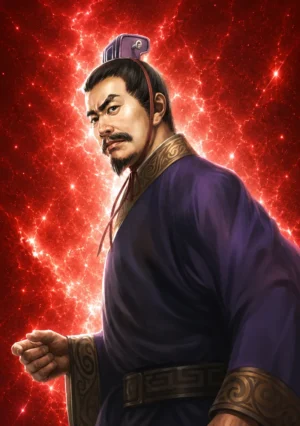
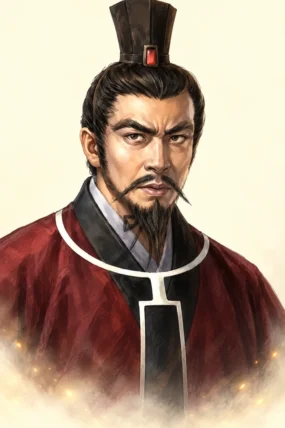
Xu Shao, courtesy name Zijiang, was a paramount political critic, renowned character evaluator, and high-ranking scholar-official during the late Eastern Han dynasty. Hailing from Pingyu County in Runan Commandery (modern-day Henan Province), he was born into a distinguished gentry family with a legacy of high government service. Documented in Fan Ye’s Book of Later Han (Hou Han Shu – Book 68, Biographies of Guo, Fu, Xu) and Chen Shou’s Records of the Three Kingdoms (Sanguozhi – Book of Wei, Biography of Emperor Wu), Xu Shao is universally celebrated in Chinese history as the co-founder of the legendary ‘Monthly Criticisms of Runan’ (Yuedan Ping) and the master evaluator whose prophetic assessment framed the historical persona of Cao Cao.
In his youth, Xu Shao possessed an extraordinary gift for penetrating human nature, evaluating moral character, and predicting political destinies. Alongside his elder cousin Xu Jing, he established a monthly intellectual forum held on the first day of every month in Runan Commandery, known as the Monthly Criticisms. Scholars, aspiring officials, and gentry elites from across the Han Empire flocked to Runan seeking their evaluation. A favorable appraisal from Xu Shao guaranteed immediate nationwide prestige and accelerated imperial recruitment. During this period, a young, ambitious Cao Cao traveled to Runan to seek Xu Shao’s evaluation. Initially, Xu Shao hesitated to offer a comment, observing Cao Cao’s volatile nature. When pressed repeatedly by Cao Cao, Xu Shao delivered his famous, timeless prophecy: ‘In times of peace, you are an able minister; in times of chaos, you are a treacherous hero!’ Upon hearing these words, Cao Cao burst into loud, triumphant laughter and departed. However, despite their shared fame, Xu Shao eventually developed a bitter personal rift with his cousin Xu Jing, utilizing his immense local influence to suppress Xu Jing’s career advancement in Runan.
As Xu Shao’s fame reached the imperial court, high ministers such as Grand Tutor Yuan Wei and the imperial administration repeatedly summoned him to assume government posts. Xu Shao served as Officer of Merit (Gongtao) in Runan and was later nominated as Exemplary and Upright (Fangzheng) and Virtuous and Courteous (Dunhou). In his administrative role overseeing talent selection, Xu Shao maintained absolute moral integrity, firmly refusing bribes from powerful local clans. Recognizing the rampant corruption of eunuch cliques in Luoyang and foreseeing impending civil war, Xu Shao resigned his posts and led his clan south to seek refuge.
Xu Shao initially sought sanctuary under Liu Biao, the Governor of Jing Province. However, after observing Liu Biao’s character, Xu Shao perceptively noted that Liu Biao was outwardly hospitable but secretly suspicious and incapable of visionary leadership. He departed Jing Province and traveled east to join Liu Yao, the Inspector of Yang Province, who received Xu Shao as a supreme honored advisor. In 194 AD, when the formidable general Sun Ce launched his conquest of Jiangdong, Liu Yao hesitated to appoint the elite warrior Taishi Ci as supreme commander, fearing the ridicule of gentry scholars for promoting someone without established scholarly fame. Xu Shao earnestly advised Liu Yao that failing to utilize Taishi Ci’s genuine martial talent would result in total military defeat. Liu Yao ignored the counsel, leading to his swift defeat by Sun Ce’s army.
Following the military collapse in Jiangdong, Xu Shao loyally accompanied Liu Yao in his retreat southwest to Yuzhang Commandery. Exhausted by the hardships of exile and deeply grieved by the disintegration of the Han Empire, Xu Shao fell gravely ill and passed away in Yuzhang Commandery in 195 AD (the second year of Xingping under Emperor Xian) at the age of forty-six, leaving a timeless legacy as the patron master of character evaluation in Chinese history.
Role in Romance of the Three Kingdoms
In Luo Guanzhong’s novel Romance of the Three Kingdoms, Xu Shao (under his courtesy name Xu Zijiang) makes a pivotal, iconic appearance in Chapter 1. Introduced as a master character evaluator residing in Runan, he is visited by the youthful Cao Cao, who inquires about his future destiny. When Xu Shao remains silent, Cao Cao presses him aggressively. Xu Shao responds with the legendary literary prophecy: ‘You are an able minister in times of peace, and a treacherous hero in times of chaos!’ Upon hearing this evaluation, Cao Cao departs filled with immense delight. This brief yet monumental encounter in Chapter 1 serves as the foundational psychological blueprint for Cao Cao’s entire character arc throughout the novel, defining his dual nature as both a brilliant statesman and a ruthless, ambitious tyrant across the Three Kingdoms era.
Xu Shao (許劭) — Historical & Literary Timeline
Founding Yuedan Ping & Delivering the Prophecy to Cao Cao
Co-founds the Monthly Criticisms of Runan with Xu Jing, evaluating nationwide scholars. Evaluates young Cao Cao in Chapter 1 of Romance of the Three Kingdoms, declaring him ‘an able minister in peace, a treacherous hero in chaos.’
Imperial Recruitment and Civil Administration
Summoned by Grand Tutor Yuan Wei; serves as Officer of Merit in Runan, enforcing strict moral integrity in talent selection before resigning to flee Dong Zhuo’s tyranny.
Exile in Jing Province and Service under Liu Yao
Refuses prolonged stay under Liu Biao in Jing Province; joins Yang Province Inspector Liu Yao as chief strategist, advising Liu Yao to entrust supreme military command to Taishi Ci against Sun Ce.
Retreat to Yuzhang and Passing
Accompanies Liu Yao in his retreat to Yuzhang Commandery following Sun Ce’s victory; falls ill from the hardships of exile and passes away at forty-six years of age.
For detailed historical records, archives, and official chronicles, explore Xu Shao on Wikipedia.
Key Relationships
Family
- Xu Jing (许敬, Hứa Kính): Father who served as the Minister of Works (Sikong) during the Eastern Han dynasty.
- Xu Jing (许靖, Hứa Tĩnh): Elder cousin with whom he co-founded the influential Monthly Criticisms in Runan, though the two later fell into an intense personal rivalry.
- Xu Hun (许混, Hứa Hỗn): Son who carried on the family’s scholarly tradition and later served as an official in the state of Cao Wei.
Friends
- Liu Yao (刘繇, Lưu Dao): Inspector of Yang Province who revered Xu Shao as his foremost advisor and whom Xu Shao accompanied into final exile in Yuzhang Commandery until his passing in 195 AD.
- Taishi Ci (太史慈, Thái Sử Từ): Esteemed warrior whose extraordinary martial prowess Xu Shao recognized, urging Liu Yao to place him in chief command against Sun Ce.
Enemies
- Sun Ce (孙策, Tôn Sách): Jiangdong warlord whose military offensive across the Yangtze in 194–195 AD overwhelmed Liu Yao’s forces and drove Xu Shao into debilitating exile.
- Dong Zhuo (董卓, Đổng Trác): Tyrannical warlord whose violent seizure of the Han court and destabilization of the realm forced Xu Shao to resign his administrative post and flee south.
Other
- Cao Cao (曹操, Tào Tháo): Powerful warlord whom Xu Shao famously appraised during their youth, delivering the legendary assessment that he would be an able minister in times of peace and a treacherous hero in times of chaos.
- Liu Biao (刘表, Lưu Biểu): Governor of Jing Province who initially granted Xu Shao refuge, but whom Xu Shao quickly left after perceiving him to be outwardly welcoming yet inwardly suspicious and indecisive.
- Yuan Wei (袁隗, Viên Ngỗi): Grand Tutor of the Eastern Han dynasty who admired Xu Shao’s keen intellect and repeatedly recommended him for high imperial office.
In Novel
Chapter 1
- Xu Shao (许劭, Hứa Thiệu): Xu Shao is a famous evaluator of men whose judgment is sought by Cao Cao when Cao Cao is still a young man. Cao Cao asks Xu Shao to assess his character. Xu Shao initially refuses to answer directly, but after persistent questioning gives the famous judgment that Cao Cao is a capable minister in times of peace and a cunning hero in times of disorder. The remark becomes one of the novel’s defining descriptions of Cao Cao.
In History
Summary
- Xu Shao (许劭, Hứa Thiệu), courtesy name Zijiang (子將), was a celebrated Eastern Han critic and commentator famous for his assessments of political and military personalities.
Period I — Reputation for Character Judgments
- Xu Shao and his relative Xu Jing became famous for evaluating prominent figures. Their judgments were highly valued because reputation and character assessment were important parts of elite political culture.
Period II — Cao Cao’s Reputation
- Xu Shao is traditionally credited with the famous judgment concerning the young Cao Cao, describing him in terms that suggested both the potential of a capable statesman and the danger of a turbulent age.
- This episode became one of the most famous anecdotes attached to Cao Cao’s early life.
Historical Record
- Xu Shao was historical. He died in 195. His reputation as a critic of men is documented in late-Han historical and biographical traditions.