
Contents
Biography & Historical Record
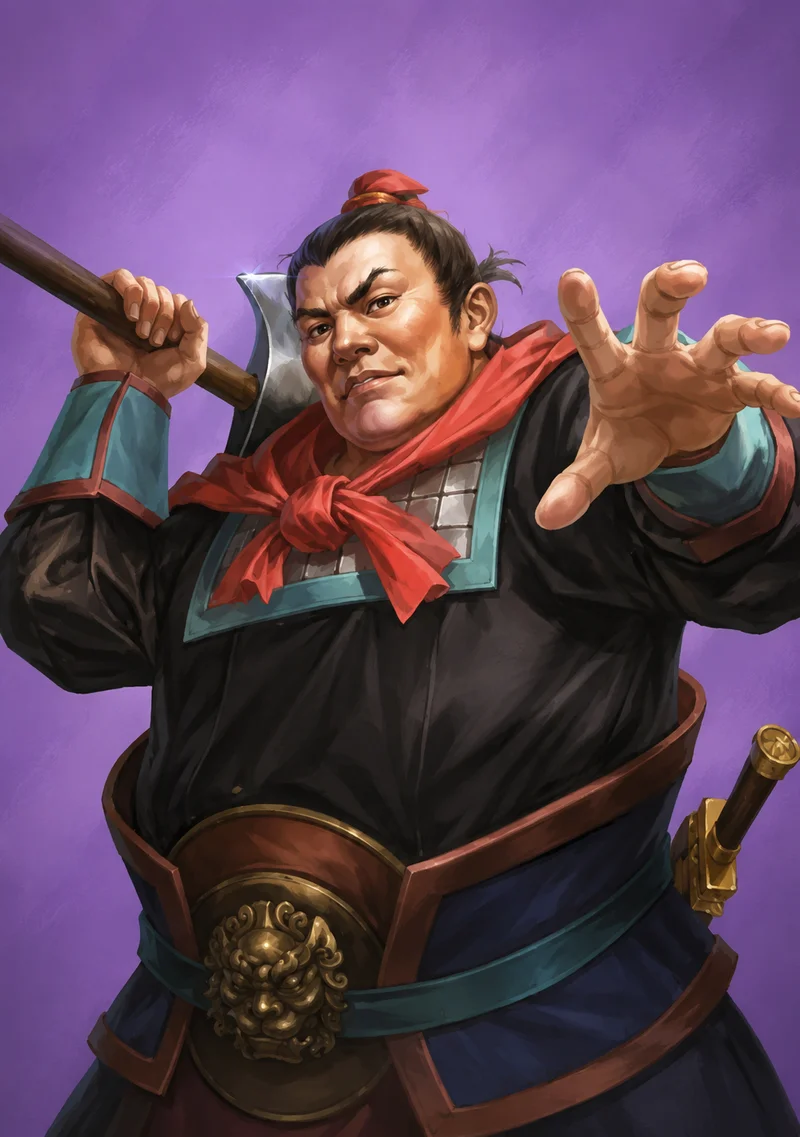
Zhou Chao was a rebel leader and remnant insurgent commander of the Yellow Turban Rebellion who operated in southern Jing Province during the late Eastern Han dynasty. Operating across the vast territories south of the Yangtze River during the reign of Emperor Ling of Han, Zhou Chao mobilized thousands of disaffected peasants, impoverished farmers, and rogue insurgent forces in response to endemic imperial corruption and the rampant tyranny of the Ten Eunuchs. Documented in Chen Shou’s Records of the Three Kingdoms (Sanguozhi – Book of Wu, Biography of Sun Jian) and Fan Ye’s Book of Later Han (Hou Han Shu), Zhou Chao forged a formidable rebel coalition alongside fellow insurgent commander Guo Shi, unleashing a widespread uprising that overwhelmed local Han administrations across Lingling, Guiyang, and Changsha commanderies.
In 187 AD (the fourth year of Zhongping), as imperial authority crumbled in southern China, Zhou Chao and Guo Shi declared themselves insurgent generals, storming government garrisons, plundering imperial granaries, and driving regional Han magistrates into flight. Simultaneously, another major rebel leader named Ou Xing raised an army of over ten thousand insurgents in Changsha Commandery, creating a massive multi-commander front that threatened to sever southern China from the Eastern Han Empire. Panicked local officials dispatched urgent memorials to the imperial capital at Luoyang, prompting the Han court to commission the martial commander Sun Jian as Grand Administrator of Changsha, granting him full military powers to suppress the rebellion.
Upon arriving in southern Jing Province, Sun Jian executed a series of brilliant, rapid offensive maneuvers. After defeating Ou Xing in Changsha within fifty days, Sun Jian immediately led his veteran forces south across commandery borders into Lingling and Guiyang to confront Zhou Chao and Guo Shi. Despite Zhou Chao’s numerical superiority and attempt to leverage fortified riverine terrain, his undisciplined insurgent forces were no match for Sun Jian’s battle-hardened troops and elite generals, including Cheng Pu, Huang Gai, and Han Dang. Sun Jian executed swift night ambushes and aggressive cavalry charges, completely encircling and shattering Zhou Chao’s army. Zhou Chao was killed in action during the melee, and his co-commander Guo Shi was subsequently eliminated. The decisive victory completely pacified southern Jing Province in less than a month, earning Sun Jian widespread military acclaim as the Tiger of Jiangdong and ennoblement as the Marquis of Wucheng.
Role in Romance of the Three Kingdoms
In Luo Guanzhong’s classic novel Romance of the Three Kingdoms, Zhou Chao appears in Chapter 2 during the chaotic aftermath of the initial Yellow Turban Rebellion. Driven by extreme poverty and the corruption of the Ten Eunuchs, Zhou Chao allies with Guo Shi in Lingling and Guiyang commanderies, raising a massive peasant army that plunders the southern borderlands in coordination with Ou Xing’s revolt in Changsha. When the Han court appoints Sun Jian as Grand Administrator of Changsha to restore order, Sun Jian leads his elite generals Cheng Pu, Huang Gai, and Han Dang into battle. Sun Jian’s swift tactical assault completely routs Zhou Chao’s insurgent army, and Zhou Chao is slain in the chaotic battle. Zhou Chao’s defeat in Chapter 2 serves as a pivotal narrative milestone establishing Sun Jian’s formidable military prowess and rapid rise to national prominence prior to the grand coalition against Dong Zhuo.
Zhou Chao (周朝) — Historical & Literary Timeline
Rebellion in Lingling and Guiyang Commanderies
Allies with Guo Shi to raise a major armed rebellion across Lingling and Guiyang commanderies, raiding county seats and coordinating with Ou Xing’s revolt in Changsha.
Target of Imperial Counter-Offensive by Sun Jian
Targeted by Sun Jian following Sun Jian’s victory over Ou Xing in Changsha; pursued across commandery borders into Lingling and Guiyang.
Killed in Action and Pacification of Southern Jing
Defeated and slain in battle by Sun Jian’s forces; his death leads to the total pacification of Lingling, Guiyang, and Changsha commanderies.
For detailed historical records, archives, and official chronicles, explore Zhou Chao on Wikipedia.
Key Relationships
Family
- No information
Friends
- Guo Shi (郭石, Quách Thạch): Fellow rebel commander who co-led the major insurgent uprising across Lingling and Guiyang commanderies alongside Zhou Chao in 187 AD.
- Ou Xing (区星, Khu Tinh): Rebel leader who raised an army in neighboring Changsha Commandery, operating alongside Zhou Chao and Guo Shi in a coordinated anti-Han insurrection across southern Jing Province in 187 AD.
Enemies
- Sun Jian (孙坚, Tôn Kiên): Grand Administrator of Changsha and martial commander who led the Han imperial counter-offensive into Lingling and Guiyang in 187 AD, defeating and killing Zhou Chao in battle.
- Cheng Pu (程普, Trình Phổ): Veteran general serving under Sun Jian who participated in the rapid military campaign that encircled and destroyed Zhou Chao’s rebel forces in 187 AD.
- Huang Gai (黄盖, Hoàng Cái): Trusted officer under Sun Jian who took part in the decisive offensive that routed Zhou Chao’s insurgent army in southern Jing Province in 187 AD.
- Han Dang (韩当, Hàn Đương): Elite cavalry commander under Sun Jian who aided in the suppression and elimination of Zhou Chao’s rebellion in 187 AD.
Other
- Emperor Ling of Han (汉灵帝, Hán Linh Đế): Sovereign of the Eastern Han dynasty whose regional magistrates, garrisons, and commanderies in southern Jing Province were targeted and overthrown during Zhou Chao’s 187 AD revolt.
In Novel
Zhou Chao (周朝, Zhōu Cháo) does not have a securely verified named appearance in the supplied edition under the exact Chinese name 周朝. No chapter is assigned without an exact textual match.
In History
Summary
- Zhou Chao (周朝, Châu Triều) is a minor late Han figure whose surviving record is limited.
Historical Record
- The exact-name evidence should be retained without importing biographies of other Zhou-family figures.
- Classification: Historical / Briefly Attested.