The Ten Eunuchs: The Corrupt Clique That Shattered the Eastern Han Dynasty
Contents
An Exhaustive Historical and Literary Analysis of the Twelve Court Eunuchs
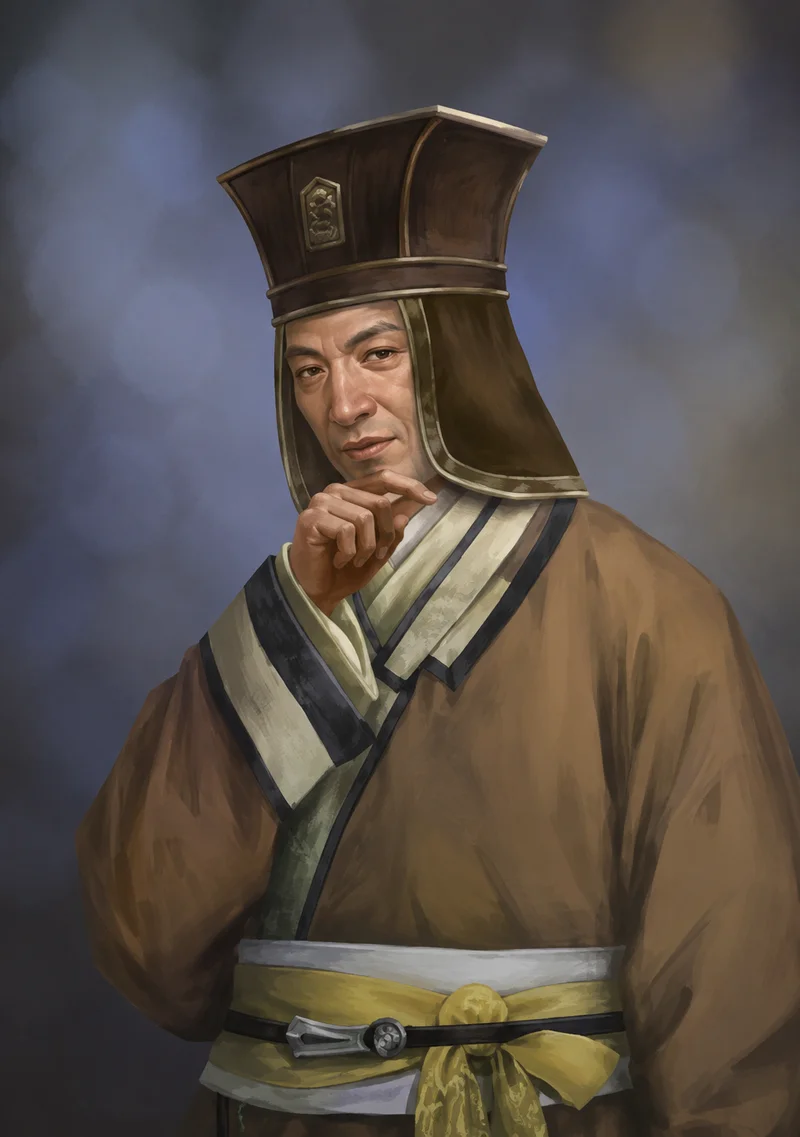
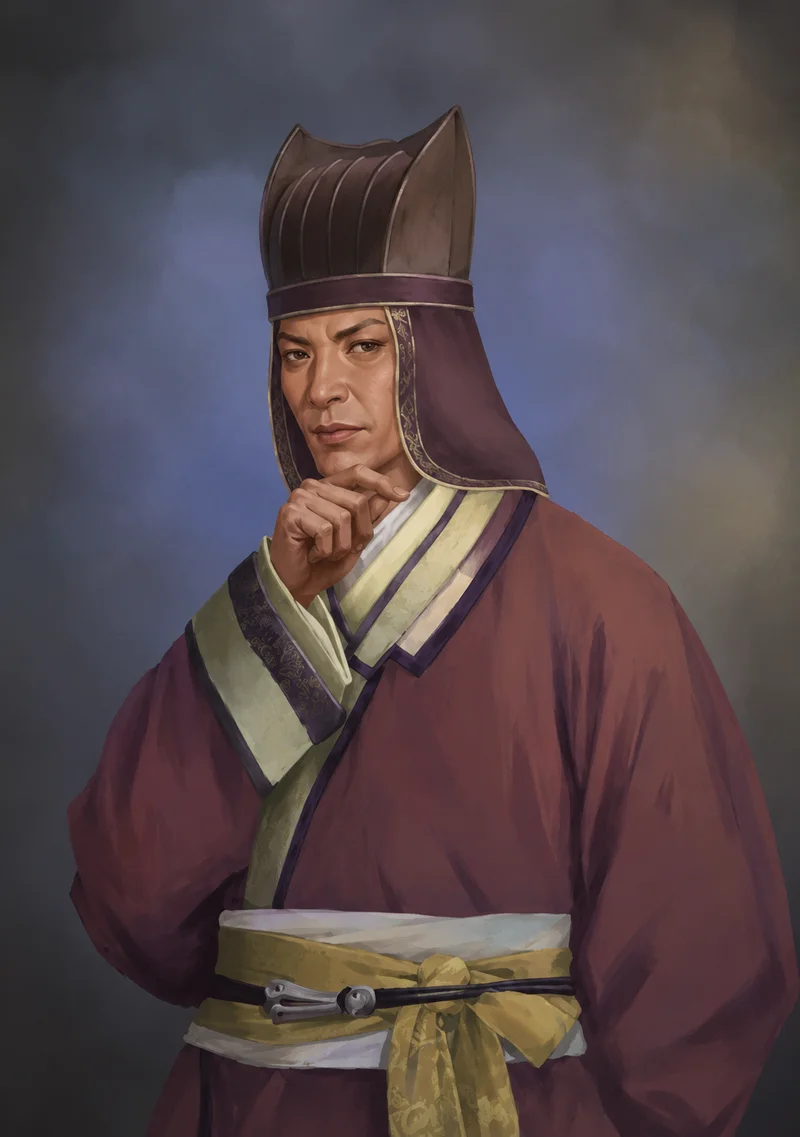
In both Chen Shou’s (陈寿, Trần Thọ) historical Records of the Three Kingdoms (三国志, Sān Guó Zhì, Tam Quốc Chí) and Luo Guanzhong’s (罗贯中, La Quán Trung) 14th-century epic novel Romance of the Three Kingdoms (三国演义, Sān Guó Yǎn Yì, Tam Quốc Diễn Nghĩa), few factions carry a legacy as destructive as The Ten Eunuchs or Ten Attendants (十常侍, Shí Cháng Shì, Thập Thường Thị).
Dominating the inner palace during the reign of Emperor Ling of Han (汉灵帝, Hán Linh Đế), this corrupt political clique seized absolute imperial authority, drove noble scholars into exile, and engineered the treacherous assassination of Grand General He Jin (何进, Hà Tiến). This single act triggered a violent military purge in Luoyang (洛阳, Lạc Dương) and opened the gates for the tyrant Dong Zhuo (董卓, Đổng Trác), pitching China into the chaos of the Three Kingdoms period.
1. Nomenclature and the “Twelve” Members
While traditionally referred to in idioms, classical texts, and chapter titles as the “Ten Eunuchs” (十常侍), historical records from the Book of the Later Han (后汉书, Hòu Hàn Shū) and the narrative structure of Romance of the Three Kingdoms confirm that the core group actually consisted of twelve high-ranking court eunuchs.
All twelve held the prestigious imperial office of Attendant-in-Ordinary (中常侍, Zhōng Cháng Shì, Trung Thường Thị) and were granted noble fiefs as marquises (Liè Hóu, Li列侯).
Emperor Ling’s Total Subjugation
Emperor Ling was so thoroughly manipulated by their flatteries and financial extortion that he famously declared to his court:
“Attendant Zhang is my father, and Attendant Zhao is my mother!”
(张常侍是我父,赵常侍是我母, Zhāng chángshì shì wǒ fù, Zhào chángshì shì wǒ mǔ, Trương thường thị thị ngã phụ, Triệu thường thị thị ngã mẫu)
2. Complete Roster of the Twelve Eunuchs
Below is the complete list of the twelve eunuchs who comprised the Ten Eunuchs clique, matching historical Pinyin, Traditional Chinese, and Vietnamese annotations:
| No. | Vietnamese Name | Chinese (Traditional) | English Pinyin Name | Historical & Literary Role / Fate |
| 1 | Trương Nhượng | 張讓 | Zhang Rang | Primary Leader: Co-head of the clique; masterminded the execution of He Jin; drowned himself in the Yellow River while fleeing (189 AD). |
| 2 | Triệu Trung | 趙忠 | Zhao Zhong | Co-Leader: Fellow leading eunuch co-governing the court; slaughtered by Yuan Shao’s forces during the palace invasion (189 AD). |
| 3 | Đoàn Khuê | 段珪 | Duan Gui | Key Conspirator: Participated directly in court manipulations and assisted Zhang Rang in kidnapping Emperor Shao; executed by Min Gong (Mǐn Gòng, Mẫn Cống). |
| 4 | Quách Thắng | 郭勝 | Guo Sheng | Allied with Empress Dowager He (Hé Tàihòu, Hà Thái hậu); vied for inner palace influence; killed during Yuan Shu’s assault on the palace gates. |
| 5 | Hạ Vận | 夏恽 | Xia Yun | High-ranking member of the Ten Attendants; actively participated in monopolizing court communications; killed in the 189 AD purge. |
| 6 | Tôn Chương | 孫璋 | Sun Zhang | Attendant who controlled administrative affairs and extortion networks inside the inner imperial chambers. |
| 7 | Tất Lam | 畢嵐 | Bi Lan | Noted for overseeing grand imperial engineering projects, including bronze statues, water-pumping machines, and palace gardens. |
| 8 | Lật Tung | 栗嵩 | Li Song | Senior palace attendant who leveraged royal favor to hoard vast personal wealth and land estates across Jing and Yu provinces. |
| 9 | Cao Vọng | 高望 | Gao Wang | Member of the clique who wielded direct authority over imperial decrees and appointments to provincial governorships. |
| 10 | Trương Cung | 張恭 | Zhang Gong | High-ranking court attendant involved in inner palace decision-making and suppressing opposition from scholar-officials. |
| 11 | Hàn Khôi | 韓悝 | Han Kui | Member of the Ten Attendants who managed internal palace finances and tribute collection from regional lords. |
| 12 | Tống Điển | 宋典 | Song Dian | Member of the Ten Attendants who managed imperial household affairs and palace security personnel. |
3. The Rise to Power: Corruption and the Disasters of the Partisan Prohibitions
The dominance of the Ten Eunuchs was built upon two structural crises during the late Eastern Han Dynasty:
Monopolization of the Inner Court (Hòu Gōng, Hậu Cung):
Because Eastern Han emperors often ascended the throne as young children, power alternated violently between the Emperor’s maternal relatives (Consort Kin / Wài Qī, Ngoại thích) and the court eunuchs who managed the inner palace. The Ten Eunuchs positioned themselves as the sole physical link between the young Emperor Ling and the outside world.
The Disasters of the Partisan Prohibitions (Dǎng Cóng Zhī Hùo, Đảng Cố Chi Họa):
When upright scholar-officials and Confucian academy students protested against eunuch corruption, Zhang Rang and Zhao Zhong convinced Emperor Ling that the scholars were plotting treason. Hundreds of elite scholars were executed, imprisoned, or banned from holding public office, completely stripping the Eastern Han government of honest administrators.
Sale of Public Offices (Mǎi Guān Sè Jiáo)
Under the influence of the Ten Eunuchs, court offices were publicly auctioned for set prices. Candidates paid millions of copper coins to buy governorships and commanderies, which they then squeezed back from the peasantry through oppressive taxes. This widespread misery directly triggered the outbreak of the Yellow Turban Rebellion (黄巾之乱, Huáng Jīn Zhī Luàn, Khởi nghĩa Khăn Vàng) in 184 AD.
4. The Climax: The Assassination of He Jin
Following the death of Emperor Ling in April 189 AD, his young son Liu Bian (刘辩, Lưu Biện / Emperor Shao) ascended the throne. A lethal clash erupted between the Consort Kin faction led by Grand General He Jin (何进) and the Ten Eunuchs.
He Jin’s Fatal Mistake
He Jin wanted to exterminate the eunuchs, but his sister, Empress Dowager He, protected them due to heavy bribes. Rejecting the warnings of Cao Cao (曹操) and Chen Lin (陈琳), He Jin adopted Yuan Shao’s (袁绍) reckless plan: summoning Western warlords, including Dong Zhuo (董卓), to march their armies on Luoyang to intimidate the Empress Dowager.
The Trap at Changle Palace
Realizing their lives were at stake, Zhang Rang and Duan Cui struck first:
The Fake Edict: They wept before Empress Dowager He and tricked her into issuing an urgent summons ordering He Jin into Changle Palace (长乐宫, Cung Trường Lạc).
The Arrogant Entry: Despite warnings from Yuan Shao and Cao Cao, He Jin laughed: “I am the Grand General holding all military power! What can a few petty eunuchs do to me?” He Jin entered the palace alone while Yuan Shu (袁术) guarded the gates outside with 500 troops.
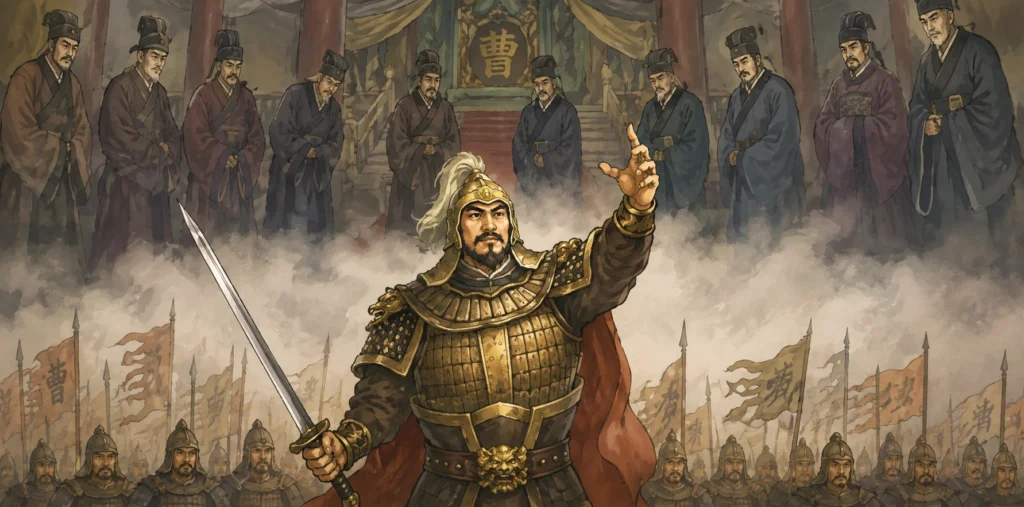
The Execution: Inside the Hall of Jiade, armed assassins surrounded He Jin. Zhang Rang denounced him for ingratitude before the executioners chopped He Jin into pieces. Zhang Rang then severed He Jin’s head and tossed it over the palace wall.
5. The Aftermath: Fire, Massacre, and the Fall of Luoyang
The sight of He Jin’s severed head sparked an unprecedented crisis that wiped out the court and dissolved imperial authority:
The Palace Massacre: Enraged by He Jin’s death, Yuan Shao and Yuan Shu broke down the palace gates, set the imperial complex on fire, and slaughtered every beardless man inside. Over 2,000 people were killed, including young court officials who lacked facial hair.
The Kidnapping of the Emperor: Zhang Rang, Zhao Zhong, and Duan Cui seized Emperor Shao and his younger brother, Prince Liu Xie (刘协, Lưu Hiệp / future Emperor Xian), fleeing in the middle of the night toward the Yellow River.
The End of Zhang Rang: Pursued to the banks of the Yellow River at Minxi by imperial officers Min Gong (闵贡) and Lu Zhi (卢植), Zhang Rang realized all was lost. He turned toward the young Emperor, bowed tearfully, saying: “We are dying; may Your Majesty take care of yourself!” before jumping into the roaring Yellow River and drowning.
Inviting the Wolf into the House: Finding the capital burning and leaderless, Dong Zhuo arrived with his battle-hardened Xiliang army. He seized the young Emperor, deposed Emperor Shao, installed Emperor Xian, and launched a tyrannical reign that officially split China into warlord factions.
6. Summary of Historical and Literary Significance
| Aspect | Historical & Literary Details |
| Chinese Name | 十常侍 (Shí Cháng Shì) |
| Vietnamese Name | Thập Thường Thị |
| English Name | The Ten Eunuchs / The Ten Attendants |
| Actual Member Count | 12 Eunuchs (All holding the rank of Zhōng Cháng Shì) |
| Primary Leaders | Zhang Rang (张让) & Zhao Zhong (赵忠) |
| Novel Chapters | Romance of the Three Kingdoms, Chapters 1, 2, and 3 |
| Peak Impact Period | Reign of Emperor Ling (168–189 AD) |
| Ultimate Fate | Massacred by Yuan Shao/Yuan Shu; Zhang Rang drowned in the Yellow River (189 AD) |
| Historical Legacy | Primary catalyst for the collapse of the Eastern Han Dynasty and the rise of Dong Zhuo |
Historical Reality vs. Literary Narrative
In Official History (Book of the Later Han / Records of the Three Kingdoms):
The eunuchs were not merely cartoonish villains; they operated within a deeply fractured imperial system where the Han bureaucracy was structurally flawed. Emperor Ling actively used the eunuchs to bypass the conservative nobility and raise funds for the imperial treasury through office sales.
In Literature (Romance of the Three Kingdoms):
Luo Guanzhong uses the Ten Eunuchs as the ultimate moral opening motif. By placing their corruption at the very beginning of Chapter 1, the novel establishes that the loss of the “Mandate of Heaven” (Tiān Mìng, Thiên mệnh) by the Han Dynasty was caused by moral decay within the imperial court, making the eventual rise of heroes like Liu Bei, Guan Yu, and Zhang Fei both necessary and righteous.
Here is the complete, detailed English section providing comprehensive profiles for each of the Twelve Eunuchs (The Ten Eunuchs). This text serves as a direct continuation of the previous overview, diving deep into each figure’s background, official titles, political schemes, historical role, and ultimate fate according to both official historical records (Book of the Later Han) and literary tradition (Romance of the Three Kingdoms).
Detailed Profiles and Fates of the Twelve Eunuchs
1. Zhang Rang (张让 / 張讓)
Courtesy Name / Origin: Native of Yinxuan Commandery (present-day Xuchang, Henan).
Official Rank: Attendant-in-Ordinary (Zhong Chang Shi), enfeoffed as Marquis of Suling with a stipend of several thousand households.
Biography and Political Schemes:
Zhang Rang was the supreme leader, mastermind, and political brain of the Ten Eunuchs clique. By mastering the art of flattery and exploiting the youth and naivety of Emperor Ling of Han, he secured such absolute royal favor that the Emperor notoriously declared to the court: “Attendant Zhang is my father!” Zhang Rang monopolized imperial appointments, dismissals, and policy decisions, pioneering the widespread, institutionalized sale of public offices for gold. He constructed palatial mansions in Luoyang that rivaled the imperial palace in height, going so far as to trick Emperor Ling into avoiding high towers so the Emperor would not see his eunuchs’ grand estates.
Role and Ultimate Fate:
When Grand General He Jin prepared to purge the eunuchs, Zhang Rang masterminded the forgery of Empress Dowager He’s edict, luring He Jin into Changle Palace where hidden executioners chopped him into pieces. As Yuan Shao and Cao Cao set fire to the palace to massacre the eunuchs, Zhang Rang kidnapped the young Emperor Shao (Liu Bian) and Prince Liu Xie, fleeing in the dead of night toward the Yellow River. Pursued to the banks at Minxi Ferry with no escape left, Zhang Rang turned to the child Emperor, bowed tearfully, saying: “We are dying; may Your Majesty take care of yourself!” before drowning himself in the Yellow River (189 AD).

Trương Nhượng – Zhang Rang – Thập Thường Thị – Tam Quốc Chí
2. Zhao Zhong (赵忠 / 趙忠)
Origin: Native of Anping Commandery (present-day Jizhou, Hebei).
Official Rank: Attendant-in-Ordinary, Marquis of Juan, briefly served as General of Chariots and Cavalry (Ju Qi Jiang Jun).
Biography and Political Schemes:
As the second-in-command of the clique, Zhao Zhong held power equal to Zhang Rang. Emperor Ling famously proclaimed: “Attendant Zhao is my mother!” Zhao Zhong was notorious for his ruthless suppression of Confucian scholars during the two Disasters of the Partisan Prohibitions (Dang Gu Zhi Huo). Alongside Zhang Rang, he fabricated treason charges against hundreds of imperial academy students and scholar-officials. He bribed imperial relatives, seized control of land taxation across northern China, and briefly assumed supreme military authority over the capital guards.
Role and Ultimate Fate:
On the night of He Jin’s assassination, Zhao Zhong stood alongside Zhang Rang to oversee the executioners. However, when Yuan Shao led the imperial guards through the palace gates to slay every beardless man, Zhao Zhong failed to escape toward the river. Surrounded by Yuan Shao’s troops in the courtyard of the Southern Palace, he was hacked into pieces, and his remains were thrown into the raging palace fire.

Triệu Trung – 趙忠 – Zhao Zhong – Thập Thường Thị – Tam Quốc Chí
3. Duan Cui (段珪 / 段珪)
Official Rank: Attendant-in-Ordinary, Marquis of Benxiang.
Biography and Political Schemes:
Duan Cui served as Zhang Rang’s primary enforcer and right-hand operative. He managed the inner palace intelligence network, spying on the private conversations of imperial consorts and court ministers to report dissent back to the clique. Duan Cui was the chief architect of the scheme that tricked Empress Dowager He into issuing the fatal summons to her brother, He Jin.
Role and Ultimate Fate:
Following He Jin’s murder, Duan Cui helped Zhang Rang escort the kidnapped Emperor Shao and Prince Liu Xie toward the northern mountains under cover of darkness. After Zhang Rang drowned himself in the Yellow River, Duan Cui fled alone into the dense riverbank marshes. However, Imperial Officer Min Gong (Min Gong) pursued and trapped him. Min Gong drew his blade, decapitated Duan Cui on the spot, and hung his severed head from his horse’s saddle before escorting the child Emperor back to Luoyang.

Duan Gui – 段珪 – Đoàn Khuê
4. Guo Sheng (郭胜 / 郭勝)
Official Rank: Attendant-in-Ordinary.
Biography and Political Schemes:
Guo Sheng occupied a unique and dangerous political position: he was a fellow townsman of Empress Dowager He and He Jin, having assisted their family back when He Jin was a humble butcher. It was through Guo Sheng’s early recommendation that He Jin’s sister was introduced into the imperial harem and eventually became Empress. Consequently, Guo Sheng acted as a deceptive bridge, constantly convincing Empress Dowager He that the eunuchs were her family’s benefactors, which led her to repeatedly forbid He Jin from purging them.
Role and Ultimate Fate:
Despite his historical ties to the He family, Guo Sheng sided unconditionally with Zhang Rang when the existential threat arose, joining the plot to ambush He Jin. This betrayal ignited fierce fury among He Jin’s troops. When Yuan Shu broke through the Qingtsong Gate with 500 imperial guards, Guo Sheng was cornered inside the palace hall and run through with spears, his body tossed out the window.

Quách Thắng – 郭勝 – Guo Sheng – Thập Thường Thị – Tam Quốc Chí
5. Xia Yun / Xia Hui (夏恽 / 夏暉)
Official Rank: Attendant-in-Ordinary.
Biography and Political Schemes:
Xia Hui was tasked with monitoring all incoming secret memorials, official dispatches, and reports sent from provincial governors and commandery inspectors. Any memorial exposing eunuch extortion or warning of the rising Yellow Turban Rebellion was either suppressed or altered by Xia Hui before reaching Emperor Ling’s desk. Together with Li Song, he effectively blindfolded the Emperor from imperial realities.
Role and Ultimate Fate:
Xia Hui participated in trapping He Jin inside Changle Palace. During the chaotic assault led by Yuan Shao, Xia Hui disguised himself in maidservant robes to flee the burning compound. However, recognized by his lack of facial hair and panicked behavior, he was exposed by imperial guards and decapitated on the marble steps.

Hạ Vận (hoặc Hạ Huy) – 夏暉 夏惲 – Xia Yun (hoặc Xia Hui)
6. Sun Zhang (孙璋 / 孫璋)
Official Rank: Attendant-in-Ordinary, Enfeoffed Marquis.
Biography and Political Schemes:
Sun Zhang managed the inner palace treasury and specialized in financial extortion. He established oppressive commercial tariffs on merchant caravans entering Luoyang and instituted a mandatory “courtesy tax” on newly appointed officials—forcing them to pay up to one-third of their official salary before taking office. Those who refused were framed by Sun Zhang for corruption and executed.
Role and Ultimate Fate:
When Yuan Shao’s forces stormed the inner chambers, Sun Zhang and a group of eunuchs attempted to barricade themselves inside the inner vault to protect their looted gold. Yuan Shu’s soldiers set fire to the treasury, and Sun Zhang burned to death inside the vault amidst the very gold he had extorted.
7. Bi Lan (毕岚 / 畢嵐)
Official Rank: Attendant-in-Ordinary, Imperial Architect / Engineer.
Biography and Political Schemes:
Unlike his purely political co-conspirators, Bi Lan was famous as an inventor and master architect for the eunuch clique. He engineered complex water-pumping machines (Long Gu Di Long), mechanical fountains, and cast massive bronze statues (Bronze Colossi) placed south of Luoyang to amuse Emperor Ling. However, the staggering costs of these vanity projects were forcibly extracted from the peasantry through heavy labor and taxation, earning him widespread hatred.
Role and Ultimate Fate:
Despite his technical skills, Bi Lan was an indispensable pillar of the corrupt clique. During the palace purge of 189 AD, Bi Lan was captured near the imperial bronze foundries by troops under Lu Zhi and Yuan Shao, and was summarily executed in the palace courtyard.

Tất Lam (hoặc Tất Phức) – 畢嵐 – Bi Lan – Thập Thường Thị – Tam Quốc Chí
8. Li Song (栗嵩 / 栗嵩)
Official Rank: Attendant-in-Ordinary.
Biography and Political Schemes:
Li Song operated a vast grain-monopoly network across Jing and Yu provinces. He colluded with corrupt merchants to hoard grain during floods and famines, selling it back to the imperial government at tenfold prices. Li Song used his fortune to maintain thousands of private armed retainers, turning his rural estates into fortified strongholds outside the capital.
Role and Ultimate Fate:
Li Song joined the ambush that slaughtered He Jin at Changle Palace. As Yuan Shao’s fire spread across the Southern Palace, Li Song was pursued through the corridors. He attempted to hide inside a massive decorative bronze cauldron, but was discovered by imperial guards and cut down where he hid.

Lật Tung (hoặc Lật Túc) – 栗嵩 – Li Song (hoặc Li Song Lisong)
9. Gao Wang (高望 / 高望)
Official Rank: Attendant-in-Ordinary, briefly served as Master of Writing (Shang Shu Ling).
Biography and Political Schemes:
Gao Wang represented the eunuchs within the secretarial bureau, holding direct authority over the Imperial Seal. He routinely forged imperial edicts and altered official records. Gao Wang accepted massive bribes from Dong Zhuo while Dong Zhuo was Inspector of Xiliang, covering up Dong Zhuo’s insubordination and military buildup at the frontier.
Role and Ultimate Fate:
During the ambush at Changle Palace, Gao Wang was the officer who read out the fake imperial summons that enticed He Jin through the gate. When Yuan Shao breached the complex, Gao Wang fled toward the palace walls but was cornered near the main hall, where he was beheaded on the spot.

Cao Vọng – 高望 – Gao Wang – Thập Thường Thị – Tam Quốc Chí
10. Zhang Gong (张恭 / 張恭)
Official Rank: Attendant-in-Ordinary.
Biography and Political Schemes:
Zhang Gong was responsible for commanding the palace gate sentries and internal security personnel. He transformed the palace guard into a private security force for the eunuchs, arresting any scholar-official who spoke out against the clique as soon as they exited court sessions.
Role and Ultimate Fate:
Zhang Gong was the officer who ordered the heavy iron gates of Changle Palace bolted shut the moment He Jin stepped inside, completely isolating the Grand General from his 500 guards outside. When Yuan Shu smashed down the gates, Zhang Gong drew his sword to resist, but was run through by spears in the corridor.

Trương Cung – 張恭 – Zhang Gong – Thập Thường Thị – Tam Quốc Chí
11. Han Kui (韩悝 / 韓悝)
Official Rank: Attendant-in-Ordinary, Enfeoffed Marquis.
Biography and Political Schemes:
Han Kui managed the royal private treasury and handled tribute sent by regional lords and foreign tribes. Notorious for insatiable greed, he routinely skimmed the finest jewels and silks for himself before logging items into the royal ledgers. He persuaded Emperor Ling to build the “Ten-Thousand-Year Fort,” a private stronghold meant to store imperial treasure.
Role and Ultimate Fate:
During the 189 AD massacre, Han Kui attempted to escape through a secret drainage tunnel beneath the palace, but choked on dense smoke filling the subterranean passages. Crawling out near the outer perimeter, he was spotted by Yuan Shao’s troops and instantly decapitated.

Hàn Khôi (hoặc Hàn Lạp) – 韓悝 – Han Kui – Thập Thường Thị – Tam Quốc Chí
12. Song Dian (宋典 / 宋典)
Official Rank: Attendant-in-Ordinary.
Biography and Political Schemes:
Song Dian managed palace construction and supervised junior eunuchs. He exploited palace restoration projects—such as rebuilding the burnt Yu Cang Hall—by inflating construction budgets tenfold and embezzling vast sums from the treasury. He also protected low-ranking eunuchs who committed extortion and kidnapping in Luoyang.
Role and Ultimate Fate:
Song Dian was among the eunuchs who directly participated in hacking He Jin to pieces. During the subsequent purge, Song Dian climbed onto the roof of the Southern Palace to jump to an adjacent building. However, he was spotted by guards below, shot through the chest with a crossbow bolt, and fell to his death on the courtyard stones.

Tống Điển – 宋典 – Song Dian – Thập Thường Thị – Tam Quốc Chí
Summary of the Twelve Eunuchs’ Fates (189 AD)
| No. | Eunuch Name | Primary Role | Final Fate in the 189 AD Purge |
| 1 | Zhang Rang | Supreme Mastermind | Pursued to Minxi Ferry; drowned himself in the Yellow River. |
| 2 | Zhao Zhong | Co-Leader | Hacked into pieces by Yuan Shao’s soldiers in the Southern Palace. |
| 3 | Duan Cui | Imperial Kidnapper | Decapitated by Officer Min Gong along the Yellow River banks. |
| 4 | Guo Sheng | He Family Liaison | Run through with spears by Yuan Shu’s guards inside the hall. |
| 5 | Xia Yun | Memorial Suppressor | Disguised as a maidservant; discovered and beheaded. |
| 6 | Sun Zhang | Treasury Extorter | Burned to death inside the palace gold vault. |
| 7 | Bi Lan | Palace Architect | Captured at the foundry and executed in the courtyard. |
| 8 | Li Song | Grain Monopolist | Discovered hiding in a bronze cauldron and cut down. |
| 9 | Gao Wang | Edict Forger | Beheaded in front of the main palace hall. |
| 10 | Zhang Gong | Gate Commander | Drew his sword to resist; killed by spears in the corridor. |
| 11 | Han Kui | Tribute Skimmer | Overcome by smoke in an escape tunnel; decapitated upon exit. |
| 12 | Song Dian | Construction Embezzler | Shot off the palace roof with a crossbow bolt and fell to his death. |
Key Relationships
Family
- Zhang Feng (张奉, Trương Phụng): Son of Zhang Rang. Married the daughter of He Jin’s sister.
- Empress Dowager Dong (董太后, Đổng Thái Hậu): Imperial patroness backed by the eunuch faction.
Friends
- Emperor Ling of Han (汉灵帝, Hán Linh Đế): Imperial sovereign who infamously declared: “Zhang Rang is my father, Zhao Zhong is my mother” (张常侍是我公,赵常侍是我母), ceding absolute authority to the eunuchs.
- Zhang Rang (张让, Trương Nhượng): Paramount leader of the Ten Attendants.
- Zhao Zhong (赵忠, Triệu Trung): Senior leader of the Ten Attendants.
- Feng Xu (封谞, Phong Tư): Eunuch who secretly colluded with the Yellow Turbans.
- Duan Gui (段珪, Đoạn Khuê): Senior eunuch commander.
- Cao Jie (Cao Jie, Tào Tiết): Senior eunuch of the earlier generation who purged scholar-officials in the Disasters of Partisan Prohibitions.
Enemies
- He Jin (何进, Hà Tiến): General-in-Chief who plotted to execute the eunuchs and was ambushed and beheaded by them in the palace on September 22, 189 AD.
- Yuan Shao (袁绍, Viên Thiệu): Young commander who led the imperial guards in storming the palace following He Jin’s death, butchering over 2,000 eunuchs.
- Cao Cao (Cao Cao, Tào Tháo): Western Garden Colonel who fought the eunuch faction.
- Lu Zhi (卢植, Lư Thực): Loyal general framed by eunuch inspector Zuo Feng in 184 AD.
- Huangfu Song (皇甫嵩, Hoàng Phủ Tung): Victorious commander stripped of honors after refusing Zhang Rang’s bribes in 185 AD.
- Chen Fan (陈蕃, Trần Phồn): Grand Tutor martyred while attempting to purge the eunuchs in 168 AD.
- Dou Wu (窦武, Đậu Vũ): General-in-Chief martyred in the coup against the eunuchs in 168 AD.
Others
- No information


[…] The Ten Eunuchs […]
[…] The Ten Eunuchs […]
[…] The Ten Eunuchs […]
[…] The Ten Eunuchs […]
[…] The Ten Eunuchs […]
[…] The Ten Eunuchs […]
[…] The Ten Eunuchs […]
[…] The Ten Eunuchs […]