
Contents
Biography & Historical Record
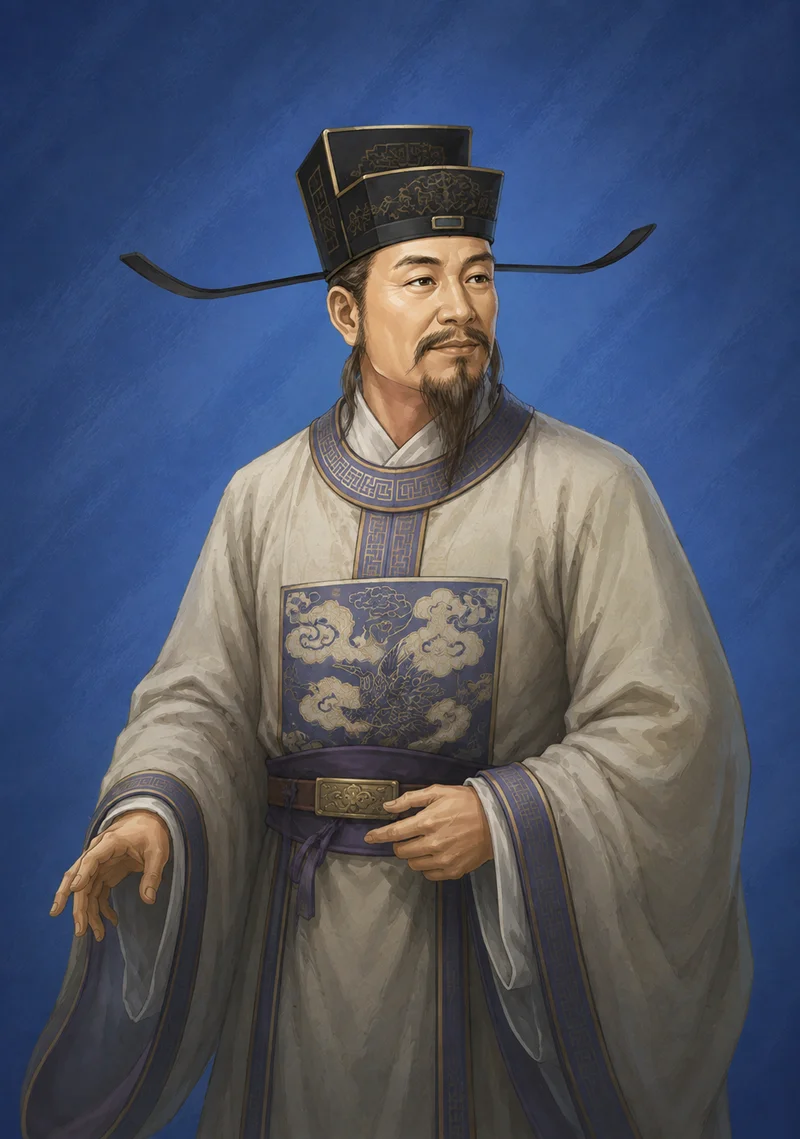
Fu Fu (died 311 AD or post-311 AD) was a high-ranking court official and aristocratic nobleman during the Western Jin dynasty. Hailing from Niyang, Beidi Commandery (present-day Tongchuan, Shaanxi Province), Fu Fu represented the fifth generation of the illustrious Beidi Fu family. He was the great-great-grandson of the Eastern Han martyr Fu Xie, great-grandson of the strategic advisor Fu Gan, grandson of the renowned Jin philosopher Fu Xuan, and the eldest son of Fu Xian, the famous Capital Commandant of Justice.
Following the death of his father Fu Xian in 294 AD, Fu Fu inherited the noble title Marquis of Qingquan (Thanh Tuyền hầu). Leveraging the immense moral prestige and anti-corruption legacy of his father and grandfather, Fu Fu entered civil service and was appointed as Sanqi Shilang (Casual Rider Attendant / Attendant Gentleman of the Dispersed Cavalry), a prestigious imperial advisory position responsible for conveying imperial decrees, assisting the emperor, and providing policy advice.
Fu Fu’s career unfolded during the most catastrophic era of the Western Jin dynasty—the bloody civil turmoil known as the War of the Eight Princes, followed by the catastrophic invasion of the Five Barbarians (Wu Hu). As the Sima princes slaughtered each other for supreme power, imperial control over the capital Luoyang collapsed. Taking advantage of the internal destruction, the Han-Zhao state led by Liu Cong launched a massive invasion into the Central Plains. In 311 AD (the Disaster of Yongjia), Han-Zhao forces breached Luoyang, burned the imperial palace, and massacred tens of thousands of Jin nobles, officials, and civilians. Amidst this unprecedented catastrophe, Fu Fu and his younger brothers Fu Zhi and Fu Chang strove to protect their clan. While his youngest brother Fu Chang remained in the north to uphold his moral integrity (and was eventually coerced into suicide), Fu Fu alongside remnants of his family participated in the historic ‘Yi Guan Nan Du’ (the massive southern migration of Jin aristocracy across the Yangtze River), helping preserve the cultural and political continuity of the Jin state in the south.
Role in Romance of the Three Kingdoms
In Luo Guanzhong’s Romance of the Three Kingdoms, Fu Fu represents the administrative continuity and aristocratic legacy of the late Western Jin period following Chapter 120. As the head of the fifth-generation Beidi Fu clan and heir to the Marquisate of Qingquan, his court presence under the Jin administration reflects the civil leadership that attempted to sustain imperial authority amidst the tragic decline of the Jin dynasty.
Fu Fu (傅敷) — Literary Timeline
Inheriting Title and Imperial Appointment
Succeeds his father Fu Xian as Marquis of Qingquan; appointed as Sanqi Shilang (Attendant Gentleman of the Dispersed Cavalry) in the Western Jin court at Luoyang.
Disaster of Yongjia and Southern Migration
Witnesses the fall of Luoyang to Han-Zhao forces during the Yongjia turmoil; leads surviving family members south across the Yangtze River in the historic ‘Yi Guan Nan Du’ migration.
Key Relationships
Family
- Fu Xie (傅燮, Phó Hiệp): Great-great-grandfather; a famous Eastern Han loyalist martyr who died defending the empire during the Liang Province rebellion.
- Fu Gan (傅干, Phó Cán): Great-grandfather; a senior strategic advisor who served under Cao Cao during the late Han dynasty.
- Fu Xuan (傅玄, Phó Huyền): Grandfather; a renowned Western Jin philosopher, historian, and poet who established the intellectual prestige of the Beidi Fu clan.
- Fu Xian (傅咸, Phó Hàm): Father; the Capital Commandant of Justice known for his fearlessly incorruptible nature, whose noble title Fu Fu inherited in 294 AD.
- Fu Zhi (傅祗, Phó Chi): Younger brother; a Western Jin official who collaborated with Fu Fu to protect their clan during the collapse of Luoyang.
- Fu Chang (傅畅, Phó Sướng): Youngest brother; a scholar who remained in the north following the Disaster of Yongjia and eventually committed suicide to maintain his moral integrity.
Friends
- No information
Enemies
- Liu Cong (刘聪, Lưu Thông): Ruler of the Han-Zhao state whose forces captured and sacked Luoyang in 311 AD, forcing Fu Fu and his family to flee south.
- The Eight Princes (八王, Bát Vương): The Sima imperial princes whose prolonged civil wars (291–306 AD) destroyed the Western Jin’s internal stability and led to the barbarian invasions.
Other
- Sima Zhong (司马衷, Tư Mã Trung): Emperor Hui of Jin; the sovereign under whose reign Fu Fu inherited the title of Marquis of Qingquan following his father’s death.
- Sima Chi (司马炽, Tư Mã Si): Emperor Huai of Jin; the ruler whom Fu Fu served as a Casual Rider Attendant (Sanqi Shilang) during the catastrophic Yongjia era.
In Novel
Fu Fu (傅敷, Phó Phu) does not have a securely verified named appearance in the supplied edition. No chapter is assigned without an exact textual match.
In History
Summary
- Fu Fu (傅敷, Phó Phu) is a minor historical name associated with the Fu family tradition of the late Han and Jin periods.
Historical Record
- The exact identification and career of Fu Fu under 傅敷 are not sufficiently established in the standard sources available for this entry. Details should therefore remain limited rather than being reconstructed from similarly named members of the Fu family.