
Contents
Biography & Historical Record
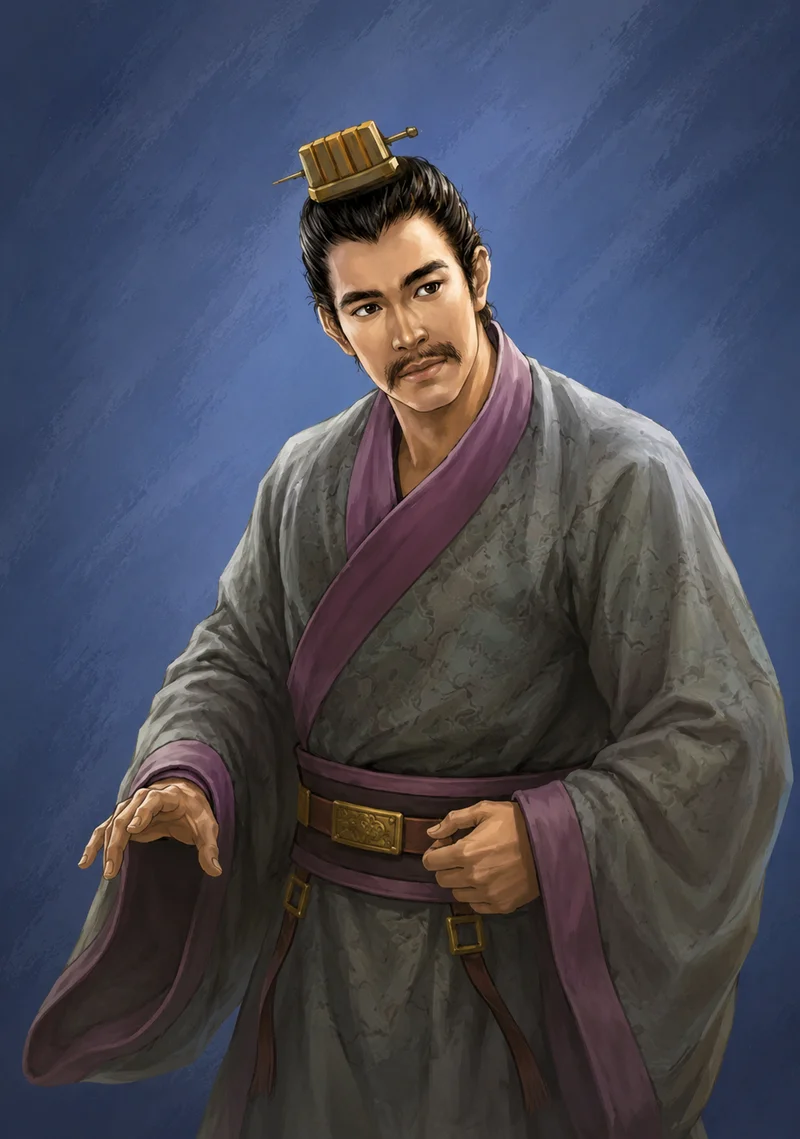
Fu Xie (died 187 AD), courtesy name Rongqi, was an upright Confucian scholar, righteous military commander, and dedicated official who served as a loyal pillar of the Eastern Han dynasty. Hailing from Beidi Commandery (present-day Gansu Province), Fu Xie grew up in the rugged frontier regions, mastering both classical Confucian scriptures and military arts. He was widely celebrated throughout his lifetime for his moral integrity, contempt for political careerism, and deep-seated hatred for the pervasive corruption among court eunuchs.
When the Yellow Turban Rebellion erupted in 184 AD, Fu Xie served as an Army Protector under imperial commanders Lu Zhi, Huangfu Song, and Zhu Jun. Stationed in Yanzhou and Yingchuan, Fu Xie displayed brilliant tactical leadership alongside Huangfu Song. During a fierce battle in Dong Commandery, Fu Xie personally orchestrated a decisive tactical ambush, crushing the rebel army and capturing the Yellow Turban chieftain Bu Si alive alongside several insurgent commanders.
Following his military triumphs against the rebels, Fu Xie was commended for imperial rewards. Driven by unyielding moral conviction, Fu Xie submitted a famous memorial to Emperor Ling, fearlessly denouncing the rampant corruption and tyranny of the Ten Attendants (Ten Eunuchs), identifying their greed as the root cause of widespread peasant uprisings. Although Emperor Ling recognized Fu Xie’s truthfulness, he protected the eunuchs, provoking deep hatred from the Ten Attendants. Seeking to neutralize him, the eunuchs engineered his transfer far from the imperial capital of Luoyang, appointing him as Grand Administrator of Hanyang Commandery in the turbulent frontier of Liang Province.
In 187 AD, local Qiang insurgents allied with regional rebels to lay siege to Hanyang Commandery, surrounding Fu Xie’s garrison. The city was severely undermanned and depleted of food supplies. Among the besieging rebel ranks was Hou Chongcheng, a rebel leader who had previously received great personal kindness from Fu Xie. Reluctant to harm his benefactor, Hou Chongcheng and his troops knelt outside the ramparts, weeping and begging Fu Xie to open the gates and surrender so they could escort him safely home to retire. Fu Xie’s son, Fu Gan, also wept and urged his father to preserve his life. Fu Xie sternly rejected their pleas, declaring: ‘I receive the Emperor’s salary; how could I value life over duty and surrender to rebels?’ Drawing his sword, Fu Xie led his remaining soldiers out through the city gates and charged directly into the enemy lines, fighting valiantly until he was killed in action in 187 AD.
Role in Romance of the Three Kingdoms
In Luo Guanzhong’s Romance of the Three Kingdoms, Fu Xie’s historic integrity is highlighted during the opening campaigns against the Yellow Turban Rebellion in Chapter 1 and Chapter 2. Serving as an imperial officer alongside Huangfu Song and Lu Zhi, Fu Xie helps suppress the widespread insurgent forces across northern China. His unyielding stance against court corruption and his heroic martyrdom at Hanyang serve as a poignant literary representation of the noble yet doomed Han loyalists who fought to preserve the collapsing Eastern Han dynasty.
Fu Xie (傅燮) — Literary Timeline
Yellow Turban Suppression and Defeat of Bu Si
Serves as Army Protector under Huangfu Song; defeats the Yellow Turban forces at Dong Commandery and captures chieftain Bu Si alive.
Memorial Against the Ten Attendants
Submits a courageous memorial to Emperor Ling exposing the corruption of the Ten Eunuchs; reassigned to Hanyang Commandery due to eunuch intrigue.
Siege of Hanyang and Heroic Martyrdom
Defends Hanyang Commandery against Qiang rebels; rejects calls to surrender from Hou Chongcheng and his son Fu Gan, charging out to die in battle.
Key Relationships
Family
- Fu Gan (傅干, Phó Cán) — Son of Fu Xie who survived the siege of Hanyang and later became a prominent official under the Cao Wei regime.
- Fu Xuan (傅玄, Phó Huyền) — Grandson of Fu Xie, known as a distinguished scholar and official during the Western Jin Dynasty.
Friends
- Huangfu Song (皇甫嵩, Hoàng Phủ Tung) — Imperial general and commander under whom Fu Xie served as an Army Protector during the suppression of the Yellow Turban Rebellion in 184 AD.
- Lu Zhi (卢植, Lư Thực) — Senior Han commander and fellow loyalist who fought alongside Fu Xie against the Yellow Turban insurgents.
- Zhu Jun (朱儁, Chu Tuấn) — Imperial commander who served alongside Fu Xie during the military campaigns of 184 AD.
Enemies
- The Ten Attendants (十常侍, Thập Thường Thị) — A group of corrupt court eunuchs who engineered Fu Xie’s transfer to the dangerous Hanyang frontier in retaliation for his memorial against their tyranny.
- Bu Si (卜巳, Bốc Tị) — Yellow Turban chieftain defeated and captured alive by Fu Xie during the battle at Dong Commandery in 184 AD.
- Hou Chongcheng (侯种成, Hầu Chủng Thành) — A rebel leader who besieged Hanyang in 187 AD; despite having received past kindness from Fu Xie, he led the forces that ultimately caused Fu Xie’s death.
Other
- Emperor Ling of Han (汉灵帝, Hán Linh Đế) — The sovereign to whom Fu Xie remained steadfastly loyal, despite his frustration with the corruption allowed at court.
In Novel
Fu Xie (傅燮, Phó Tiệp) does not have a securely verified named appearance in the supplied Vietnamese edition currently used for this project. The historical character is well known, but historical biography alone is not sufficient to create an In Novel timeline, so no chapter is assigned.
In History
Summary
- Fu Xie (傅燮, Phó Hiệp) was a highly respected Eastern Han official and military commander, remembered for defending Hanyang against Han Sui.
Period I — Official Career
- Fu Xie served as an official in the western regions and became known for integrity, administrative ability and loyalty to the Han court.
- During the political and military crisis in Liang Province, he continued to resist rebel forces despite the deteriorating imperial position.
Period II — Defense of Hanyang, 187 AD
- In 187, Han Sui’s forces attacked Hanyang. Fu Xie chose to fight rather than abandon his post.
- He was killed in battle while defending the commandery. His death became an example of loyal service in the late Han tradition.