

Contents
Biography & Historical Record
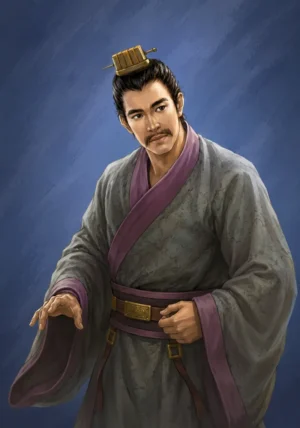
Fu Gan (175–216 AD), courtesy name Yancai and childhood name Biecheng, was a sharp political strategist, military advisor, and senior civil official who served under Cao Cao during the late Eastern Han dynasty. Hailing from Beidi Commandery (present-day Gansu/Shaanxi Province), Fu Gan was the son of Fu Xie, the famously righteous Grand Administrator of Hanyang Commandery who chose martyrdom over surrender during the 187 AD Qiang rebel siege.
In early 187 AD, when Fu Gan was only thirteen years old, the insurgent leader Hou Chongcheng besieged Hanyang. Seeing the rebels weeping outside the city walls and begging his father to surrender so he could return home safely, Fu Gan hugged his father, weeping and pleading with him: ‘The imperial court is hopelessly corrupt with eunuchs holding absolute power. State affairs are beyond salvation, and holding out here serves no purpose. It is better to accept their offer and retreat home until political circumstances change.’ However, Fu Xie sternly rejected his son’s advice, choosing to draw his sword, charge into enemy lines, and die a loyal martyr. Moved by Fu Xie’s extraordinary loyalty and past benevolence, the rebel forces spared young Fu Gan, ensuring his safety and releasing him unharmed.
Upon reaching adulthood, Fu Gan initially joined the staff of Liang Province warlord Ma Teng. As the Three Kingdoms power balance shifted, Fu Gan entered Cao Cao’s service, holding distinguished administrative and advisory roles including Army Inspector (Sanjun), Attendant (Shizhong), and Grand Administrator of Fufeng Commandery. He achieved historical fame through two major strategic contributions recorded in the Records of the Three Kingdoms (Sanguozhi).
In 202 AD, following Cao Cao’s victory at Guandu, Yuan Shang allied with the Southern Xiongnu and general Guo Yuan to assault Hedong. As Ma Teng wavered between supporting Cao Cao or Yuan Shang, Fu Gan delivered a brilliant geopolitical analysis to Ma Teng. He argued that Cao Cao possessed Emperor Xian, represented imperial legitimacy, and demonstrated superior military talent, making his ultimate victory inevitable. He urged Ma Teng to immediately dispatch forces to assist Cao Cao rather than risk destruction through hesitation. Convinced by Fu Gan’s reasoning, Ma Teng sent his eldest son Ma Chao with over 10,000 troops to assist Zhong Yao, decisively crushing Guo Yuan’s army.
In autumn 214 AD, following setbacks at Red Cliffs and Ruxukou, Cao Cao contemplated launching another massive southern campaign against Sun Quan. Fu Gan, serving as Army Inspector, submitted a famous, comprehensive memorial dissuading Cao Cao. He argued that military power relies on authority while statecraft rests on virtue, pointing out that Eastern Wu was protected by the Yangtze River while Shu possessed formidable mountain barriers, making rapid conquest by brute force impossible. He advised Cao Cao to rest his armor, cease military expeditions, foster agriculture, reward merit, and establish schools to win the hearts of the people. Deeply impressed by Fu Gan’s profound strategic vision, Cao Cao praised his memorial and cancelled the planned southern campaign to focus on internal consolidation.
Fu Gan’s son, Fu Xuan, did not pursue a military career but grew to become one of the most prominent philosophers, poets, historians, and political thinkers of the Western Jin Dynasty, leaving behind a vast literary legacy.
Role in Romance of the Three Kingdoms
In Luo Guanzhong’s Romance of the Three Kingdoms, Fu Gan’s background and historical presence tie into the broader strategic governance under Cao Cao’s administration following the northern unification campaigns. His historical legacy as the son of the virtuous martyr Fu Xie and his sharp advisory role in persuading Ma Teng to support Cao Cao against Guo Yuan showcase the intellectual depth of the civil strategists who helped stabilize Wei’s northern foundation.
Fu Gan (傅幹) — Literary Timeline
Siege of Hanyang and Childhood Rescue
Pleads with his father Fu Xie at age thirteen to preserve his life during the rebel siege of Hanyang; spared and released safely by rebels following his father’s martyrdom.
Strategic Advice to Ma Teng
Advises warlord Ma Teng to ally with Cao Cao against Yuan Shang and Guo Yuan, prompting Ma Chao’s deployment to reinforce Zhong Yao at Hedong.
Memorial Against Southern Campaign
Submits a famous memorial to Cao Cao urging him to halt southern military expeditions against Sun Quan and focus on internal governance and agriculture.
For detailed historical records, archives, and official chronicles, explore Fu Gan on Wikipedia.
Key Relationships
Family
- Fu Xie (傅燮, Phó Hiệp): Father. The Grand Administrator of Hanyang who chose martyrdom over surrender during the 187 AD rebel siege; he sternly rejected the thirteen-year-old Fu Gan’s pleas to preserve his life.
- Fu Xuan (傅玄, Phó Huyền): Son. A prominent philosopher, historian, and poet who became a leading intellectual figure during the Western Jin Dynasty.
- Fu Xian (傅咸, Phó Hàm): Grandson. A noted official and writer who served during the Western Jin Dynasty.
Friends
- Ma Teng (马腾, Mã Đằng): Warlord of Liang Province whom Fu Gan served as a strategist; Fu Gan successfully convinced him to support Cao Cao against the Yuan family in 202 AD.
- Ma Chao (马超, Mã Siêu): Son of Ma Teng; he led over 10,000 troops to reinforce the defense of Hedong in 202 AD following Fu Gan’s geopolitical analysis.
- Zhong Yao (钟繇, Chung Diêu): Senior administrator under Cao Cao whose military position at Hedong was secured by the reinforcements Fu Gan persuaded Ma Teng to send.
Enemies
- Guo Yuan (郭援, Quách Viện): General under Yuan Shang whose invasion of Hedong in 202 AD was crushed by the combined forces of Zhong Yao and Ma Chao, an alliance facilitated by Fu Gan’s counsel.
- Hou Chongcheng (侯重成, Hầu Trọng Thành): Rebel leader who besieged Hanyang in 187 AD; though he was responsible for the death of Fu Gan’s father, he spared the young Fu Gan out of respect for Fu Xie’s loyalty.
- Sun Quan (孙权, Tôn Quyền): Warlord of Eastern Wu; Fu Gan authored a famous memorial in 214 AD arguing against a campaign to conquer Sun Quan’s territory, citing the natural defenses of the Yangtze River.
Other
- Cao Cao (曹操, Tào Tháo): Ruler of Wei whom Fu Gan served as Army Inspector and advisor; Cao Cao highly valued his counsel, particularly his 214 AD advice to halt southern expeditions in favor of internal governance.
- Emperor Xian (刘协, Lưu Hiệp): The Han Emperor; Fu Gan cited Cao Cao’s possession of the Emperor as a key reason for Ma Teng to offer his allegiance to the central government in 202 AD.
In Novel
Chapter 66
- Fu Gan (傅干, Phó Cán): Fu Gan serves Cao Cao as a military adviser during the period when Cao Cao is considering a major southern campaign. He submits a memorial urging Cao Cao to stop expanding by force for the moment, strengthen virtue, rest the army and wait for a better opportunity. Cao Cao accepts the advice. Fu Gan’s appearance is therefore significant as a strategic adviser rather than a battlefield commander.
In History
Summary
- Fu Gan (傅幹, Phó Cán) was an Eastern Han scholar-official and the son of Fu Xie.
Period I — Family and Early Life
- Fu Gan was still very young when his father Fu Xie was killed in 187 while defending Hanyang.
- Despite the loss of his father, Fu Gan continued the family’s scholarly and political tradition.
Period II — Political Career
- Fu Gan served during the turbulent final decades of the Eastern Han and was known for his learning and political judgment.
- He was the father of Fu Xuan, who later became a major scholar and official under Wei and Jin.
Historical Record
- Fu Gan was historical. He is preserved in the genealogical and biographical tradition surrounding Fu Xie and Fu Xuan. citeturn0search29