





Contents
Biography & Historical Record
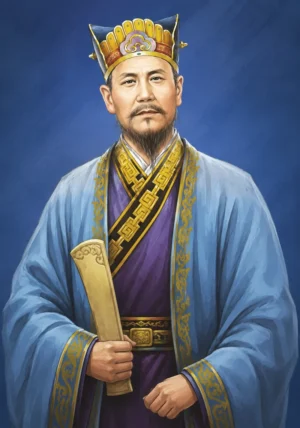
Fu Xian (239–294 AD), courtesy name Changyu and posthumous title Marquis Zhen, was a renowned prose writer, poet, and fearlessly incorruptible imperial inspector during the Western Jin dynasty. Hailing from Niyang, Beidi Commandery (present-day Tongchuan, Shaanxi Province), Fu Xian represented the fourth generation of the distinguished Beidi Fu clan. He was the great-grandson of the Eastern Han martyr Fu Xie, grandson of the strategic advisor Fu Gan, and son of the famous philosopher and historian Fu Xuan. Following his father’s death in 278 AD, Fu Xian inherited the noble title Marquis of Qingquan.
During his official career under Emperor Wu (Sima Yan) and Emperor Hui of Jin, Fu Xian held critical legislative and supervisory posts, including Palace Attendant, Assistant Director of the Left of the Secretariat (Shangshu Zuo Cheng), and Capital Commandant of Justice (Sili Xiaowei), the supreme imperial watchdog post previously held by his father. Known as the ‘fearless official’, Fu Xian tirelessly impeached corrupt aristocrats, powerful imperial relatives, and extravagant ministers who squandered state wealth. Amid the decadent climate of the Western Jin gentry, Fu Xian submitted numerous urgent memorials advocating strict government frugality, agricultural revitalization, and tax relief for peasants exhausted by decades of civil war. He repeatedly warned the imperial court of impending national collapse, predicting the internal chaos that would later manifest as the War of the Eight Princes.
As a prolific literary figure, Fu Xian authored the multi-volume collection Fu Sili Ji (Collection of Capital Commandant Fu). He was a master of Fu poetry, composing acclaimed works such as Gan Jiu Fu (Fu on Remembering the Past), Min Huang Fu (Fu on Lamenting Famine), and Xian Nü Fu (Fu on Virtuous Women). Rather than adhering to empty rhetorical ornament, his writings focused on social realism, moral virtue, and deep concern for the common people. Fu Xian passed away in 294 AD at the age of 55. His sons Fu Fu, Fu Ta, and Fu Shu continued his legacy of public virtue and civil service in the Western Jin administration.
Role in Romance of the Three Kingdoms
In Luo Guanzhong’s Romance of the Three Kingdoms, Fu Xian is featured in Chapter 119 and Chapter 120 as a prominent civil official and high-ranking court scholar during the transition from the late Cao Wei regime to the consolidation of the Western Jin dynasty. Continuing his family’s distinguished heritage of imperial service, Fu Xian’s court presence reflects the civil oversight and administrative stability required to integrate the northern territories under Sima Yan’s reign following the conquest of Shu and Wu.
Fu Xian (傅鹹) — Literary Timeline
Establishment of the Western Jin Court
Enters imperial service under Sima Yan (Emperor Wu of Jin) following the usurpation of Cao Wei, serving as an influential young civil officer in Luoyang.
Inheriting Titles and Senior Inspectorship
Succeeds his father Fu Xuan as Marquis of Qingquan; elevated to Capital Commandant of Justice, fearlessly impeaching corrupt courtiers and powerful nobles.
Death and Posthumous Honoring
Passes away in Luoyang at age 55 prior to the outbreak of the War of the Eight Princes; honored posthumously with the title Marquis Zhen (Marquis of Chastity).
For detailed historical records, archives, and official chronicles, explore Fu Xian on Wikipedia.
Key Relationships
Family
- Fu Xie (傅燮, Phó Hiệp): Great-grandfather; a Han loyalist martyr and Grand Administrator of Hanyang who died in battle during the Liang Province rebellion.
- Fu Gan (傅干, Phó Cán): Grandfather; a strategic advisor to Cao Cao and Grand Administrator of Fufeng.
- Fu Xuan (傅玄, Phó Huyền): Father; a famous philosopher, historian, and Capital Commandant of Justice whose noble title, Marquis of Qingquan, Fu Xian inherited in 278 AD.
- Fu Fu (傅敷, Phó Phu): Eldest son; a Western Jin official who inherited the family prestige and continued the clan’s service in Luoyang.
- Fu Ta (傅祗, Phó Chi): Second son; a prominent Western Jin official who upheld the family’s legacy of administrative service.
- Fu Shu (傅宣, Phó Tuyên): Third son; a scholar and administrator who served during the Western Jin dynasty.
Friends
- Wang Shen (王沈, Vương Thẩm): Senior scholar and family associate connected through the compilation of the Book of Wei and shared administrative circles.
Enemies
- Yang Jun (杨骏, Dương Tuấn): Powerful imperial regent whose monopolization of power and administrative failures were severely criticized and impeached by Fu Xian.
- Corrupt Nobles of Luoyang: Various high-ranking courtiers and imperial clan members whom Fu Xian fearlessly targeted for their extravagance and moral decadence.
Other
- Sima Yan (司马炎, Tư Mã Viêm): Emperor Wu of Jin; he valued Fu Xian’s administrative integrity and appointed him to critical legislative and supervisory posts.
- Sima Zhong (司马衷, Tư Mã Trung): Emperor Hui of Jin; Fu Xian served as a senior imperial watchdog under his reign, repeatedly warning of the impending national collapse.
In Novel
Fu Xian (傅咸, Phó Hàm) does not have a securely verified named appearance in the supplied edition. No chapter is assigned without an exact textual match.
In History
Summary
- Fu Xian (傅咸, Phó Hàm) was a scholar and official of the Western Jin dynasty and the son of Fu Xuan.
Period I — Early Jin Career
- Fu Xian inherited a strong scholarly and political tradition from his father and grandfather.
- He became known for his integrity, direct criticism of corruption and concern for the proper functioning of government.
Period II — Senior Jin Official
- Fu Xian held several offices under Western Jin and became involved in court politics and institutional reform.
- His memorials emphasized frugality, proper administration and the dangers of excessive influence by powerful families.
Historical Record
- Fu Xian was historical. He belonged to the same three-generation scholarly family as Fu Xie and Fu Xuan.