
Contents
Biography & Historical Record
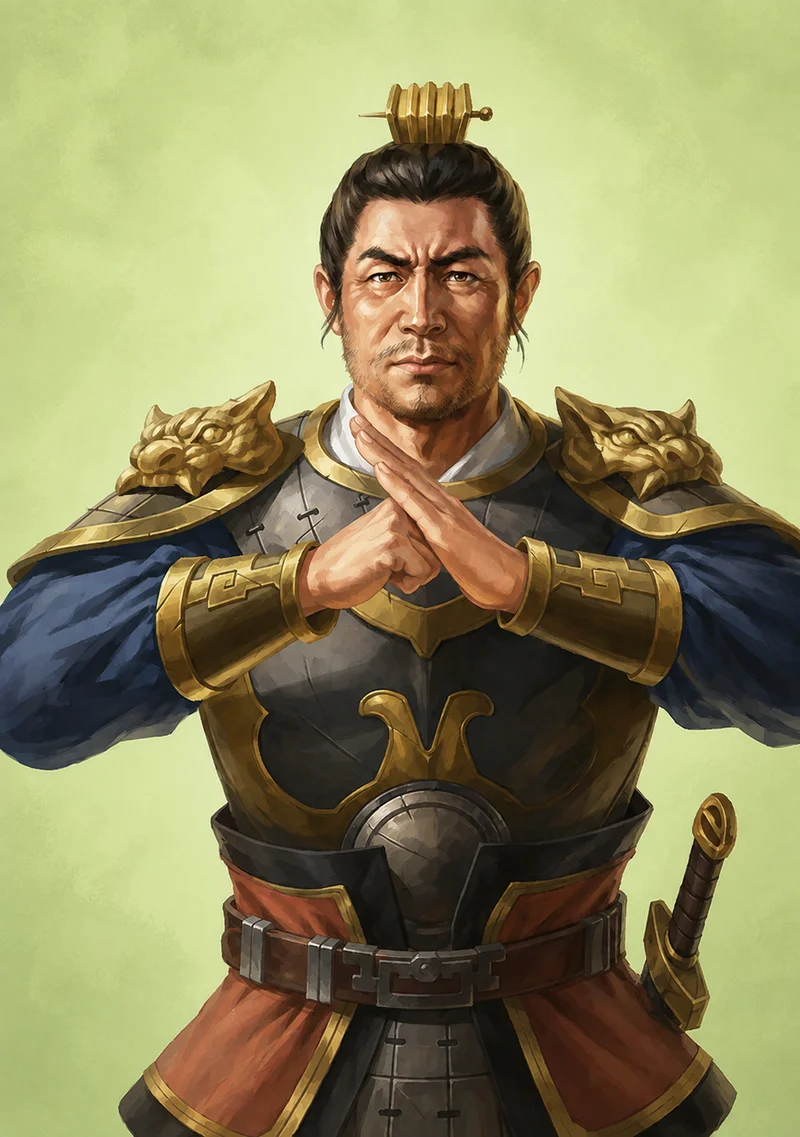
Xu Qiu (courtesy name Mengyu) was a distinguished high-ranking official, unyielding statesman, and accomplished military commander of the Eastern Han dynasty, originating from Guangling Commandery. Celebrated throughout his life for his fierce integrity, incorruptibility, and loyalty to the Hán throne, he held major positions including Inspector of Jing Province, Grand Administrator of Nanyang, Grand Administrator of Donghai, Minister of Justice (Tingwei), Minister of Ceremonies (Taichang), and Grand Excellency of Works (Sikong).
Prior to the outbreak of the Yellow Turban Rebellion in 184 AD, when Xu Qiu was designated to take office as Inspector of Jing Province, Empress Dowager Dong dispatched an imperial eunuch to personally demand that Xu Qiu show special favor and protection to her nephew Zhang Zhao. Zhang Zhao, serving as a regional official, had abused his imperial connections to embezzle vast sums of money from the populace. Unawed by royal pressure, Xu Qiu famously declared to the eunuch: ‘Thần thân vi quốc, bất cảm văn mệnh’ (Serving as an official of the state, I strictly uphold public law and dare not heed private commands). Upon assuming his regional posting, Xu Qiu immediately impeached Zhang Zhao for corruption, forcing the furious Empress Dowager Dong to hastily transfer her nephew elsewhere.
In the first month of 184 AD, the Yellow Turban Rebellion erupted, shaking the Han empire. The Yellow Turban chief Zhang Mancheng invaded Nanyang Commandery, captured the strategic provincial capital of Wancheng, and killed Grand Administrator Chu Gong. In response, the Hán imperial court dispatched Xu Qiu as Inspector of Jing Province to restore order. Xu Qiu gathered provincial forces and coordinated with the newly appointed Grand Administrator of Nanyang, Qin Jie. In the sixth month of 184 AD, the joint forces of Xu Qiu and Qin Jie launched a fierce counter-offensive, shattering the Yellow Turban army and personally decapitating Zhang Mancheng. Xu Qiu subsequently collaborated with Imperial General Zhu Jun to defeat the successor rebel leaders Zhao Hong and Han Zhong, fully pacifying the region.
Following his military triumphs in 184 AD, Xu Qiu was promoted to Grand Administrator of Runan and later Grand Administrator of Donghai. In every region he governed, he implemented righteous policies, eradicated systemic corruption, and earned the deep affection and respect of the common people. When Dong Zhuo seized control of the imperial capital and threw the realm into chaos, Xu Qiu aligned himself with local governors led by Tao Qian, co-signing joint memorials to the imperial court against Li Jue and Guo Si in Chang’an in a valiant effort to rescue Emperor Xian of Han.
In 197 AD (second year of Jian’an), the imperial court summoned Xu Qiu to Xuchang to serve as Minister of Justice (Tingwei). While travelling to the capital, his party was intercepted in Huainan by the warlord Yuan Shu. Admiring Xu Qiu’s immense public prestige and talent, Yuan Shu attempted to coerce him into joining his illegitimate regime, offering him the title of High Duke. Xu Qiu adamantly refused. When Yuan Shu threatened him with execution, Xu Qiu looked up to the heavens and declared: ‘Cung Thắng, Bào Tuyên, độc hà nhân tai? Hựu chi tất tử!’ (Spirited loyalists of old like Gong Sheng and Bao Xuan chose death over dishonor; am I any less than they? Upholding my loyalty, I accept death willingly!). Struck with awe by his resolute integrity, Yuan Shu dared not harm him and kept him under house arrest.
In 199 AD (fourth year of Jian’an), Yuan Shu met his demise after his imperial ambitions failed. Amid the collapse of Yuan Shu’s army, Yuan Shu’s nephew Yuan Yin attempted to flee to Lujiang with Yuan Shu’s coffin, family, and the coveted Imperial Heirloom Seal. Xu Qiu led a force that intercepted and destroyed Yuan Yin’s party, successfully recovering the Imperial Heirloom Seal. Safeguarded alongside the regional seals of Runan and Donghai, Xu Qiu braved perilous roads to travel to Xuchang and present the Imperial Seal directly to Emperor Xian of Han. Moved by his steadfast loyalty, Emperor Xian appointed him Minister of Ceremonies (Taichang) and subsequently elevated him to Grand Excellency of Works (Sikong), one of the Three Excellencies. When Cao Cao assumed the title of Imperial Chancellor, he held such profound respect for Xu Qiu’s character and erudition that he offered to yield the Chancellorship to him, but Xu Qiu modestly declined. He passed away peacefully while holding high imperial office.
Role in Romance of the Three Kingdoms
In Luo Guanzhong’s classic novel Romance of the Three Kingdoms, Xu Qiu appears in a pivotal scene during the downfall of the usurper Yuan Shu. Following Yuan Shu’s death in Huainan, his nephew Yuan Yin escorted his coffin, family, and the Imperial Heirloom Seal toward Lujiang Commandery. Xu Qiu launched a decisive surprise attack on Yuan Yin’s fleeing convoy, completely wiping out the group and securing the priceless Imperial Seal. Riding post-haste to the capital city of Xuchang, Xu Qiu presented the Imperial Heirloom Seal to Cao Cao. Delighted by the recovery of the imperial treasure, Cao Cao rewarded Xu Qiu by appointing him Grand Administrator of Gaoling, thereby formally cementing Cao Cao’s political possession of the Imperial Seal.
Xu Qiu (徐璆) — Literary & Historical Timeline
184 AD — Historical Record
Appointment and Impeachment of Zhang Zhao
Appointed Inspector of Jing Province; rejects pressure from Empress Dowager Dong to shield her corrupt nephew Zhang Zhao, declaring ‘Thần thân vi quốc, bất cảm văn mệnh’ and immediately impeaching Zhang Zhao.
184 AD — Historical Record
Pacification of Yellow Turban Rebellion in Nanyang
Coordinates with Grand Administrator Qin Jie to defeat Zhang Mancheng and behead him in battle; subsequently assists Imperial General Zhu Jun in destroying rebel remnants under Zhao Hong and Han Zhong.
197 AD — Historical Record
Interception by Yuan Shu and Defiance of Usurpation
Summoned to serve as Minister of Justice (Tingwei) but captured by Yuan Shu; refuses Yuan Shu’s offer of high office and defies death, declaring ‘Cung Thắng, Bào Tuyên, độc hà nhân tai? Hựu chi tất tử!’.
199 AD
Interception of Yuan Yin and Recovery of Imperial Seal
Intercepts and destroys Yuan Yin’s fleeing convoy in Lujiang; recovers the Imperial Heirloom Seal and rides to Xuchang to present it to Cao Cao, receiving appointment as Grand Administrator of Gaoling.
199 AD — Historical Record
Presentation of Seal to Emperor Xian and High Office
Presents the Imperial Seal to Emperor Xian, answering Minister Zhao Wen’s query with the famous quote ‘Tích Tô Vũ lưu hung nô, bất bốc hán tiết. Huống thử ngọc tỷ quốc bảo tai?’; appointed Minister of Ceremonies and later Grand Excellency of Works (Sikong).
Key Relationships
- Family:
- ? — Unknown family lineage.
- Comrades / Allies:
- Qin Jie — Grand Administrator of Nanyang who co-commanded the army that defeated Zhang Mancheng.
- Zhu Jun — Imperial Right General who coordinated with Xu Qiu to suppress the Yellow Turbans at Wancheng.
- Tao Qian — Governor of Xu Province who led regional officials including Xu Qiu in submitting joint memorials against Li Jue and Guo Si.
- Emperor Xian of Han — Han monarch to whom Xu Qiu remained fiercely loyal, returning the Imperial Seal to his court.
- Cao Cao — Imperial Chancellor who received the Imperial Seal from Xu Qiu in Chapter 21 and appointed him Grand Administrator of Gaoling.
- Zhao Wen — Minister over the Masses (Sidu) who praised Xu Qiu’s dedication in preserving the Imperial Seal.
- Enemies / Opponents:
- Zhang Mancheng — Yellow Turban rebel leader slain in battle by Xu Qiu and Qin Jie’s forces.
- Yuan Shu — Self-proclaimed Emperor of Cheng who captured Xu Qiu and attempted to force his submission.
- Yuan Yin — Nephew of Yuan Shu slain by Xu Qiu’s forces while attempting to escape with the Imperial Seal.
- Zhang Zhao — Corrupt official and nephew of Empress Dowager Dong impeached by Xu Qiu.
- Empress Dowager Dong — Mother of Emperor Ling who attempted to pressure Xu Qiu into protecting her corrupt relative.
For detailed historical records, archives, and official chronicles, explore Xu Qiu on Wikipedia.
In Novel
Chapter 21
- Xu Qiu (徐璆, Xú Qiú): After Yuan Shu dies in desperation, his cousin Yuan Yin takes Yuan Shu’s coffin, family members and remaining followers toward Lujiang. Xu Qiu intercepts them and kills the group. He takes the Imperial Jade Seal from Yuan Shu’s possessions and carries it to Xuchang to present to Cao Cao. Cao Cao is delighted and appoints Xu Qiu as Governor of Gaoling. This episode is the decisive moment in which the seal passes from Yuan Shu’s faction to Cao Cao.
In History
Summary
- Xu Qiu (徐璆, Từ Cầu) was a historical Eastern Han official known for his integrity and administrative service.
Period I — Provincial Administration
- Xu Qiu held provincial and central offices during the late Eastern Han and became known for resisting corruption.
- His career unfolded amid the increasingly difficult political environment created by eunuch influence and competing regional interests.
Period II — Late Han Crisis
- Xu Qiu continued to serve the Han government through the period of warlord conflict.
- He is remembered in the historical tradition as an official whose conduct contrasted with the corruption prevalent in parts of the late Han bureaucracy.
Historical Record
- Xu Qiu was historical. His surviving biography belongs to the official and administrative history of the Eastern Han.