


Contents
Biography & Historical Record
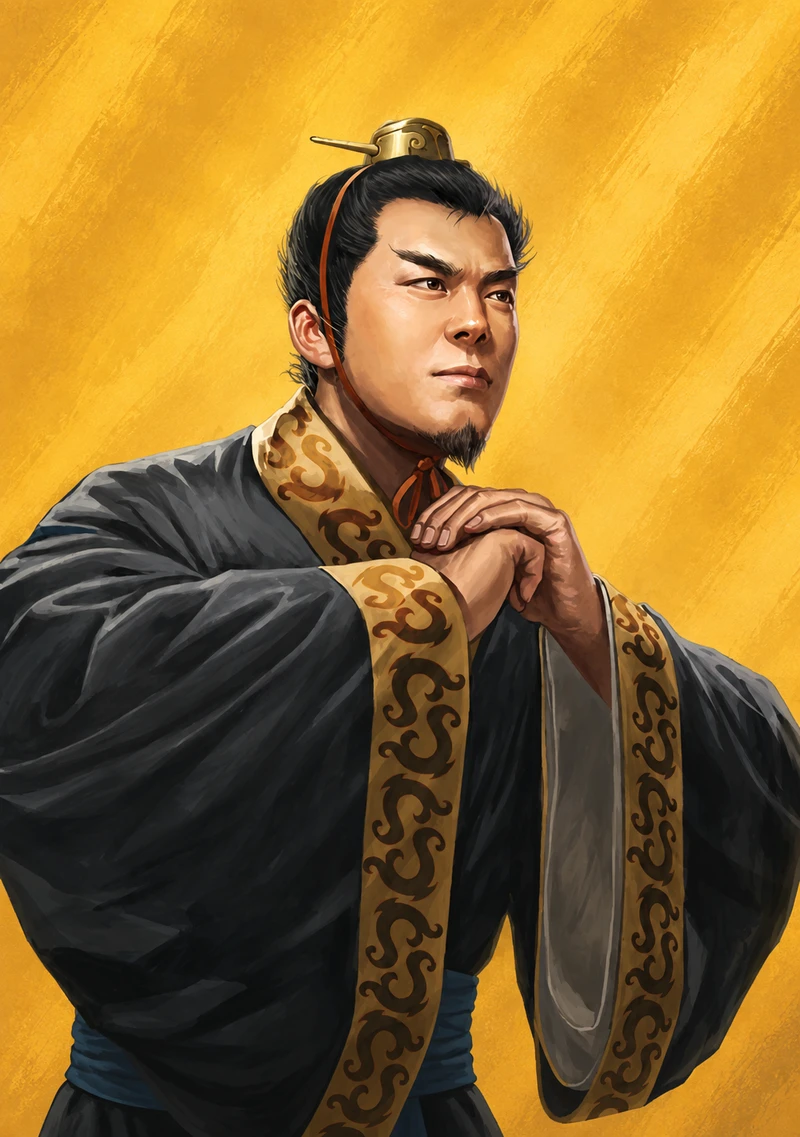
Luo Tong, courtesy name Gongxu, was an exceptionally gifted civil statesman, military commander, and incorruptible remonstrator of the Eastern Wu state during the late Eastern Han dynasty and Three Kingdoms period. Born in 193 AD in Wushang within Kuaiji Commandery (modern Yiwu, Zhejiang), Luo Tong was the son of Luo Jun, the respected Chancellor of Chen who was assassinated by Yuan Shu. Endowed with profound intellect, immense personal benevolence, and fearless rhetorical courage, Luo Tong entered public service under Sun Quan in his youth, quickly rising to hold prestigious military and civil positions including General of the Outspreading Martial Power (Pian Jiangjun), Area Commander of Ruxu, and Marquis of Xinting (Xinting Hou). Documented in Chen Shou’s official dynastic history Records of the Three Kingdoms (Sanguozhi – Book of Wu, Biography of Luo Tong) and Sima Guang’s Zizhi Tongjian, Luo Tong was celebrated as one of the most outspoken and morally conscientious ministers in Eastern Wu history, dedicating his life to alleviating public suffering, reforming penal codes, and restraining Sun Quan’s impulsive tendencies.
When Luo Tong was young, his mother Lady Hua remarried the prominent official Hua Xin, but Luo Tong remained filial, supporting his kin and distributing his private grain stores to impoverished relatives and starving commoners during regional famines. At the age of twenty, he was appointed Chief of Wucheng, where his enlightened and benevolent governance earned widespread acclaim. Sun Quan summoned him to the central administration, appointing him as a Merit Officer (Gongcao) and Cavalry Commandant. Throughout his court service, Luo Tong repeatedly submitted lengthy, brilliantly argued memorials urging Sun Quan to lower agricultural taxes, curtail exhaustive corvée labor, show mercy to displaced commoners, and foster administrative transparency. Deeply moved by the moral clarity of his counsel, Sun Quan consistently praised Luo Tong’s memorials, adopting many of his proposed administrative reforms.
Beyond his administrative brilliance, Luo Tong was a skilled military strategist. In 222 AD, during the monumental Battle of Yiling against Liu Bei’s massive Shu Han invasion, Luo Tong served as a frontline commander under Grand Commander Lu Xun. Leading his detachments with precision, Luo Tong participated in the coordinated fire attacks and strategic encirclement along the Yangtze river gorges, capturing enemy stockades and cutting off Shu supply routes. Following the victory at Yiling, Cao Wei launched a three-pronged invasion against Eastern Wu in late 222 and 223 AD. Stationed at the critical fortress of Ruxu under the supreme command of Zhu Huan, Luo Tong defended the fortifications against Cao Ren’s elite assault army of tens of thousands. When Cao Ren dispatched his son Cao Tai to launch a furious assault on the濡须 citadel and sent Chang Diao across the river, Luo Tong and Zhu Huan coordinated a fierce counter-assault, routing Cao Ren’s vanguard, slaying Chang Diao, capturing thousands of enemy soldiers, and forcing the Wei armies into total retreat. For his extraordinary military valor, Luo Tong was ennobled as the Marquis of Xinting. Historically, he passed away of illness in office in 228 AD at the prime of his life, leaving Sun Quan and the entire Wu court in profound mourning for the premature loss of an irreplaceable pillar of state.
Role in Romance of the Three Kingdoms
In Chapters 82, 83, and 84 of Luo Guanzhong’s classic 14th-century historical novel Romance of the Three Kingdoms, Luo Tong is portrayed as an insightful, resolute, and loyal court minister and field commander whose sharp intellect guides Eastern Wu through foreign diplomatic perils and frontline crises during the Battle of Yiling.
In Chapter 82, following the loss of Jing Province and the execution of Guan Yu, Liu Bei mobilizes the entire military might of Shu Han to march east. When Cao Pi dispatches envoys demanding that Sun Quan send his eldest son Sun Deng to Luoyang as a hostage in exchange for an alliance and a princely title, the Wu court falls into intense debate. Luo Tong steps forward alongside senior statesmen, vigorously arguing against submitting to Cao Wei or sending the heir apparent as a hostage, advising Sun Quan to accept the titular enfeoffment while maintaining complete military vigilance along the northern border.
In Chapter 83 and Chapter 84, as Liu Bei’s forces sweep through the river gorges and establish dozens of interconnected wooden stockades stretching over seven hundred li, Luo Tong is appointed to Lu Xun’s grand military staff alongside experienced commanders such as Zhu Huan, Han Dang, and Zhou Tai. When the senior veteran generals initially express skepticism and disdain toward the youthful scholar Lu Xun, Luo Tong maintains strict military discipline and supports Lu Xun’s patient defensive strategy. During the decisive nocturnal counter-offensive, Luo Tong leads his detachment into the fray, setting fire to Liu Bei’s camps, routing the enemy vanguards, and securing key river crossings that shatter Shu Han’s imperial army. Luo Guanzhong highlights Luo Tong as an exemplary representative of the younger generation of Wu luminaries whose combined civil wisdom and battlefield courage preserved the independence of the southern kingdom.
Luo Tong (駱統) — Historical & Literary Timeline
Benevolent Governance & Court Remonstrances
Serves as Chief of Wucheng and Merit Officer under Sun Quan; distributes private wealth to starving citizens and submits famous memorials reforming penal laws and reducing labor burdens.
Opposing Hostage Concessions to Wei & Smashing Shu Forces
Advises Sun Quan against sending the crown prince as hostage to Wei; serves under Lu Xun at Yiling, executing fire attacks that destroy Liu Bei’s seven-hundred-li encampments.
Repelling Cao Ren & Ennoblement as Marquis of Xinting
Assists Zhu Huan in defending Ruxu against Cao Ren’s grand northern invasion; routes the Wei vanguard, slays Chang Diao, and is ennobled as Marquis of Xinting.
Untimely Death & Enduring Legacy
Passes away of illness in office at the young age of thirty-six; deeply mourned by Sun Quan and the Eastern Wu court for his immense integrity and administrative brilliance.
For detailed historical records, archives, and official chronicles, explore Luo Tong on Wikipedia.
Key Relationships
Family
- Luo Jun (骆俊, Lạc Tuấn): Father. Esteemed Chancellor of Chen in the late Han dynasty who fiercely resisted the warlord Yuan Shu and was tragically assassinated by Yuan Shu’s assassin Zhang Kai (197 AD).
- Lady Hua (华氏, Hoa Thị): Mother. Virtuous noblewoman who raised Luo Tong and later remarried the prominent statesman Hua Xin.
- Hua Xin (华歆, Hoa Hâm): Stepfather. Prominent scholar, statesman, and later Grand Tutor of Cao Wei whom Lady Hua remarried.
- Luo Xiu (骆秀, Lạc Tú): Son. Military officer of Eastern Wu who inherited Luo Tong’s noble title of Marquis of Xinting and continued the family line.
Friends
- Sun Quan (孙权, Tôn Quyền): Founding Emperor of Eastern Wu. Sovereign who held immense respect for Luo Tong’s upright integrity and strategic wisdom, appointing him Area Commander of Ruxu despite Luo Tong’s frequent and fearless remonstrances.
- Lu Xun (陆逊, Lục Tốn): Grand Commander (Da Dudu) of Eastern Wu. Supreme commander under whom Luo Tong served as a key vanguard commander, achieving a crushing victory over Liu Bei’s army at the Battle of Yiling (222 AD).
- Zhu Huan (朱桓, Chu Hoàn): Senior general of Eastern Wu. Co-commanded the fortified garrison at the Battle of Ruxu (222–223 AD), successfully crushing Cao Ren’s multi-pronged invasion.
- Gu Yong (顾雍, Cố Ung): Grand Chancellor of Eastern Wu. Highly praised Luo Tong’s moral rectitude, administrative talent, and constructive counsel at court.
- Lu Ji (陆绩, Lục Tích): Eminent scholar and statesman of Wu. Close contemporary and literary companion who shared high mutual respect with Luo Tong.
Enemies
- Yuan Shu (袁术, Viên Thuật): Warlord of the late Han dynasty. Orchestrated the treacherous assassination of Luo Tong’s father Luo Jun in Chen Commandery (197 AD) after being denied grain supplies.
- Liu Bei (刘备, Lưu Bị): Founding Emperor of Shu Han. Launched the massive western invasion against Eastern Wu in 221–222 AD; his forces were decisively defeated and routed at Yiling by Lu Xun and Luo Tong.
- Cao Ren (曹仁, Tào Nhân): Senior Grand General of Cao Wei. Led a massive offensive of tens of thousands of troops against Ruxu (222–223 AD), where his army was thoroughly routed by Luo Tong and Zhu Huan.
- Cao Tai (曹泰, Tào Thái): Wei general (son of Cao Ren). Launched direct assaults against the Ruxu fortifications (222–223 AD) and was soundly repulsed by Luo Tong’s disciplined counterattack.
- Chang Diao (常雕, Thường Điêu): Wei vanguard naval officer. Attempted an amphibious surprise raid on Zhongzhou island during the Ruxu campaign (223 AD) but was intercepted, defeated, and slain.
Others
- No information
In Novel
Chapter 67
- Luo Tong (骆统, Lạc Thống): Luo Tong serves Wu and is presented as a capable young official. He participates in the administration of Wu and is entrusted with responsibilities during Sun Quan’s rule. His appearances emphasize his ability as a civil and military official rather than a single famous duel.
Chapter 83
- Luo Tong (骆统, Lạc Thống): Luo Tong is involved in the Wu military response to Liu Bei’s invasion after Yiling. He serves among the officers supporting Lu Xun and helps maintain Wu’s defensive position during the campaign.
History
- Luo Tong (骆统, Lạc Thống), courtesy name Gongxu, was an official and scholar of Eastern Wu.
- He was known for his learning and for submitting memorials on political and administrative matters.
- Luo Tong served under Sun Quan and was involved in military and civil affairs.
- He advocated policies intended to strengthen the state and improve the welfare of the population.
- He died relatively young, ending a career that had earned him a reputation for ability and integrity.
Classification
- Historical.