

Contents
The Historical Career of Bi Gui
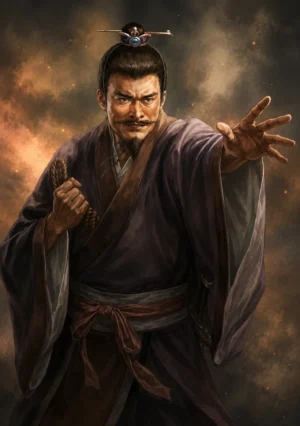
Bi Gui (died 249 AD) was a prominent court official of the Cao Wei state during China’s turbulent Three Kingdoms era. Descended from Bi Chen—a celebrated Han Dynasty scholar whose filial loyalty had earned high praise from warlord Cao Cao—he grew up well-connected among the empire’s aristocratic elite. He initially served during the reign of Emperor Cao Rui. However, Emperor Ming harbored a strong dislike for ostentatious literary cliques (fuhua zhi tu) and temporarily dismissed him from civil office to discourage vanity among young courtiers.
Following the ascension of the juvenile Emperor Cao Fang, regent Cao Shuang assumed paramount authority and recalled his longtime associate to imperial service. During this transformative administration, Bi Gui served as the Inspector of Jingzhou and later advanced to the prestigious post of Director of the Imperial Secretariat (Shangshu Ling). Together with reformist thinkers such as He Yan, Ding Mi, and Deng Yang, he formed the intellectual and administrative backbone of the central government, spearheading institutional policies.
The Gaoping Tombs Coup and Downfall
In early 249 AD, veteran statesman Sima Yi staged a dramatic military coup known as the Incident at Gaoping Tombs. Capitalizing on the regent’s absence from Luoyang, Sima Yi seized control of the armories and imperial palace. Accused of treason, corruption, and subverting dynastic stability, the minister was captured and subsequently executed alongside his entire lineage to the third degree.
Role in Romance of the Three Kingdoms
In Luo Guanzhong’s historical epic Romance of the Three Kingdoms, the official is portrayed as an arrogant yet incompetent member of Cao Shuang’s ruling clique. His inability to anticipate Sima Yi’s deception serves as a narrative cautionary tale regarding factionalism and political complacency.
Key Historical Relationships
- Cao Shuang: Regent of Wei and primary political patron who elevated his faction to supreme executive power.
- He Yan & Deng Yang: Senior ministers, Xuanxue philosophers, and close allies within the central cabinet.
- Sima Yi: Grand Commander who feigned severe illness before orchestrating the brutal liquidation of Bi Gui and his clan.
- Cao Rui: Second emperor of Wei who disciplined vain courtiers to discourage superficial political factions.
In Novel
Chapter 106
- Bi Gui (毕轨, Tất Quỹ): Bi Gui is identified as one of Cao Shuang’s principal political supporters. After Cao Rui’s death, he holds high office and becomes part of the faction that shares control of Wei with Cao Shuang. His political position places him directly in opposition to Sima Yi as the regency becomes increasingly divided.
Chapter 107
- Bi Gui (毕轨, Tất Quỹ): When Sima Yi launches the coup at Gaoping Tombs, Bi Gui is with Cao Shuang, Cao Xi, Cao Xun, He Yan, Deng Yang, Ding Mi and Li Sheng. Sima Yi seizes Luoyang and forces Cao Shuang’s faction to surrender. Bi Gui is arrested, convicted with the other members of Cao Shuang’s faction, and executed; his family is also punished. His death is one of the decisive steps in Sima Yi’s seizure of effective control over Wei.
In History
Early Career
- Bi Gui (毕轨, Tất Quỹ), courtesy name Zhaoxian, was a Cao Wei official from Dongping. He rose through court service and became closely associated with the Cao Shuang faction.
239 AD
- After Cao Rui (曹叡, Tào Duệ) died, the young Cao Fang (曹芳, Tào Phương) became emperor. Bi Gui became one of the officials supporting Cao Shuang, who shared regency with Sima Yi (司马懿, Tư Mã Ý).
249 AD
- During the Gaoping Tombs coup, Sima Yi seized control of the capital while Cao Shuang and his supporters were away. Bi Gui was arrested as one of Cao Shuang’s principal allies.
249 AD
- Bi Gui was executed together with Cao Shuang and other members of the faction. His fall illustrates the destruction of the Cao Shuang regency and the decisive rise of the Sima clan.