


Contents
The Life and Legacy of Bao Xun
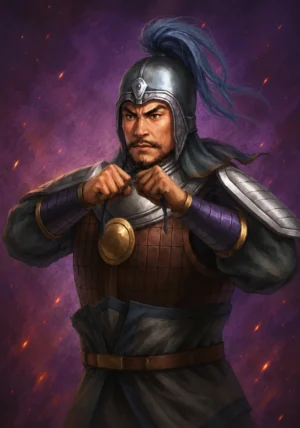
Bao Xun (died 226 AD), courtesy name Shuye, was a high-ranking minister of state in Cao Wei during the turbulent Three Kingdoms period. Renowned across the realm for his unyielding integrity and adherence to justice, he consistently prioritized the rule of law over personal safety, political patronage, and royal favor. As the son of Bao Xin—a heroic warlord who died defending Cao Cao—he earned great respect at court and served as a Gentleman of the Imperial Secretariat.
Despite facing immense pressure from the imperial court, Bao Xun remained steadfast in his legal duties. His most famous historical confrontation arose when a retainer of the imperial uncle Cao Hong committed severe legal offenses. While Emperor Cao Pi intervened and demanded imperial clemency, the principled magistrate refused to bend statutory laws for the aristocracy. This incorruptibility sparked deep personal resentment from the throne.
Role in Romance of the Three Kingdoms
In historical fiction and lore, he is portrayed as a quintessential loyalist who upheld administrative law above royal favoritism, serving as a powerful foil to imperial authoritarianism.
Historical Timeline
Tragic Execution
In 226 AD, Emperor Cao Pi ordered the execution of Bao Xun on fabricated pretexts, defying desperate appeals from senior ministers just weeks before the sovereign’s own death.
Key Relationships
Family
- Bao Xin: Father. Chancellor of Jibei who sacrificed his life to save Cao Cao during the Battle of Yan Province.
- Bao Tao: Paternal uncle who fell heroically at the Battle of Xingyang.
- Bao Shao: Elder brother who inherited their father’s noble peerage.
Court Allies & Adversaries
- Cao Cao: Imperial Chancellor who honored his family’s sacrifices with noble appointments and patronage.
- Zhong Yao & Hua Xin: Senior statesmen who courageously knelt and petitioned to preserve the righteous official’s life.
- Cao Pi: Wei Emperor who executed him over long-held personal grievances and bold court remonstrances.
- Cao Hong: Senior general whose corrupt household sparked intense legal disputes.
In Novel
Bao Xun (鲍勋, Bào Huân) does not have a securely verified named appearance under the exact Chinese name 鲍勋 in the supplied novel text. Although he is an important historical Wei official, historical biography is not sufficient to create an In Novel timeline.
In History
Early Career
- Bao Xun (鲍勋, Bào Huân) was the son of Bao Xin (鲍信, Bào Tín), an early supporter of Cao Cao (曹操, Tào Tháo). He inherited his father’s reputation for integrity and entered Cao Cao’s administration.
Wei Service
- Under Cao Pi (曹丕, Tào Phi), Bao Xun became an official known for frank remonstrance. He repeatedly criticized policies and military decisions when he believed they harmed the state.
226–227 AD
- Bao Xun opposed Cao Pi’s proposed campaigns and was not afraid to challenge senior officials. His insistence on legal and administrative standards made him increasingly unpopular with powerful figures at court.
226–230 AD
- He continued to serve under Cao Rui (曹叡, Tào Duệ). His uncompromising character brought repeated accusations and punishments, although several officials defended him.
230 AD
- Bao Xun was ultimately condemned after a dispute involving a military matter and was executed. His death became a famous example in Wei history of an official whose strict adherence to principle brought him into conflict with the imperial court.