
Contents
Biography & Historical Record
Xu Gan, courtesy name Weichang, was a celebrated Eastern Han dynasty political philosopher, poet, calligrapher, and high-ranking secretarial advisor serving the warlord and Han Chancellor Cao Cao and his heir Cao Pi. Hailing from Ji County in Beihai Commandery (modern-day Changle County, Shandong Province), Xu Gan was a fellow countryman and intellectual intimate of the grand Confucian master Zheng Xuan. Acclaimed across China as one of the Seven Scholars of Jian’an (Jian’an Qizi), Xu Gan was universally revered as the hermit philosopher of the group, a man whose serene, unpretentious, and stoic lifestyle stood in stark contrast to the turbulent civil wars of his era. Documented in Chen Shou’s Records of the Three Kingdoms (Sanguozhi – Book of Wei, Biography of Wang Can) and Fan Ye’s Book of Later Han (Hou Han Shu), Xu Gan lived a life dedicated to moral self-cultivation, ethical philosophy, and humanistic poetry, leaving behind his immortal magnum opus Zhonglun (Discourses on the Middle Way) as a guiding beacon of governance for generations.
During his youth in the 190s AD, as northern China was engulfed in the devastation of the Yellow Turban Rebellion and the tyranny of Dong Zhuo, Xu Gan chose the path of a recluse scholar. Despising political intrigue, warlord vanity, and moral corruption, he repeatedly rejected official invitations from regional military warlords. Living in a secluded thatched cottage, he endured extreme poverty, subsisting on wild herbs and wearing coarse, tattered robes. Yet he remained completely unfazed, deriving supreme spiritual joy from studying classical philosophy, mastering ancient texts, and pondering the root causes of societal collapse. Following Cao Cao’s pacification of Ji Province and the northern frontier, Cao Cao issued a special imperial summons in 205 AD to invite the famous hermit scholar to Ye. Recognizing Cao Cao as a capable leader dedicated to restoring order, Xu Gan accepted appointment as a secretarial officer in the Chancellor’s Secretariat and was later appointed as a Literary Officer (Wenbiao) in the household of Cao Pi.
At the court of Ye, while his peers engaged in heated political debates and martial poetry, Xu Gan poured his life energy into writing his philosophical treatise Zhonglun (Discourses on the Middle Way), comprising twenty essays. Blending classical Confucian ethics with practical statecraft, Zhonglun offered a sharp critique of contemporary hypocrisy, vanity, and political deceit, establishing rigorous standards for moral self-cultivation, administrative meritocracy, and benevolent royal governance necessary to revitalize a ruined nation. Upon reading the completed manuscript of Zhonglun, Cao Pi was astounded by its intellectual depth, writing a lavish praise stating that Xu Gan’s prose soared like the clouds, possessing an immortal philosophy comparable to the ancient sages. Cao Pi treasured the work so deeply that he later used his own personal funds to publish and distribute copies across the entire empire, gifting it to senior ministers so that Xu Gan’s wisdom would endure forever.
Beyond his philosophical accomplishments, Xu Gan was an exceptionally gifted realistic poet whose verse possessed delicate emotional depth and profound humanistic compassion. His famous work Shi Ai Shi (Lament in the Bedchamber), compiled in Xu Weichang Ji, depicted the silent grief and longing of a lonely wife awaiting her husband dispatched to distant military campaigns, subtly mourning the tragic human toll of endemic war. In the twenty-second year of Jian’an (217 AD), a catastrophic plague swept across northern China. Xu Gan, alongside fellow Seven Scholars of Jian’an members Chen Lin, Wang Can, Liu Zhen, and Ying Chang, contracted the contagion and died in the same tragic year at forty-six years of age. His death left Cao Pi in profound, lifelong grief, solidifying Xu Gan’s historical legacy as an immortal scholar-philosopher whose prose brought moral clarity to a chaotic world.
Role in Romance of the Three Kingdoms
In Luo Guanzhong’s classic historical novel Romance of the Three Kingdoms, Xu Gan is featured as a revered member of the Seven Scholars of Jian’an serving as a trusted secretarial advisor and literary officer in Cao Cao’s imperial administration at Ye. Renowned for his recluse virtue, profound philosophical wisdom, and serene poetic style, Xu Gan appears alongside Chen Lin, Wang Can, Liu Zhen, and Ying Chang, representing the elite intellectual advisors whose cultural authority and moral weight elevated the Cao family’s court. While the novel focuses heavily on grand military campaigns and political struggles, Xu Gan’s presence highlights the sophisticated civil administration, philosophical flowering, and cultural depth that underpinned the rise of the Cao Wei state.
Xu Gan (徐幹) — Historical & Literary Timeline
Recluse Life & Refusing Warlord Summons
Rejects official posts from local warlords during the late Han chaos, living in a secluded cottage in poverty to study classical philosophy and moral self-cultivation.
Entry into Imperial Service at Ye
Accepts Cao Cao’s imperial summons to Ye; appointed secretarial officer in the Chancellor’s Secretariat and subsequently serves as Literary Officer under Cao Pi.
Authoring Zhonglun & Imperial Praise by Cao Pi
Authors his magnum opus Zhonglun (Discourses on the Middle Way) in twenty chapters; lavishly praised by Cao Pi, who compares his prose to ancient sages and funds its publication.
Passing in the Great Plague & Posthumous Legacy
Perishes in the great northern plague alongside Chen Lin, Wang Can, Liu Zhen, and Ying Chang at age forty-six; his works are preserved and distributed nationwide by Emperor Cao Pi.
For detailed historical records, archives, and official chronicles, explore Xu Gan on Wikipedia.
Key Relationships
Family
- No information
Friends
- Wang Can (王粲, Vương Xán) — Fellow member of the Seven Scholars of Jian’an serving in the civil administration at Ye who perished during the northern plague of 217 AD.
- Liu Zhen (刘桢, Lưu Trinh) — Close literary companion and fellow member of the Seven Scholars of Jian’an who served in Cao Pi’s inner circle and died in the same 217 AD epidemic.
- Ying Chang (应玚, Ứng Sưởng) — Colleague within the Seven Scholars of Jian’an who shared literary duties at court and succumbed to the catastrophic plague of 217 AD.
- Chen Lin (陈琳, Trần Lâm) — Fellow secretarial official and prominent Jian’an scholar who served Cao Cao and passed away during the 217 AD plague.
- Ruan Yu (阮瑀, Nguyễn Vũ) — Peer among the Seven Scholars of Jian’an who served alongside him as an elite writer in the Chancellor’s secretariat.
- Kong Rong (孔融, Khổng Dung) — Fellow countryman from Beihai Commandery and venerated elder peer within the Seven Scholars of Jian’an.
Enemies
- No information
Other
- Cao Pi (曹丕, Tào Phi) — Primary literary patron, ruler, and close intellectual friend who lavishly praised Xu Gan’s philosophical treatise Zhonglun, funded its empire-wide publication, and deeply mourned his death in 217 AD.
- Cao Cao (曹操, Tào Tháo) — Han Chancellor and King of Wei who ended Xu Gan’s hermitic seclusion by summoning him to official service at Ye in 205 AD as a secretarial officer.
- Zheng Xuan (郑玄, Trịnh Huyền) — Venerated Eastern Han Confucian master and fellow Beihai countryman who shared an intellectual bond with Xu Gan during his early scholarly formation.
Comrades
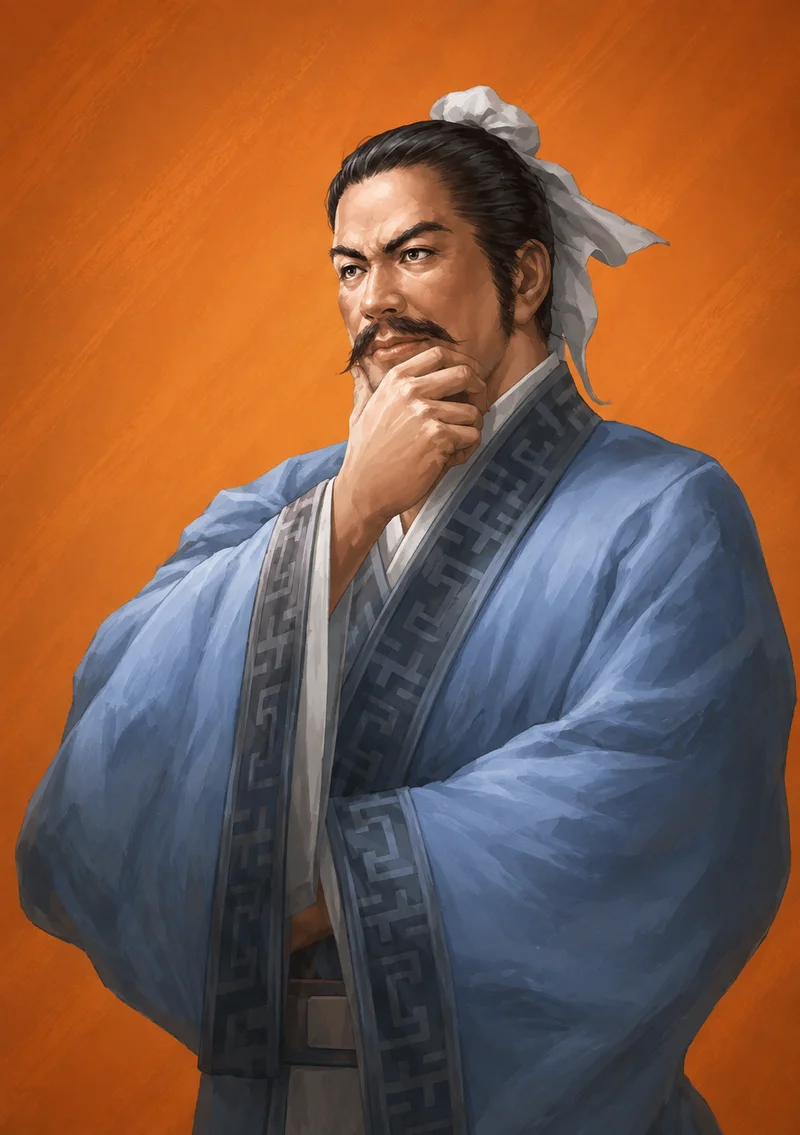
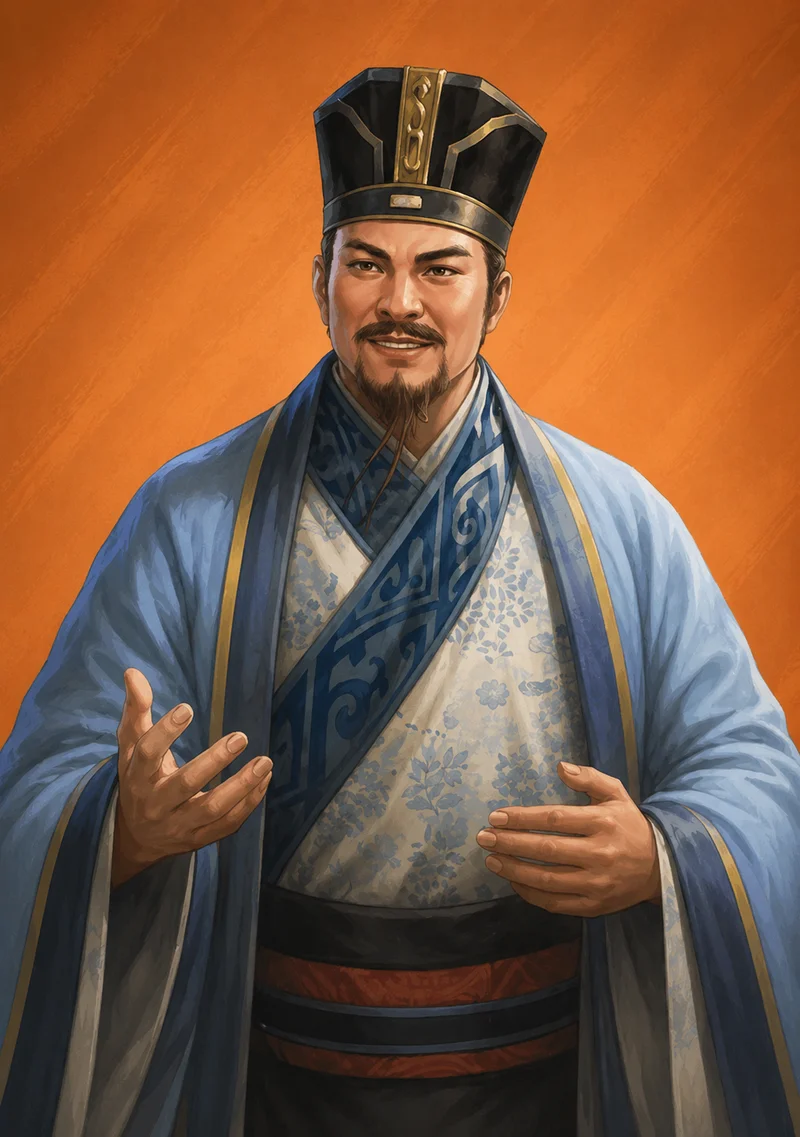
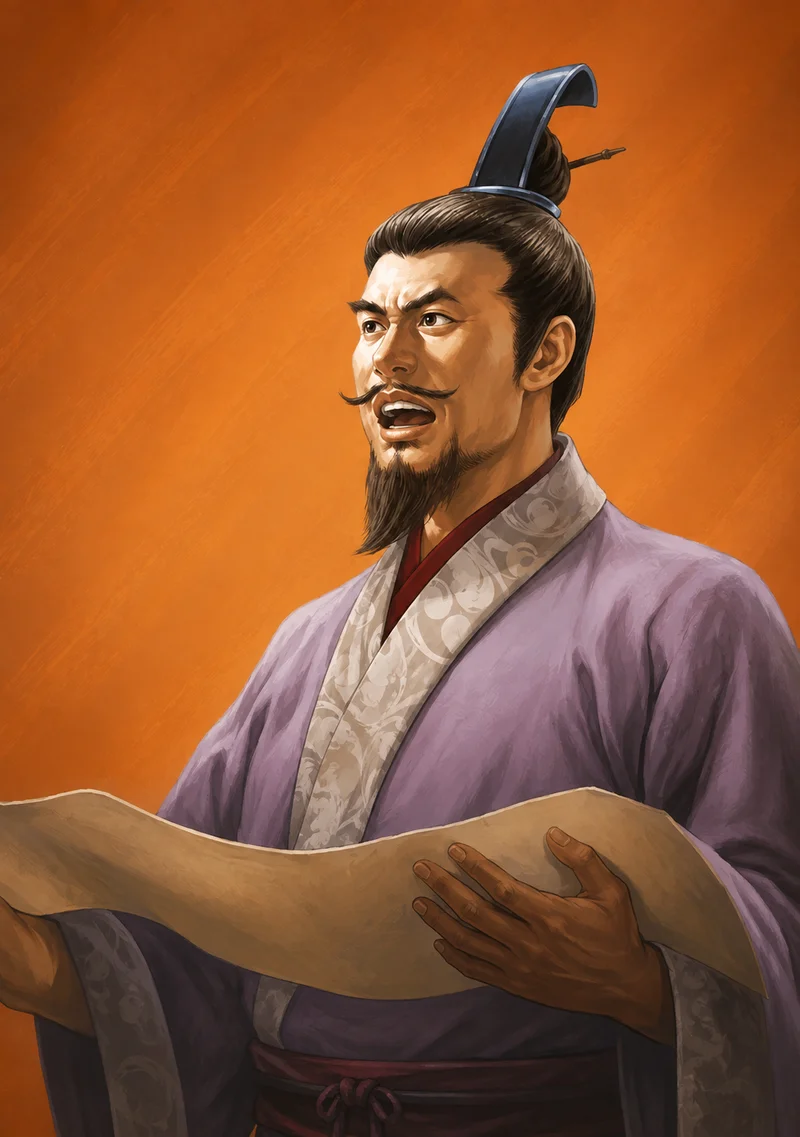
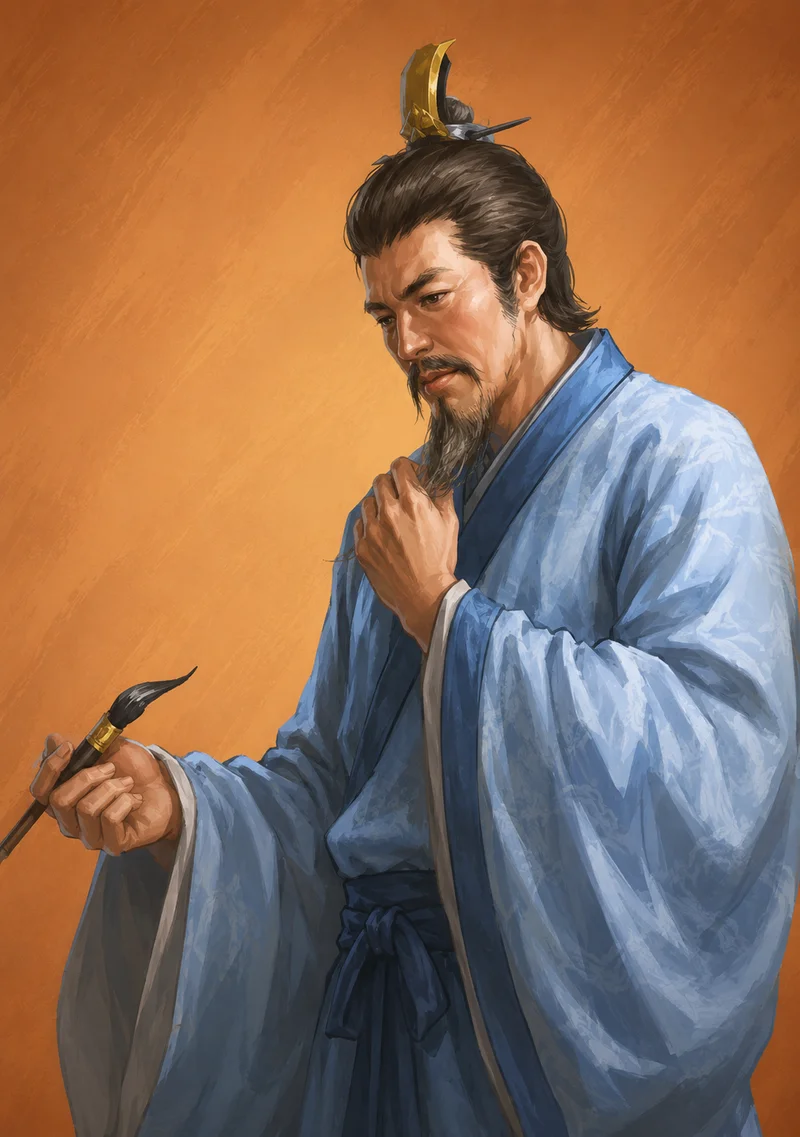
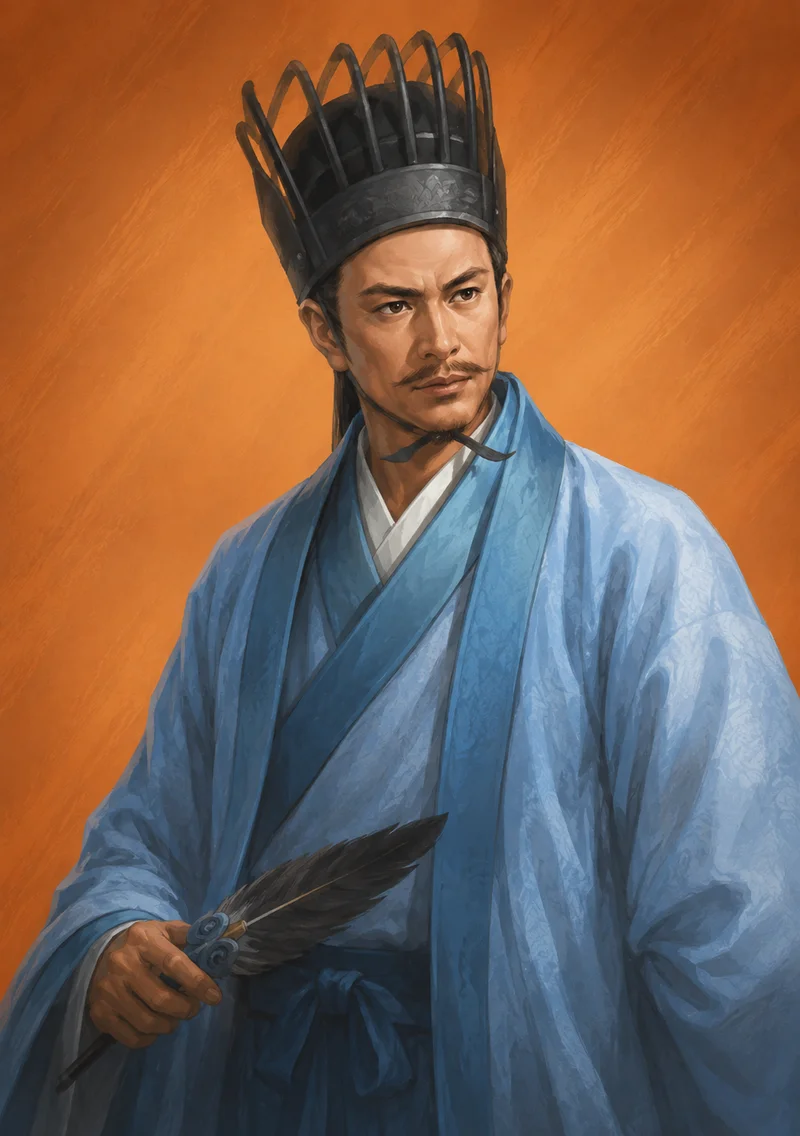
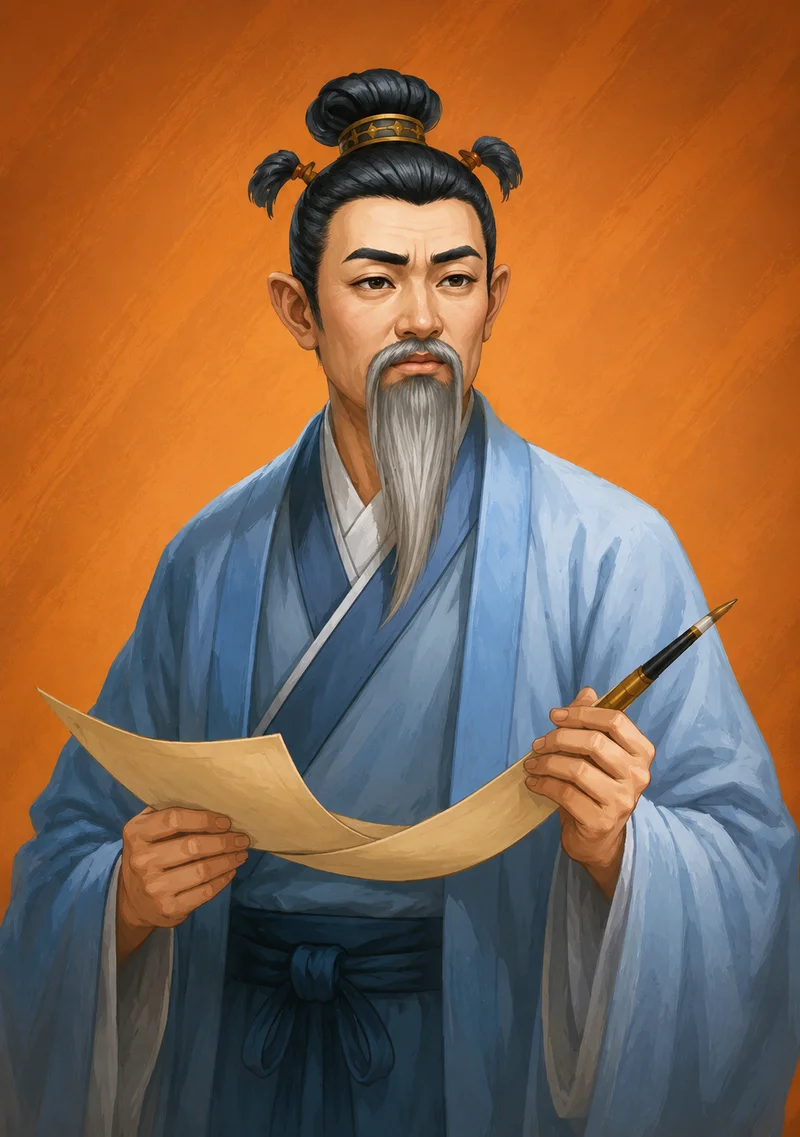
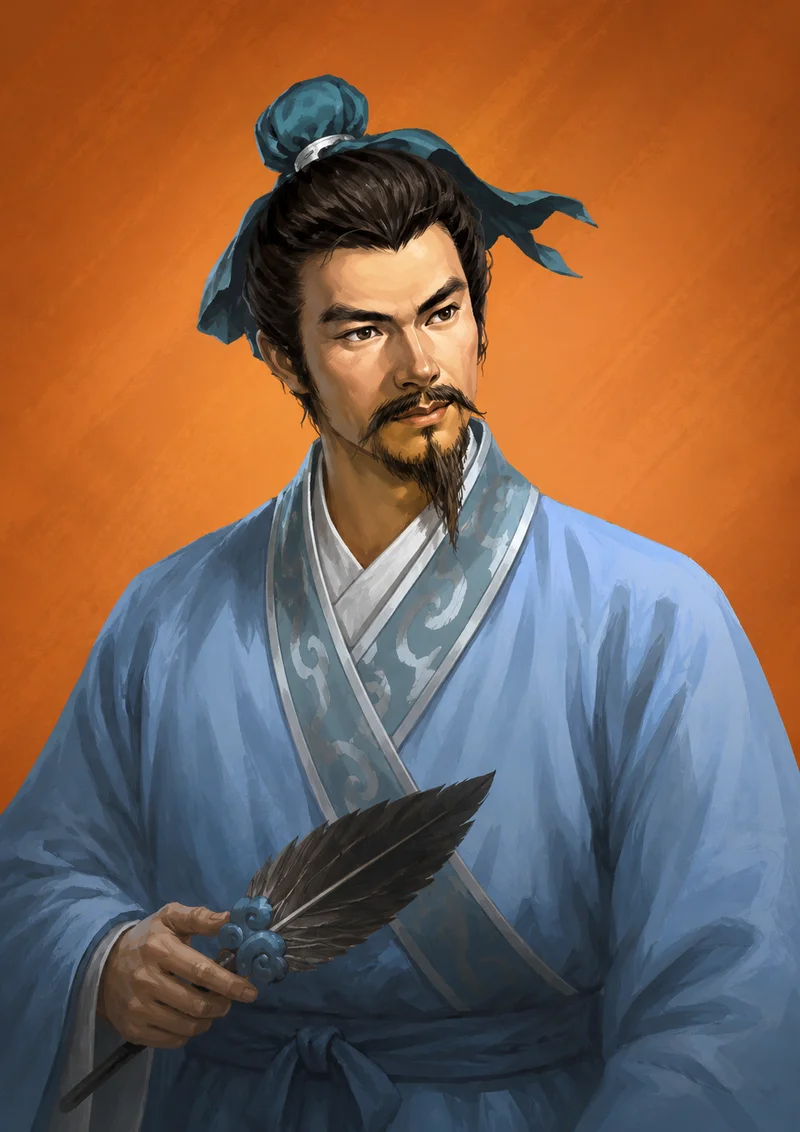
In Novel
Scholar-Philosopher of the Jian’an Era
- Xu Gan (徐干, Từ Cán): Xu Gan is not singled out by name in most Romance of the Three Kingdoms battle narratives, yet his philosophical treatise Zhonglun (中论) and gentle chamber poetry represent the intellectual depth of Cao Cao’s recruited scholars. Cao Pi praised Zhonglun as establishing “a school of its own,” the same critical culture Cao Pi later codified when naming the Seven Scholars in his Dianlun.
Seven Scholars & Plague of 217
- Xu Gan (徐干, Từ Cán): Summoned early in the Jian’an era as a clerical officer under Cao Cao (曹操, Tào Tháo), Xu Gan declined further magistracy to write, sharing the Ye literary circle with Wang Can (王粲, Vương Xán), Chen Lin, Ruan Yu, Liu Zhen, and Ying Chang (应玚, Ứng Sướng). He died in the epidemic of 217 AD — the catastrophe that devastated the Jian’an generation even though the Romance foregrounds military rather than literary loss.
In History
Summary
- Xu Gan (徐干, Từ Cán), courtesy name Weichang (伟长, Vĩ Trưởng), was a philosopher, poet, and one of the Seven Scholars of Jian’an.
Period I — Scholarship & Zhonglun
- Xu Gan (徐干, Từ Cán) devoted himself to classical study in poverty during Emperor Ling’s reign. Summoned by Cao Cao, he served as a clerical officer but repeatedly declined magistracy to focus on writing, especially his treatise Zhonglun (中论), praised by Cao Pi as establishing its own school.
Year: 217 AD
- Xu Gan (徐干, Từ Cán) contracted the plague and died at age forty-six, one of four Seven Scholars lost in the 217 epidemic.
Historical Record
- Xu Gan (徐干, Từ Cán) appears in Sanguozhi and Cao Pi’s Dianlun. His philosophical and poetic works survive in later anthologies.
3 comments
[…] razor-sharp pen and effortless literary elegance, Ruan Yu appears alongside Chen Lin, Wang Can, and Xu Gan, representing the elite intellectual minds who lent immense administrative competence and cultural […]
[…] Xu Gan (徐干, Từ Cán) — Fellow poet and philosopher among the Seven Scholars of Jian’an who also died during the 217 AD northern plague. […]
[…] Chương); Wang Can (王粲, Vương Xán) of Shanyang, styled Zhongxuan (仲宣, Trọng Tuyên); Xu Gan (徐干, Từ Cán) of Beihai, styled Weichang (伟长, Vĩ Trưởng); Ruan Yu (阮瑀, Nguyễn Vũ) of Chenliu, […]