
Contents
Biography & Historical Record
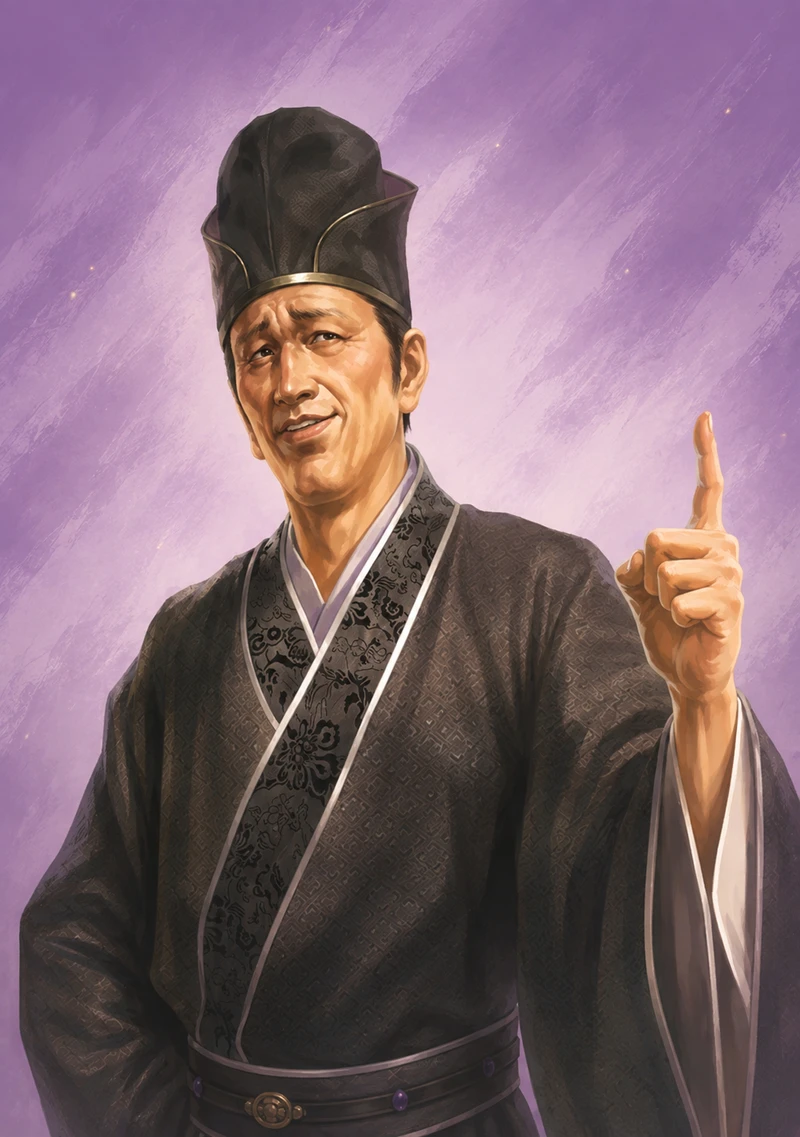
Cen Hun was a notoriously corrupt eunuch, sycophant, and senior palace official who served the final ruler of Eastern Wu, Sun Hao, during the terminal decline of the Three Kingdoms period. Documented in Chen Shou’s official dynastic history Records of the Three Kingdoms (Sanguozhi – Book of Wu, Volume 48, Biography of Sun Hao) and Sima Guang’s Zizhi Tongjian, Cen Hun possessed a natural talent for flattery and malicious manipulation. By catering to the tyrannical and paranoid whims of Emperor Sun Hao, Cen Hun rose swiftly through the ranks to become Palace Attendant (Zhong Changshi), exercising immense corrupt influence over the imperial court and accelerating the political and military collapse of Eastern Wu.
During Sun Hao’s tyrannical reign, Cen Hun actively encouraged the emperor’s worst excesses, instigating the massive construction of extravagant palaces, gardens, and pleasure parks while the state treasury was completely bankrupt and the common populace suffered in extreme poverty. He oversaw the forcible conscription of thousands of young women into the imperial harem as concubines, causing widespread devastation and social unrest across the realm. Furthermore, Cen Hun systematically purged loyal and capable ministers who dared to offer honest remonstrance, framing or slandering generals like Lu Kang and Teng Yin to remove any check on his corrupt power, thereby stripping Eastern Wu of its most competent military minds.
When the massive Western Jin invasion fleets led by Wang Jun and Deng Ai descended upon Eastern Wu in 280 AD, Cen Hun demonstrated utter military incompetence. He advised Sun Hao to rely on primitive defensive measures, such as stretching giant iron chains across the Yangtze River and embedding iron spikes underwater to block the Jin warships—tactics that were easily neutralized by Jin general Wang Jun using floating rafts loaded with burning oil. As Western Jin armies breached the defenses and marched directly on the capital of Jianye, panic consumed the imperial court. Driven beyond the limits of endurance, hundreds of enraged Wu officials and military commanders gathered outside the palace gates, shouting to Sun Hao that they refused to fight unless the emperor surrendered Cen Hun’s head to appease the wrath of the empire. Helpless to protect his favorite sycophant, Sun Hao ordered Cen Hun dragged out, whereupon furious ministers tore him apart limb from limb, executing him on the spot. Shortly thereafter, Sun Hao surrendered to Western Jin, bringing a definitive end to the Eastern Wu state.
Role in Romance of the Three Kingdoms
In Chapter 120 of Luo Guanzhong’s classic 14th-century historical novel Romance of the Three Kingdoms, Cen Hun is depicted as the ultimate symbol of imperial corruption and the direct catalyst for Eastern Wu’s downfall. The novel vividly describes his sycophantic hold over Sun Hao, his promotion of extravagant public works, and his persecution of loyal officials. When Jin armies under Wang Jun cross the Yangtze and approach Jianye, the novel details the climactic uprising of the enraged Wu officials and generals who storm the palace, drag Cen Hun out into the courtyard, and hack him to pieces in a fury of patriotic rage—serving as a poetic and violent retribution for his treasonous misrule.
Cen Hun (岑昏) — Historical & Literary Timeline
Rise to Power & Manipulation of Sun Hao
Gains supreme favor with the tyrannical emperor Sun Hao through relentless flattery; rises to the rank of Palace Attendant, monopolizing court influence and purging loyal ministers.
Jin Invasion, Uprising of Wu Officials & Dismemberment
Fails to halt the Western Jin invasion fleets with iron chains; as Jin armies approach Jianye, furious Wu officials and generals storm the palace, drag Cen Hun out, and tear him apart.
For detailed historical records, archives, and official chronicles, explore Cen Hun on Wikipedia.
Key Relationships
Family
- No information
Friends
- No information
Enemies
- Wang Jun (王濬, Vương Tuấn): Western Jin naval commander who neutralized Cen Hun’s iron chain river defenses using burning rafts during the Conquest of Wu in 280 AD, leading directly to the fall of the capital and Cen Hun’s demise.
- Lu Kang (陆抗, Lục Kháng): Renowned Eastern Wu grand commander whose loyal remonstrances and defense strategies were undermined and slandered by Cen Hun’s corrupt influence at court.
Other
- Sun Hao (孙皓, Tôn Hạo): Final emperor of Eastern Wu; Cen Hun rose to Palace Attendant by catering to Sun Hao’s tyranny and extravagance, maintaining imperial favor until Sun Hao was forced to surrender him to furious officials for execution in 280 AD.
In Novel
Chapter 120
- Cen Hun (岑昏, Sầm Hôn): Cen Hun is a favored Wu eunuch under Sun Hao. When Jin’s invasion threatens Wu, he proposes using iron chains across the Yangtze to stop Wang Jun’s fleet. Wang Jun’s forces overcome the obstruction by using fire, and the Wu position collapses. The court then blames Cen Hun for the state’s disasters and demands his death. Before Sun Hao can protect him, the officials seize Cen Hun and cut him to pieces. The exact Chapter 120 account identifies him as a eunuch and records his death at the hands of the enraged officials. citeturn2search32
In History
Summary
- Cen Hun (岑昏, Sầm Hôn) was a late Eastern Wu official who served under the last Wu emperor, Sun Hao.
Court Position
- He held a high office among the Nine Ministers and became one of the officials closest to Sun Hao.
Reputation
- Historical sources portray Cen Hun as corrupt and oppressive, and later accounts associate him with the unpopular court administration of Sun Hao.
- Despite this reputation, he is also recorded as intervening to ask Sun Hao to spare Zhang Shang after Zhang Shang offended the emperor.
Death
- As Jin forces closed in on Wu in 280, officials and palace attendants demanded Cen Hun’s execution.
- Sun Hao eventually yielded to the demand and Cen Hun was killed shortly before Wu surrendered.
- Classification: Historical.