
Contents
Biography & Historical Record
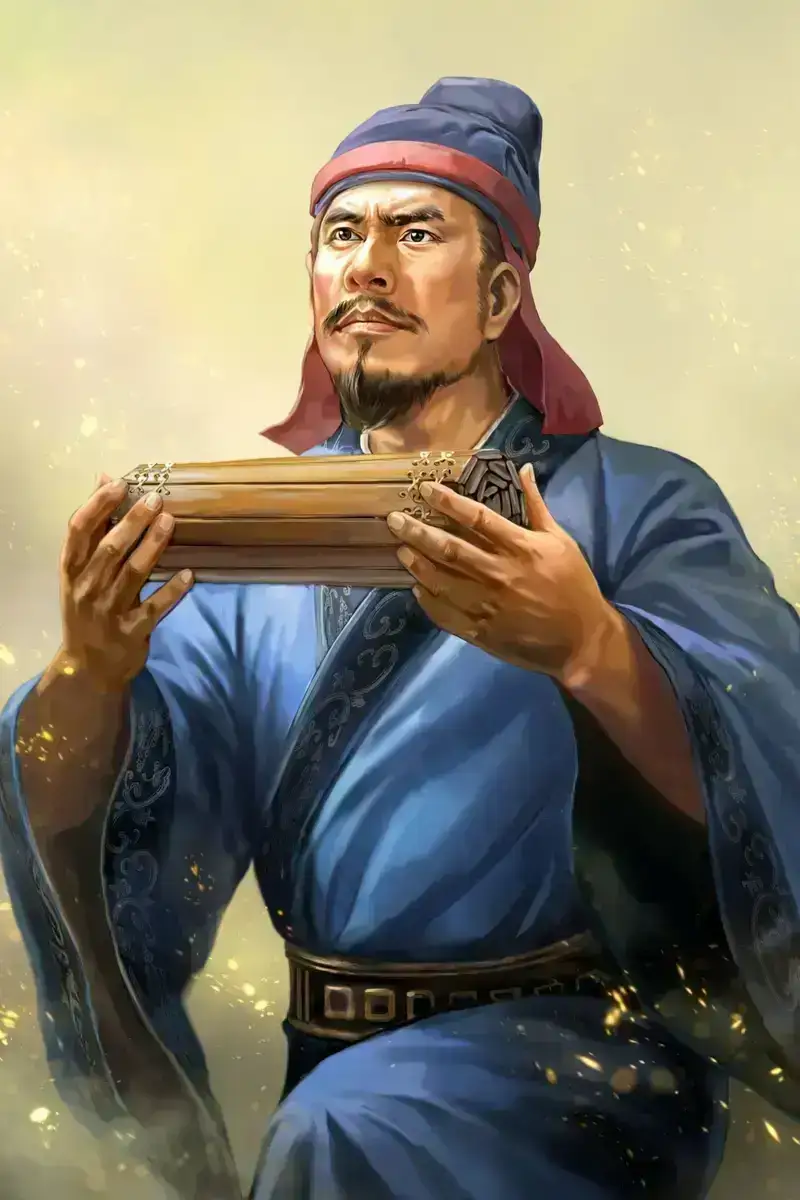
Chen Zhen (died 235 AD), courtesy name Xiaogong, was an official and diplomat of the state of Shu Han during the Three Kingdoms period. Born in Dongwu, Nanyang Commandery, he initially served the warlord Yuan Shao, and later Liu Biao in Jing Province, before finally pledging his loyalty to Liu Bei. Known for his eloquence, sharp intellect, and unwavering loyalty, Chen Zhen served as an envoy and administrator, representing Liu Bei and later Liu Shan in critical diplomatic missions, notably to Sun Quan’s court in Eastern Wu. Following the establishment of Shu Han, he held high-ranking offices such as Palace Attendant and Director of Retainers, passing away in 235 AD.
Role in Romance of the Three Kingdoms
In Luo Guanzhong’s historical novel Romance of the Three Kingdoms, Chen Zhen is depicted as a sagacious diplomat and advisor who utilizes his sharp rhetoric to advance Shu’s interests. He first appears serving Liu Biao and subsequently advises Liu Bei during critical moments of transition in Jing Province. Chen Zhen plays a pivotal role as an envoy to Eastern Wu and other courts, skillfully navigating tense political landscapes. His rhetorical expertise and diplomatic tact earn him the deep trust of Liu Bei and Zhuge Liang.
Notable Quotes & Famous Sayings
- “A wise person adapts to the times; a hero knows how to seize opportunity.” — Chen Zhen advising on political shifts.
Chen Zhen (陳震) — Historical & Literary Timeline
208 AD
Serving Liu Bei in Jing Province
After Liu Biao’s death and Cao Cao’s invasion, Chen Zhen joins Liu Bei’s camp, offering valuable counsel during the perilous retreat to Xiakou.
211 AD
Accompanying Liu Bei to Yi Province
Chen Zhen is selected to accompany Liu Bei on his expedition into Yi Province, assisting in administrative duties and diplomatic communications.
221 AD
Supporting the Founding of Shu Han
Following Liu Bei’s ascension to the imperial throne, Chen Zhen continues to serve in key civil and diplomatic posts.
229 AD
Embassy to Eastern Wu
Chen Zhen is dispatched as an official envoy to congratulate Sun Quan on his proclamation as Emperor of Wu, successfully formalizing the alliance between Shu and Wu.
For detailed historical records, archives, and official chronicles, explore Chen Zhen on Wikipedia.
Key Relationships
Family
- Chen Ji (陈济, Trần Tế) — Son of Chen Zhen who inherited his father’s noble title after his death in 235 AD.
Friends
- Zhuge Liang (诸葛亮, Gia Cát Lượng) — The Imperial Chancellor of Shu Han who deeply trusted Chen Zhen’s diplomatic acumen and relied on him for critical state missions.
Enemies
- Cao Cao (曹操, Tào Tháo) — The northern warlord whose invasion of Jing Province in 208 AD forced Chen Zhen to flee and eventually pledge his loyalty to Liu Bei.
Other
- Liu Biao (刘表, Lưu Biểu) — The Governor of Jing Province whom Chen Zhen served as an official during his early career before the collapse of the province.
- Liu Bei (刘备, Lưu Bị) — The founding Emperor of Shu Han who employed Chen Zhen as a trusted diplomat and administrator throughout his campaigns in Jing and Yi provinces.
- Sun Quan (孙权, Tôn Quyền) — The Emperor of Eastern Wu; Chen Zhen served as a diplomatic envoy to his court, most notably in 229 AD to formalize the alliance between Shu and Wu.
In Novel
Chapter 26
- Chen Zhen (陈震, Trần Chấn): Chen Zhen introduces himself to Guan Yu as a native of Runan serving Yuan Shao. He secretly delivers Liu Bei’s letter to Guan Yu at Xuchang, telling him that Liu Bei still regards their oath of brotherhood as binding. Guan Yu replies with a letter explaining why he remained with Cao Cao and asks Chen Zhen to deliver it to Liu Bei. Chen Zhen therefore becomes the trusted messenger who helps arrange Guan Yu’s departure from Cao Cao.
Chapter 28
- Chen Zhen (陈震, Trần Chấn): After Liu Bei settles at Runan, Yuan Shao sends Chen Zhen as an envoy to Jiangdong to meet Sun Ce and propose an alliance against Cao Cao.
Chapter 29
- Chen Zhen (陈震, Trần Chấn): Chen Zhen arrives at Sun Ce’s court and presents Yuan Shao’s proposal. He participates in the court discussion and pleads for Yu Ji when Sun Ce orders the Daoist arrested. Sun Quan later allows Chen Zhen to return after deciding not to ally with Yuan Shao. Chen Zhen reports to Yuan Shao that Sun Ce has died and Sun Quan has succeeded him, after which Yuan Shao launches his northern campaign against Cao Cao.
Chapter 81
- Chen Zhen (陈震, Trần Chấn): During Liu Bei’s preparations for the campaign against Wu, Chen Zhen serves together with Ma Liang in charge of official documents. When Liu Bei remains overwhelmed by grief, Chen Zhen proposes seeking the advice of the recluse Li Yi. Liu Bei accepts the suggestion and sends Chen Zhen with an imperial summons to bring Li Yi from his mountain retreat.
Chapter 98
- Chen Zhen (陈震, Trần Chấn): Chen Zhen is sent by Liu Shan to congratulate Sun Quan after Wu’s imperial proclamation and to deliver Shu’s state letter and gifts. He reaches Sun Quan’s court, receives a formal banquet, and returns to Hanzhong to report to Zhuge Liang. His mission helps preserve the Shu-Wu diplomatic relationship while Zhuge Liang prepares another campaign against Wei.
In History
Summary
- Chen Zhen (陈震, Trần Chấn), courtesy name Xiaoqi, was a Shu Han official and diplomat who served Liu Bei (刘备, Lưu Bị) and Liu Shan (刘禅, Lưu Thiện).
Year: 223 AD
- Chen Zhen (陈震, Trần Chấn) served as an envoy to Eastern Wu and participated in diplomatic relations between Shu and Wu.
Historical Record
- Chen Zhen (陈震, Trần Chấn) was a real historical Shu diplomat and official.