Contents
Biography & Historical Record
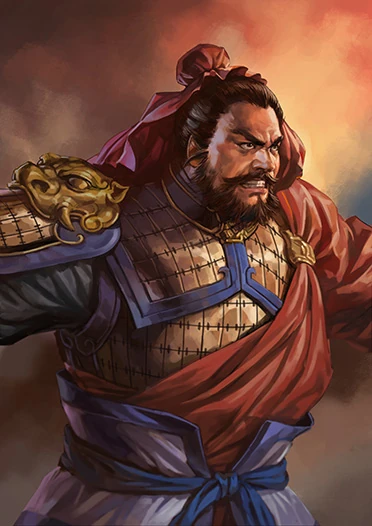
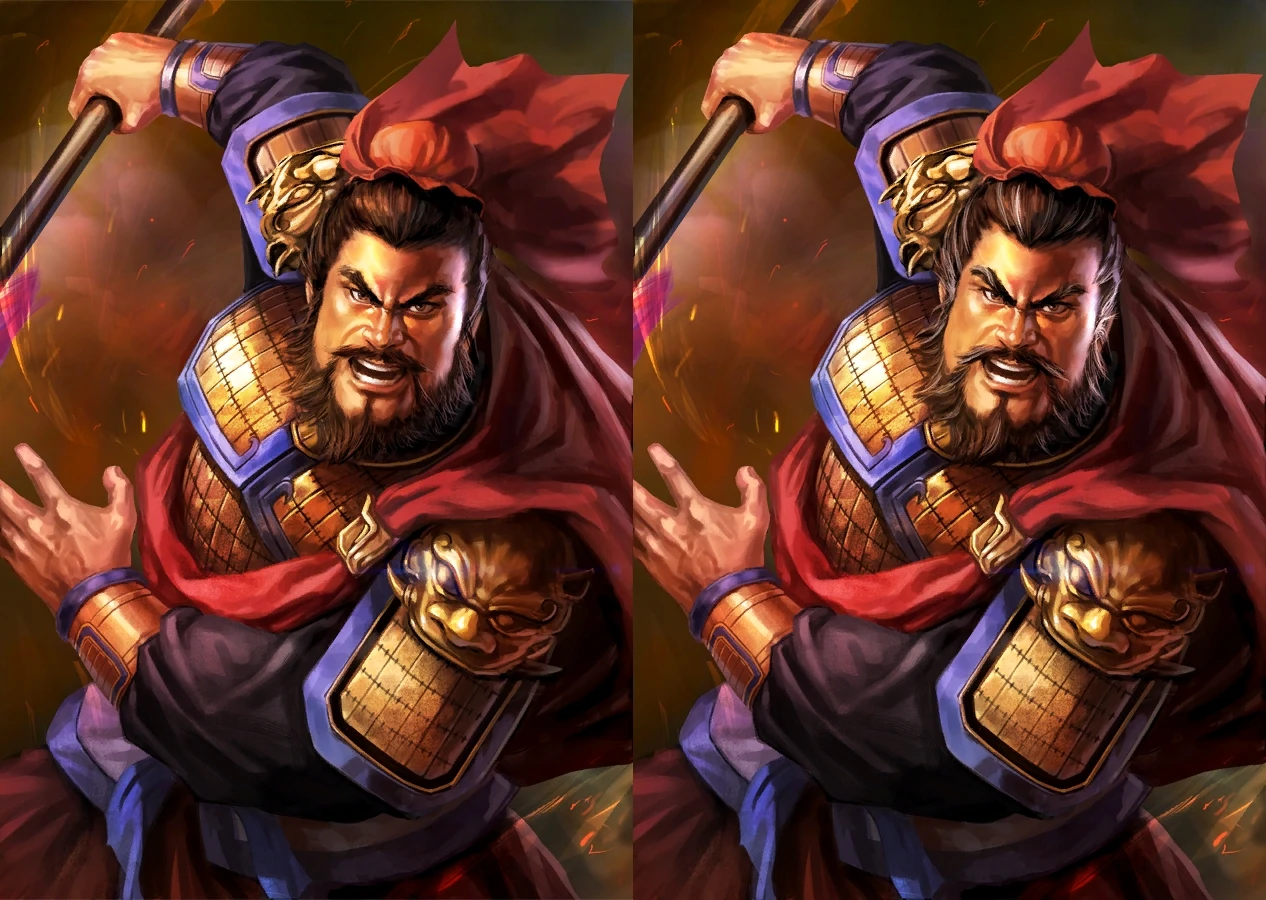
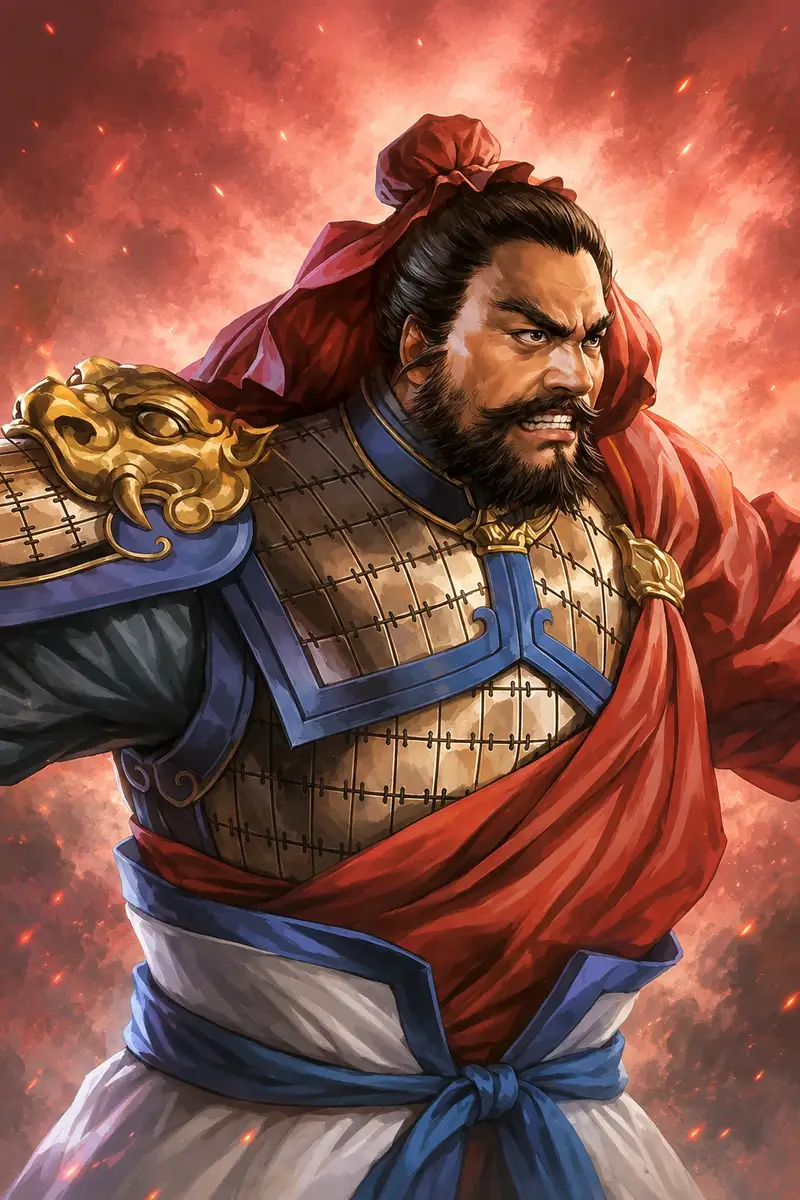
Dian Wei (典韦, Điển Vi) was a warrior of legendary physical strength and martial prowess who served as a personal bodyguard and commander under the warlord Cao Cao (曹操, Tào Tháo) during the late Eastern Han dynasty. Hailing from Ji Wu in Chenliu Commandery, Dian Wei was physically imposing, possessing extraordinary strength and a fierce, uncompromising disposition.
In his youth, Dian Wei demonstrated an intense sense of chivalry and vengeance. When a friend named Liu Shi was harassed by Li Yong (李永, Lý Vĩnh), a wealthy official from Suiyang, Dian Wei undertook a daring assassination. Posing as a nobleman carrying gifts, Dian Wei entered Li Yong’s residence, killed both Li Yong and his wife, and retrieved his weapons. He then walked out into the busy market square carrying his bloody swords. Although hundreds of onlookers gathered, none dared approach him, allowing him to escape into the wild.
When the grand coalition against Dong Zhuo (董卓, Đổng Trác) formed around 190 AD, Dian Wei entered military service under the local official Zhao Chong (趙寵, Triệu Sủng), a subordinate of Zhang Miao (張邈, Trương Mạc). During a military display, a massive war banner was swaying wildly in the gale-force winds, and multiple soldiers could not hold it steady. Dian Wei stepped forward and held the giant banner pole perfectly upright with a single hand, astounding all who witnessed the feat.
He later transferred to the army of Xiahou Dun (夏侯惇, Hạ Hầu Đôn), who recognized his formidable talents and made him a Major. When Cao Cao (曹操, Tào Tháo) engaged Lu Bu (呂布, Lã Bố) at the Battle of Puyang in 194 AD, Dian Wei volunteered for a suicide vanguard squad tasked with breaking through Lu Bu’s flank. Dressed in double layers of heavy armor and disregarding shield defenses, Dian Wei carried several dozen small throwing halberds (手戟). As enemy cavalry approached under a shower of arrows, Dian Wei ordered his men: “Tell me when they are ten paces away!” When they called out, he said, “Tell me when they are five paces!” At five paces, Dian Wei unleashed his throwing halberds with deadly precision, killing a rider with every throw and shattering the enemy assault. For his bravery, he was promoted to Commandant (校尉) and made commander of Cao Cao’s elite personal bodyguards.
Dian Wei was known for carrying a pair of oversized twin iron halberds weighing eighty jin (approx. 40–45 kg). A common song in Cao Cao’s army went: “In the camp, the most formidable warrior is Commandant Dian, who wields a pair of halberds weighing eighty jin.”
In 197 AD, Cao Cao led a campaign against Zhang Xiu (張繡, Trương Tú) at Wancheng. Zhang Xiu initially surrendered without a fight. However, after Cao Cao took Zhang Xiu’s widowed aunt as a concubine and gave secret gifts to Zhang Xiu’s general Hu Che’er (胡車兒, Hồ Xa Nhi), Zhang Xiu felt humiliated and planned a surprise night assault. During the ambush, Dian Wei stationed himself at the main entry gate of Cao Cao’s inner camp. Arming himself with a long spear, Dian Wei held off dozens of enemy soldiers simultaneously, killing dozens of attackers to buy time for Cao Cao to escape on horseback. When his weapons shattered, Dian Wei seized two enemy soldiers and used their bodies as clubs to strike down his foes. Heavily wounded and overwhelmed by archers and spearmen, Dian Wei fought until his final breath, dying while still standing at the camp entrance.
Role in Romance of the Three Kingdoms
In Romance of the Three Kingdoms, Luo Guanzhong immortalizes Dian Wei as one of Cao Cao’s most iconic and fiercely loyal champions, frequently styling him as the modern reincarnation of the ancient shang dynasty strongman Elai.
Dian Wei makes a dramatic entrance in Chapter 11 when Xiahou Dun (夏侯惇, Hạ Hầu Đôn) introduces him to Cao Cao (曹操, Tào Tháo). Dian Wei showcases his superhuman strength by steadying a giant banner staff that was collapsing under heavy wind. Impressed by his stature and courage, Cao Cao famously exclaims, “This man is the Elai of ancient times!”
In Chapter 12, Dian Wei encounters another legendary warrior, Xu Chu (許褚, Hứa Chử). The two giants engage in a duel that lasts an entire day without a clear victor, prompting Cao Cao to scheme a trap to capture and recruit Xu Chu to serve alongside Dian Wei as his twin guard commanders.
Chapter 16 (Cao Cao Proposes Marriage; Zhang Xiu Raids by Night): At Wancheng, Zhang Xiu (张绣, Trương Tú) and Jia Xu (贾诩, Giả Hủ) plot a night assault after Cao Cao takes Zhang Xiu’s widowed aunt. Hu Che’er (胡车儿, Hồ Xa Nhi) gets Dian Wei drunk and steals his eighty-jin twin halberds. Awakening weaponless, Dian Wei grabs short swords, holds the inner gate, slays scores of mutineers, then wields captured soldiers as clubs until arrows and spears kill him — still standing — while Cao Cao escapes. Cao Cao weeps that he mourns Dian Wei more than his son Cao Ang or nephew Cao Anmin.
Dian Wei’s tragic demise at Wancheng in Chapter 16 is widely considered one of the most emotional battle scenes in the novel. Knowing Dian Wei’s fearsome reputation, Zhang Xiu (張繡, Trương Tú) and his strategist Jia Xu (賈詡, Giả Hủ) scheme to disarm him beforehand. Hu Che’er (胡車兒, Hồ Xa Nhi) gets Dian Wei heavily intoxicated during a banquet and steals his famous 80-jin twin halberds. When Zhang Xiu attacks at night, Dian Wei wakes up to find his weapons missing. Undeterred, he grabs two short swords from nearby guards and rushes to the main gate. He slays over twenty men before his swords break, then grabs two enemy soldiers by their ankles to use them as blunt weapons against the surging host. Struck by dozens of arrows and spear thrusts from a distance, Dian Wei stands guard until his last breath, striking fear into the hearts of Zhang Xiu’s troops even after death.
“He held the narrow pass alone,
A giant against a sea of foes.
Though his weapons were stolen and blood flowed like rain,
The mighty Elai fought to ease his master’s pain.
Even in death, his ghost guarded the gate,
A loyal soul defying cruel fate.”
When Cao Cao safely escaped, he wept bitterly upon hearing of Dian Wei’s death. Cao Cao held a grand memorial service and declared: “Although I lost my eldest son Cao Ang and my beloved nephew Cao Anmin, my heart does not ache for them as much as it aches for my loss of Dian Wei!”
Notable Quotes & Famous Sayings
- “When the enemy is ten paces away, inform me! … When they are five paces away, inform me!” (十步乃呼我!… 五步乃呼!) — Spoken at the Battle of Puyang, demonstrating his cool demeanor under fire as he timed his deadly throwing halberds.
- “帳下壯士有典君,提一雙戟八十斤。” (“In the army, the most formidable warrior is Commandant Dian, who wields a pair of halberds weighing eighty jin.”) — A famous soldiers’ song recorded in the Sanguozhi highlighting Dian Wei’s legendary weapons and prowess.
Dian Wei — Historical & Literary Timeline
Joins Military Service
Enters the army under Zhao Chong (趙寵, Triệu Sủng) to join the coalition against Dong Zhuo (董卓, Đổng Trác). Astounds onlookers by holding a heavy war banner upright against strong winds using one hand.
Recruitment by Cao Cao
Introduced to Cao Cao (曹操, Tào Tháo) by Xiahou Dun (夏侯惇, Hạ Hầu Đôn). Cao Cao bestows upon him the moniker “Elai of Ancient Times” and appoints him as commander of his personal bodyguard.
Heroics at Puyang
Leads a vanguard unit against Lu Bu (呂布, Lã Bố) at Puyang. Uses short hand-halberds at close range to repel the enemy horsemen, earning promotion to Commandant.
Duel with Xu Chu
Engages Xu Chu (許褚, Hứa Chử) in an all-day duel during the campaign in Runan, resulting in a stalemate before Xu Chu joins Cao Cao’s faction.
Last Stand at Wancheng
Defends the camp entry against Zhang Xiu (張繡, Trương Tú)’s surprise attack at the Battle of Wancheng after his weapons are stolen. Dies standing to ensure Cao Cao’s escape. Cao Cao mourns him intensely.
For detailed historical records, archives, and official chronicles, explore Dian Wei on Wikipedia.
Key Relationships
Family
- Dian Man (典满, Điển Mãn): His son, who was granted an official position by Cao Cao following Dian Wei’s death as a gesture of gratitude for his father’s ultimate sacrifice.
Friends
- Xiahou Dun (夏侯惇, Hạ Hầu Đôn): A senior general under Cao Cao who recognized Dian Wei’s martial talent and recommended him to serve as a personal bodyguard.
- Xu Chu (许褚, Hứa Chử): A fellow legendary warrior who engaged Dian Wei in a day-long stalemate before both became the dual commanders of Cao Cao’s elite personal guard.
Enemies
- Lu Bu (吕布, Lã Bố): A rival warlord whom Dian Wei fought against during the Yanzhou campaign and the Battle of Puyang in 194 AD.
- Zhang Xiu (张绣, Trương Tú): The warlord who orchestrated the surprise night ambush at Wancheng in 197 AD, leading to the battle where Dian Wei was killed.
- Hu Che’er (胡车儿, Hồ Xa Nhi): A general under Zhang Xiu who was bribed by Cao Cao but ultimately betrayed Dian Wei by stealing his twin iron halberds, leaving him vulnerable during the Wancheng ambush.
Other
- Cao Cao (曹操, Tào Tháo): His lord and commander, whom Dian Wei protected with his life; Cao Cao famously mourned Dian Wei’s death at Wancheng more deeply than that of his own son, Cao Ang.
- Zhao Chong (赵宠, Triệu Sủng): A local official under whom Dian Wei served early in his career, witnessing Dian Wei’s display of strength with a war banner in 190 AD.
In Novel
Chapter 10
- Dian Wei (典韦, Điển Vi): Formidable warrior from Chenliu recommended by Xiahou Dun, renowned for wielding twin iron halberds weighing eighty jin and single-handedly holding a massive flagstaff steady in gale-force winds, praised by Cao Cao as ‘the ancient hero Elai’.
Chapter 11
- Dian Wei (典韦, Điển Vi): Hurled dozens of short halberds through enemy arrows with deadly accuracy at the Battle of Puyang, single-handedly breaking Lu Bu’s cavalry cordon to rescue Cao Cao.
Chapter 12
- Dian Wei (典韦, Điển Vi): Dueled Xu Chu at Gepo to a complete draw across an entire day before assisting Cao Cao in recruiting him.
Chapter 14
Chapter 16
- Dian Wei (典韦, Điển Vi): Assigned as Cao Cao’s chief personal bodyguard at Wancheng; after his twin halberds were stolen by Huche’er while he was drunk, Dian Wei fought unarmed against hundreds of mutineers, seizing two enemy soldiers to swing as weapons until he perished standing erect at the camp gate to ensure Cao Cao’s escape.
In History
Summary
- Dian Wei (典韦, Điển Vi) was a Chenliu warrior of extraordinary strength who entered service under Zhao Chong and Xiahou Dun (夏侯惇, Hạ Hầu Đôn), then became commandant of Cao Cao (曹操, Tào Tháo)‘s personal guard. The Sanguozhi records his 80-jin twin halberds and the soldiers’ song praising him as the camp’s foremost champion.
Year: c. 190 AD
- Joined Zhao Chong’s forces during the anti-Dong Zhuo coalition. Famous for holding a swaying banner pole upright with one hand during a review — the feat that first marked him as superhuman in camp lore.
Year: 194 AD
- At Puyang against Lu Bu (吕布, Lã Bố), led a suicide vanguard armed with throwing hand-halberds, timing his volleys at five paces to shatter enemy cavalry. Promoted to Commandant (校尉) and made chief of Cao Cao’s bodyguard corps.
Year: 197 AD
- During Cao Cao’s campaign against Zhang Xiu (张绣, Trương Tú) at Wancheng, Zhang Xiu launched a surprise night attack after Cao Cao’s indiscretions. Dian Wei stationed himself at the inner camp gate, fought until his weapons broke, seized enemy soldiers as clubs, and died standing so Cao Cao could escape. Cao Cao mourned him above even the loss of his son Cao Ang and nephew Cao Anmin.
Historical Record
- Sanguozhi, vol. 18 — biography of Dian Wei (典韦传), appended to Cao Cao’s record.
- Pei Songzhi cites the camp song: “In the camp the champion is Commandant Dian, who wields twin halberds of eighty jin.”
- The novel adds Hu Che’er (胡车儿) stealing his weapons while drunk and the all-day duel with Xu Chu — dramatic embellishments on the historical last stand.
Gallery