


Contents
Life and Legacy of Hu Chu Quan
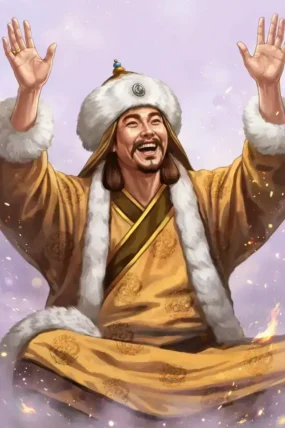
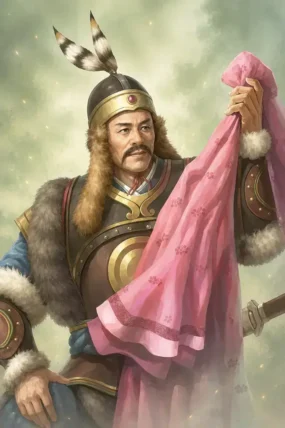
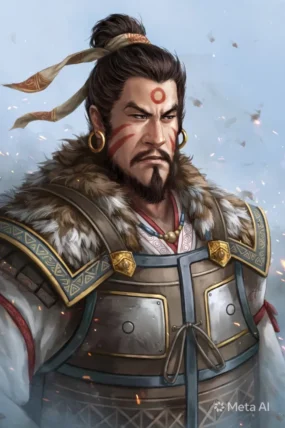
Hu Chu Quan was the last recognized Grand Chanyu of the Southern Xiongnu, ruling during the turbulent close of the Eastern Han dynasty and the dawn of the Three Kingdoms era. The son of Chanyu Qiangqu and younger brother to Yufuluo, he ascended to leadership in 195 AD amidst deep political fracture across northern China.
Historical Record and Political Submission
During the early third century, the northern steppe tribes were deeply drawn into regional conflicts between competing warlords. In 202 AD, the nomadic leader allied with northern dissidents Gao Gan and Guo Yuan against the rising power of Cao Cao. However, after suffering a crushing defeat at the Battle of Pingyang against Han commander Zhong Yao, the chieftain formally surrendered to imperial control.
In 216 AD, the ruler visited the imperial court at Ye to pay personal homage to Cao Cao, who had recently assumed the title King of Wei. To neutralize frontier threats while preserving border peace, Cao Cao detained the leader in Ye with high honors and generous stipends. Meanwhile, the Southern Xiongnu were partitioned into five administrative divisions governed by local princes. This shrewd strategy ensured that Hu Chu Quan lived comfortably at the capital through the reigns of Cao Pi and Cao Rui without posing a military threat.
Literary Depiction and Cultural Legacy
In Luo Guanzhong’s epic novel Romance of the Three Kingdoms, Hu Chu Quan represents the frontier tribes yielding to northern Chinese hegemony. His era is famously associated with the liberation of poetess Cai Yan (Cai Wenji), who was ransomed back to the Han court after twelve years among the nomads.
Key Relationships
- Yufuluo: Elder brother and predecessor as Grand Chanyu.
- Liu Bao: Nephew who governed the Left Division after the Xiongnu partition.
- Cao Cao: Chancellor of Han who integrated the tribal forces and secured northern border stability.
- Cai Yan (Cai Wenji): Renowned scholar and poetess repatriated during this reign.
In Novel
Chapter 59
- Hu Chu Quan (呼厨泉, Hô Trù Tuyền): Hu Chu Quan is the leader of the Southern Xiongnu. He is connected with the western campaign in which Cao Cao fights Ma Chao and Han Sui. The Xiongnu position becomes part of the wider frontier politics surrounding Cao Cao’s control of the northwest.
Chapter 68
- Hu Chu Quan (呼厨泉, Hô Trù Tuyền): Hu Chu Quan is later encountered in the Hanzhong campaign and is associated with Zhang Lu’s frontier allies. His presence reflects the continuing importance of the Xiongnu and other northern peoples to Cao Cao’s control of the frontier.
In History
Xiongnu Leadership
- Hu Chu Quan (呼厨泉, Hô Trù Tuyền) was the last major Southern Xiongnu chanyu to exercise authority under the late Han and early Wei order.
195–216 AD
- After the death of the Xiongnu leader Yufuluo, Hu Chu Quan inherited leadership of the Southern Xiongnu. His position was complicated by internal divisions and the growing influence of Han Chinese warlords.
Relations with Cao Cao
- Cao Cao gradually brought the Southern Xiongnu under tighter control. In 216, Hu Chu Quan was summoned to Ye and effectively placed under the supervision of the Wei government.
Later Life
- Although he retained the title of chanyu, Hu Chu Quan no longer exercised independent authority over the Southern Xiongnu. His followers were reorganized into commanderies and placed under Chinese administration.
Historical Significance
- His career marks the transformation of the Southern Xiongnu from a relatively autonomous frontier power into a population increasingly incorporated into the political structure of northern China.