

Contents
Biography & Historical Record
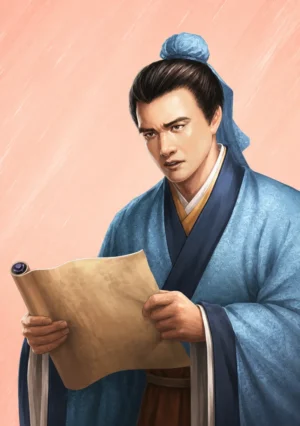
Zhong Yao (151–230 AD), courtesy name Yuanchang, was a distinguished calligrapher, senior statesman, and high-ranking imperial minister who served the Eastern Han dynasty and the state of Cao Wei during the Three Kingdoms period. Hailing from Changshe, Yingchuan Commandery (modern-day Changge, Henan Province), he belonged to the prominent Yingchuan Zhong clan. A scholar of immense erudition, Zhong Yao is universally celebrated in Chinese cultural history as the ‘Father of Regular Script’ (Khải thư – Standard Script), having codified the fundamental aesthetic structure of standard Chinese calligraphy alongside Wang Xizhi, earning them the collective title ‘Zhong-Wang’ (鍾王).
Beginning his civil career under the Han imperial court in Luoyang, Zhong Yao held the post of Master of Writing. In 195 AD, during the chaos following Dong Zhuo’s death, Zhong Yao collaborated with Dong Cheng and Han Rong to assist Emperor Xian of Han in escaping from Chang’an back to the ancient capital. Recognizing his administrative brilliance and tactical judgment, Cao Cao appointed him Director of the Secretariat and later Inspector of Capital Military Affairs, entrusting him with complete governance over the strategic Guanzhong region. During the Battle of Guandu in 200 AD, Zhong Yao secured Cao Cao’s western rear by providing two thousand warhorses and critical logistical supplies from Guanzhong. In 202 AD, he commanded troops alongside Guo Yuan and Ma Chao to defeat Yuan Shang’s forces at Pingyin.
Following the founding of the Cao Wei state, Zhong Yao was appointed Grand Attorney (Tư Lệ hiệu úy), Imperial Counselor, and eventually attained the supreme civil office of Grand Marshal / Minister of Works (Tư không) and Grand Tutor (Thái phó) under Emperor Cao Pi and Emperor Cao Rui. Renowned for his merciful legal reforms, judicial wisdom, and unyielding defense of imperial decorum, Zhong Yao passed away peacefully of natural causes at the advanced age of 80 in 230 AD. Emperor Cao Rui personally led the mourning process and granted him the posthumous title Marquis Cheng.
Role in Romance of the Three Kingdoms
In Luo Guanzhong’s historical novel Romance of the Three Kingdoms, Zhong Yao is portrayed as an esteemed elder statesman, strategist, and fortress commander serving Cao Cao and the Cao Wei dynasty. He makes his first major appearance in Chapter 58 during Ma Chao and Han Sui’s grand western rebellion at Chang’an. Assigned to guard the vital metropolis of Chang’an, Zhong Yao leads a ten-day defense against Ma Chao’s fierce cavalry. However, Ma Chao’s vanguard general Pang De infiltrates the city gates by night, forcing Zhong Yao to abandon Chang’an and retreat to Tong Pass. Later in Chapter 79 and Chapter 80, Zhong Yao serves as a senior court minister during Cao Pi’s succession as Prince of Wei and the subsequent forced abdication of Emperor Xian of Han. In Chapter 91, during Zhuge Liang’s First Northern Expedition, Zhong Yao famously recommends his brilliant young son, Zhong Hui, to court, accurately predicting his future role in statecraft.
Zhong Yao (鍾繇) — Historical & Literary Timeline
Governing Guanzhong and Supplying Guandu
Pacifies the western warlords as Inspector of Guanzhong; dispatches 2,000 horses to Cao Cao at Guandu and defeats Guo Yuan at Pingyin.
Defense of Chang’an against Ma Chao
Guards Chang’an against Ma Chao and Han Sui’s western coalition; holds out for ten days before Pang De infiltrates the gates, forcing a retreat to Tong Pass.
Establishing the Cao Wei Dynasty
Joins senior court ministers in supporting Cao Pi’s ascension to Prince of Wei and managing the formal transition of power from the Han Dynasty.
High Office as Grand Tutor and Death
Serves as Grand Tutor under Emperor Cao Rui; recommends his son Zhong Hui to court before passing away peacefully of old age at 80.
Key Relationships
Family
- Zhong Yu (钟毓, Chung Dục): Eldest son and a high-ranking official who served as a Senior Major and General Who Pacifies the South for Cao Wei.
- Zhong Hui (钟会, Chung Hội): Second son, a brilliant strategist and Grand General who played a pivotal role in the conquest of Shu Han; recommended to the court by his father.
- Zhong Yan (钟演, Chung Diễn): Younger brother who served as an official under the Cao Wei state.
- Lady Zhang (张氏, Trương thị): Concubine of Zhong Yao and the mother of his son, Zhong Hui.
- Zhong Hao (钟皓, Chung Hạo): Grandfather and a renowned scholar during the Eastern Han dynasty.
Friends
- Xun Yu (荀彧, Tuân Úc): A fellow scholar from Yingchuan who recognized Zhong Yao’s administrative brilliance and recommended him to Cao Cao.
- Sima Yi (司马懿, Tư Mã Ý): A senior strategist and regent of Cao Wei who held Zhong Yao in high regard, particularly concerning his expertise in legal and judicial reforms.
- Han Rong (韩融, Hàn Dung): A senior court official who collaborated with Zhong Yao in 195 AD to facilitate Emperor Xian’s escape from Chang’an.
Enemies
- Ma Chao (马超, Mã Siêu): A powerful western warlord who besieged Zhong Yao at Chang’an in 211 AD, forcing him to retreat to Tong Pass.
- Han Sui (韩遂, Hàn Toại): A western coalition leader who allied with Ma Chao to challenge Zhong Yao’s authority in the Guanzhong region.
- Pang De (庞德, Bàng Đức): A vanguard general under Ma Chao who successfully infiltrated the defenses of Chang’an, leading to the city’s fall.
- Guo Yuan (郭援, Quách Viện): A general serving Yuan Shang who was defeated and killed by a coalition force commanded by Zhong Yao in 202 AD.
Other
- Cao Cao (曹操, Tào Tháo): The sovereign who appointed Zhong Yao as Director of the Secretariat and entrusted him with the governance of the strategic Guanzhong region.
- Cao Pi (曹丕, Tào Phi): The first Emperor of Cao Wei, whom Zhong Yao served as a senior minister during the transition of power from the Han dynasty.
- Cao Rui (曹叡, Tào Duệ): The second Emperor of Cao Wei, under whom Zhong Yao served as Grand Tutor and who personally led the mourning rites upon Zhong Yao’s death.
- Emperor Xian of Han (汉献帝, Hán Hiến Đế): The Han monarch whom Zhong Yao assisted in escaping the chaos of Chang’an to return to the eastern capital in 195 AD.
In Novel
Chapter 10
- Zhong Yao (钟繇, Chung Dao): Zhong Yao serves Cao Cao as a senior civil and military official in the western territories. He is entrusted with important administrative responsibilities and becomes one of the officials Cao Cao relies upon to stabilize the region.
Chapter 59
- Zhong Yao (钟繇, Chung Dao): Zhong Yao remains associated with Cao Cao’s western administration during the rebellion of Ma Chao and Han Sui.
Chapter 60
- Zhong Yao (钟繇, Chung Dao): Zhong Yao participates in the Wei response to the western rebellion and helps maintain the political and military organization of the territory while Cao Cao concentrates on defeating Ma Chao and Han Sui.
In History
Summary
- Zhong Yao (钟繇, Chung Dao), courtesy name Yuanchang (元常), was a major Han and Wei statesman, administrator, calligrapher, and military governor.
- He was one of the most important figures in Cao Cao’s administration of the western territories and later became a senior minister of Wei.
Period I — Han Government
- Zhong Yao served the Han court and later entered Cao Cao’s administration. He played a major role in restoring order in the Guanzhong region.
- His diplomacy with the western warlords helped stabilize the region while Cao Cao concentrated on other fronts.
Period II — Cao Wei
- Under Cao Pi, Zhong Yao became a senior Wei official and was appointed to high ministerial office.
- He was also celebrated as one of the foundational masters of Chinese regular-script calligraphy.
Historical Record
- Zhong Yao was a historical figure. His biography is preserved in Wei Book 13 of the Records of the Three Kingdoms.
1 comment
[…] tragedy of Ma Xiu and the Ma household was sealed in the spring of 211. When Cao Cao dispatched Zhong Yao and Xiahou Yuan west under the pretext of invading Zhang Lu in Hanzhong, the Guanzhong warlords […]