


Contents
Biography & Historical Record
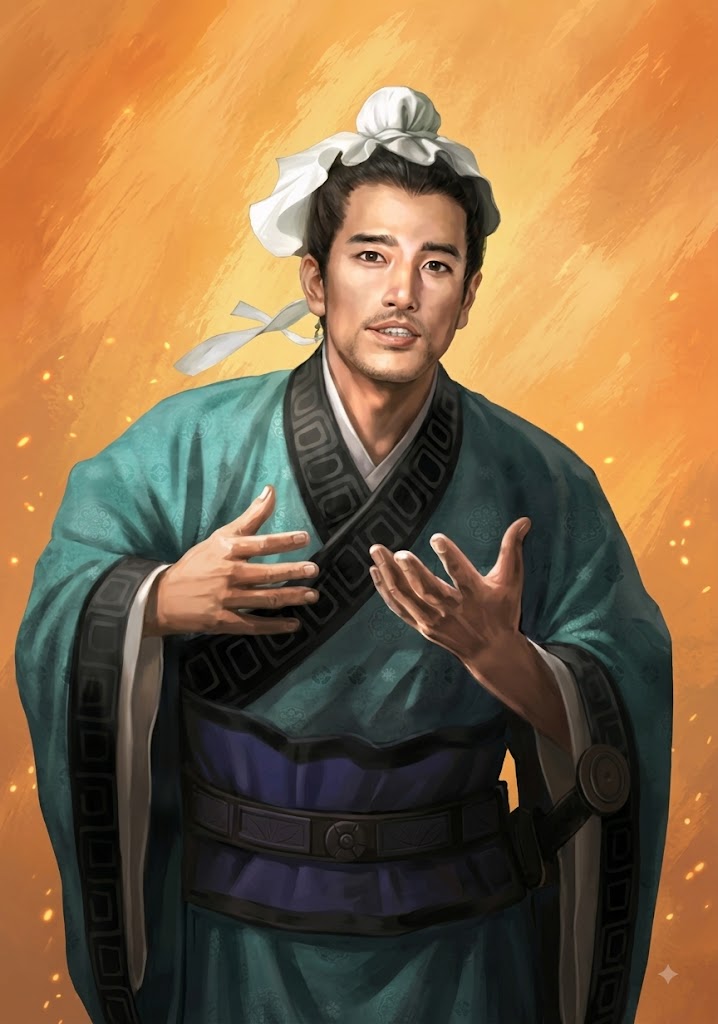
Hu Zhi, courtesy name Wende, was an exceptionally incorruptible, meticulous, and distinguished high-ranking civil administrator, provincial governor, and frontier defense general who served the Cao Wei state during the late Eastern Han dynasty and the Three Kingdoms period. Hailing from Shouchun in Jiujiang Commandery, Hu Zhi was the son of Hu Chu, a respected local scholar. Documented in Chen Shou’s official dynastic history Records of the Three Kingdoms (Sanguozhi – Book of Wei, Biography of Hu Zhi) and Sima Guang’s Zizhi Tongjian, Hu Zhi was celebrated across the realm for his profound integrity, frugality, and stellar governance, earning an immortal legacy alongside his son Hu Wei as the famous ‘Incorruptible Father and Son of the Hu Clan.’
In his youth, Hu Zhi gained widespread renown in the Jianghuai region alongside the brilliant strategist Jiang Ji. When Cao Cao asked Jiang Ji about the younger generation of local talents, Jiang Ji recommended Hu Zhi, noting that while Hu Zhi’s grand strategic vision might not rival his father’s, his meticulous attention to administrative detail, legal fairness, and governance far surpassed the elder generation. Impressed by this assessment, Cao Cao appointed Hu Zhi as Magistrate of Donqiu. In every administrative post he held—whether as Magistrate, Army Advisor, or Grand Administrator of Dongwan—Hu Zhi instituted strict impartial laws, encouraged agricultural productivity, and treated the common populace with deep compassion, causing regional economies to flourish.
Hu Zhi’s historical legacy is equally famous for his moral courage in advising elite military commanders. While serving as an Army Protector, the legendary general Zhang Liao became embroiled in a bitter personal feud with his fellow official Wu Zhou. Seeking a trustworthy confidant, Zhang Liao invited Hu Zhi to serve directly on his personal staff. Hu Zhi declined, claiming illness. When a disappointed Zhang Liao confronted him, Hu Zhi boldly declared: ‘Ancient gentlemen valued moral integrity in friendship. Wu Zhou is an upright scholar whom you previously praised without measure; yet today, over a petty disagreement, you have become bitter enemies. Given my modest abilities, how could I guarantee that I could maintain your trust for long?’ Moved to tears by Hu Zhi’s moral honesty, Zhang Liao acknowledged his error and immediately reconciled with Wu Zhou.
During the reigns of Emperor Cao Rui and Emperor Cao Fang, Hu Zhi served as Senior Clerk in the Chancellor’s Office, Grand Administrator of Dongwan, and eventually Inspector of Jing Province. In 241 AD, during a massive multi-pronged invasion by Eastern Wu, the Wu grand commander Zhu Ran launched a ferocious siege against Fancheng. Maintaining total composure, Hu Zhi efficiently organized the regional defensive garrisons, secured vital supply lines, and coordinated a resolute defense that successfully repelled the invaders. In recognition of his monumental military victory, the imperial court promoted him to General Who Attacks the East (Zhengdong Jiangjun) and Military Commander of Qing and Xu Provinces. In his northern commands, Hu Zhi promoted state-sponsored agricultural colonies (Tuntian), stockpiled massive grain reserves, and fortified frontier defenses, ensuring complete peace along the borders.
Despite holding high ministerial posts and commanding vast armies for decades, Hu Zhi lived a life of absolute simplicity and incorruptibility. When he passed away in office in 250 AD, imperial inspectors discovered that his household contained no private wealth, gold, or land estates, leaving behind only his official imperial garments and boxes of worn books. Emperor Cao Fang issued a special decree praising Hu Zhi’s lifelong virtue, granting his family a generous imperial burial stipend and bestowing upon him the honorable posthumous title Marquis Zhen. His son Hu Wei inherited his unblemished moral principles, serving as a high official under the Jin Dynasty and continuing the family’s legendary reputation for selfless public service.
Role in Romance of the Three Kingdoms
In Chapters 85 through 100 of Luo Guanzhong’s classic 14th-century historical novel Romance of the Three Kingdoms, Hu Zhi appears as a reliable, incorruptible, and vigilant border commander defending the eastern and southern frontiers of Cao Wei alongside veteran generals Man Chong and Cao Xiu.
The novel highlights Hu Zhi’s administrative efficiency and tactical reliability in the defense of Jing Province and the Huai River basin. Portrayed as a steadfast guardian of the state, Hu Zhi collaborates with Man Chong to thwart Eastern Wu’s repeated incursions across the Yangtze River. His literary presence underscores the strength of Cao Wei’s hinterland governance, illustrating how incorruptible officials and disciplined commanders maintained state stability and protected the realm from external invasion throughout the turbulent mid-3rd century.
Hu Zhi (胡質) — Historical & Literary Timeline
Recommendation by Jiang Ji & Appointment by Cao Cao
Recommended to Cao Cao by Jiang Ji for his meticulous administrative precision; appointed Magistrate of Donqiu and earns acclaim for legal fairness.
Advising Zhang Liao to Reconcile with Wu Zhou
Declines Zhang Liao’s personal invitation while serving as Army Protector; candidly admonishes Zhang Liao over his feud with Wu Zhou, inspiring Zhang Liao to make peace.
Repelling Eastern Wu Invasion and Promotion
Serves as Inspector of Jing Province; coordinates defensive garrisons to defeat Zhu Ran’s siege of Fancheng; promoted to General Who Attacks the East and Commander of Qing and Xu Provinces.
Passing Away in Office and Posthumous Honors
Passes away in office leaving no private wealth; granted posthumous title Marquis Zhen by Emperor Cao Fang for his lifelong incorruptibility and selfless public service.
For detailed historical records, archives, and official chronicles, explore Hu Zhi on Wikipedia.
Key Relationships
Family
- Hu Chu (胡楚, Hồ Sở) — Father; a respected local scholar of Jiujiang Commandery.
- Hu Wei (胡瑋, Hồ Vi) — Son; served as a high‑ranking official in the Jin Dynasty, continuing the Hu family’s reputation for incorruptibility.
Friends
- Jiang Ji (姜济, Tương Tế) — Wei strategist who recommended Hu Zhi to Cao Cao for his meticulous administrative abilities.
- Zhang Liao (张辽, Trương Liệu) — Prominent Wei general; Hu Zhi’s counsel helped reconcile Zhang Liao’s feud with Wu Zhou, strengthening their alliance.
- Man Chong (满宠, Mãn Sủng) — Senior Wei general; collaborated with Hu Zhi in defending the eastern frontier against Eastern Wu incursions.
- Cao Xiu (曹休, Tào Hưu) — Grand Marshal of Wei; Hu Zhi served under him during campaigns in the eastern theater.
Enemies
- Zhu Ran (朱然, Chu Nhiên) — Eastern Wu grand commander whose 241 AD siege of Fancheng was repelled by Hu Zhi’s defensive coordination.
- Sun Quan (孙权, Tôn Quyền) — Emperor of Eastern Wu; his repeated northern expeditions were opposed by Hu Zhi’s frontier defenses.
Other
- Cao Cao (曹操, Tào Tạo) — Chancellor of Han and founder of Cao Wei; appointed Hu Zhi as Magistrate of Donqiu after hearing Jiang Ji’s recommendation.
- Cao Rui (曹睿, Tào Duệ) — Second Wei emperor; under his reign Hu Zhi held senior posts such as Senior Clerk in the Chancellor’s Office and Inspector of Jing Province.
- Cao Fang (曹芳, Tào Phương) — Third Wei emperor; issued a posthumous decree honoring Hu Zhi with the title Marquis Zhen after his death in 250 AD.
In Novel
Chapter 96
- Hu Zhi (胡质, Hồ Chất): Hu Zhi serves Wei as governor of Dongwan during the period of Zhuge Liang’s Northern Expedition. He is responsible for the defense and administration of the Wei frontier while Shu forces pressure the region. His appearance is brief and primarily establishes the Wei defensive command opposing Shu.
History
- Hu Zhi (胡质, Hồ Chất), courtesy name Wen De, was a respected Cao Wei general and administrator.
Frontier Service
- Hu Zhi served for many years in the Huainan region and was responsible for defending Wei’s frontier against Eastern Wu.
- He was known for discipline, frugality and careful administration.
Reputation
- Historical accounts portray Hu Zhi as a commander who avoided unnecessary luxury and maintained close control over military resources.
- His son Hu Lie later became a prominent Wei and Jin general.
Death
- Hu Zhi died while serving in office during the Wei period.
- Classification: Historical.