
Contents
Biography & Historical Record
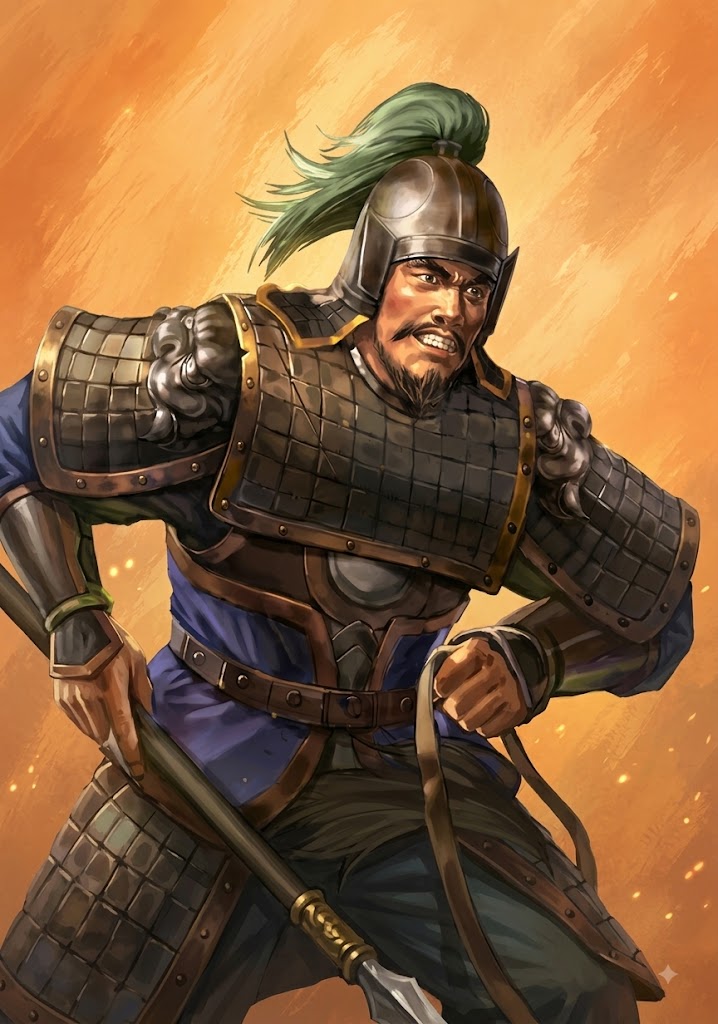
Huo Yi, courtesy name Shaoxian, was an exceptionally capable military general, provincial governor, and steadfast minister who served successively under Shu Han, Cao Wei, and the Jin Dynasty during the Three Kingdoms and early Jin periods. Hailing from Zhijiang in Nan Commandery, Huo Yi was the son of Huo Jun, a legendary founding general of Shu Han who gained enduring fame for holding Giameng Pass with a few hundred men against a ten-thousand-strong host. Following Huo Jun’s death, the founding emperor Liu Bei took the young Huo Yi directly into the imperial palace, raising him alongside the Crown Prince Liu Shan. Documented in Chen Shou’s official dynastic history Records of the Three Kingdoms (Sanguozhi – Book of Shu, Biography of Huo Jun) and Sima Guang’s Zizhi Tongjian, Huo Yi was celebrated for his impeccable administrative governance, martial prowess, and unyielding moral integrity.
Huo Yi began his official career as an imperial attendant and later served as a Secretary (Ji Shi) on Zhuge Liang’s staff during the Northern Expeditions. Recognized for his combined administrative and military talents, he was eventually appointed Commander of Nanzhong (Nanzhong Dudu) and Grand Administrator of Jianning, tasked with maintaining peace and stability in the complex, multi-ethnic southern frontier previously pacified by Zhuge Liang. In Nanzhong, Huo Yi employed a balanced strategy of benevolent diplomacy and decisive military action, successfully suppressing tribal rebellions, fostering agricultural development, and securing the southern hinterland of Shu Han for many years.
In 263 AD, when the Cao Wei army under Deng Ai and Zhong Hui launched a massive two-pronged invasion of Shu Han, Huo Yi immediately recognized the existential peril facing Chengdu. Upon learning that enemy forces had penetrated the outer defenses, Huo Yi dispatched an urgent memorial to the court, requesting permission to lead his elite southern veterans north to reinforce the capital. However, Emperor Liu Shan, misled by the eunuch Huang Hao’s false assurances that Chengdu’s garrison was sufficient, rejected Huo Yi’s offer. When news reached Nanzhong that Chengdu had fallen and Liu Shan had surrendered unconditionally, Huo Yi’s subordinates wept bitterly and urged him to surrender immediately to Cao Wei to save himself. Huo Yi sternly refused, declaring: ‘The roads are far, and the fate and treatment of the Emperor remain unknown. If the Sovereign surrendered and is treated with honor and safety, I shall submit; if the Sovereign is subjected to humiliation, I shall fight to the death!’
Huo Yi maintained full military readiness and held the southern garrisons until scouts confirmed that Liu Shan had arrived safely in Luoyang and been granted the noble title Duke of Anle. Only then did Huo Yi put on mourning attire, lead his officials in a tearful ceremony facing north toward Luoyang, and formally surrender his territory to Cao Wei. Impressed by his unshakeable loyalty, Sima Zhao re-appointed Huo Yi to his post as Inspector of Nanzhong. Following the establishment of the Jin Dynasty in 266 AD, Sima Yan (Emperor Wu of Jin) further elevated Huo Yi, appointing him Inspector of Jiao Province and Commander of Southern Barbarian Affairs (Nanman Xiaowei). From his base in Nanzhong, Huo Yi dispatched capable lieutenants such as Yang Zhi and Mao Sheng south into Jiao Province (modern-day northern Vietnam), successfully defeating Eastern Wu’s forces and expanding Jin territory to the sea. Huo Yi governed the southern realm with wisdom and distinction until his death in office from natural causes.
Role in Romance of the Three Kingdoms
In Chapters 118, 119, and 120 of Luo Guanzhong’s classic 14th-century historical novel Romance of the Three Kingdoms, Huo Yi is portrayed as a heroic symbol of unyielding righteousness and strategic far-sightedness during the tragic twilight of Shu Han and the rise of the Jin Dynasty.
The novel vividly depicts Huo Yi’s dramatic role in Chapter 118 during the invasion of Deng Ai. Stationed in Nanzhong, Huo Yi learns of the enemy’s advance and immediately submits a passionate memorial begging to bring his southern troops to defend Chengdu. The narrative highlights the tragedy of Shu Han as Huang Hao suppresses his warnings, preventing vital reinforcements from reaching the front lines.
In Chapter 119, following Chengdu’s capitulation, Luo Guanzhong highlights Huo Yi’s noble defiance. When his officers urge an immediate surrender, Huo Yi delivers his famous declaration that he will only yield if his Emperor is treated with dignity, vowing to fight to his last breath if Liu Shan is harmed. His formal submission in mourning clothes only after confirming Liu Shan’s safety in Luoyang is presented as a masterclass in ministerial loyalty. Finally, in Chapter 120, Huo Yi’s successful campaign in dispatching Yang Zhi to conquer Jiao Province from Eastern Wu demonstrates his enduring military brilliance, earning him high honors under the Jin Dynasty and cementing his literary status as one of Shu Han’s most honorable sons.
Huo Yi (霍弋) — Historical & Literary Timeline
Serving Zhuge Liang and Pacifying Nanzhong
Serves as Secretary on Zhuge Liang’s staff during the Northern Expeditions; later appointed Commander of Nanzhong, where he quells tribal rebellions and secures the southern frontier.
Requesting to Lead Southern Troops to Capital
Submits an urgent memorial offering to march his elite southern army to Chengdu to block Deng Ai’s invasion; rejected by Emperor Liu Shan due to Huang Hao’s interference.
Holding Nanzhong until Emperor’s Safety is Confirmed
Refuses immediate surrender upon Chengdu’s fall; holds Nanzhong until confirming Liu Shan’s safety in Luoyang, then dons mourning robes and formally surrenders with honor.
Expanding Jin Territory into Jiao Province
Appointed Inspector of Jiao Province under the Jin Dynasty; dispatches Yang Zhi and Mao Sheng to defeat Eastern Wu forces in Jiao Province, expanding the realm’s southern borders.
Key Relationships
Family
- Huo Jun (霍峻, Hoắc Tuấn) – Father; a celebrated founding general of Shu Han who famously defended Giameng Pass.
Friends
- Liu Bei (刘备, Lưu Bối) – Founding emperor of Shu Han who personally raised the orphaned Huo Yi in the imperial palace.
- Liu Shan (刘禅, Lưu Sán) – Second emperor of Shu Han; Huo Yi served him with unwavering personal loyalty.
- Zhuge Liang (诸葛亮, Chúć các Lướng) – Chancellor of Shu Han; Huo Yi served as a secretary on his staff during the Northern Expeditions.
- Yang Zhi (杨智, Dương Trí) – Trusted general dispatched by Huo Yi to conquer Jiao Province for Jin.
- Mao Sheng (毛盛, Mao Thịnh) – Subordinate commander who assisted Yang Zhi in the Jiao Province campaign.
Enemies
- Huang Hao (黄皓, Hoàng Hạo) – Corrupt Shu Han eunuch whose interference blocked Huo Yi’s request to reinforce Chengdu.
- Deng Ai (邓艾, Đặng Ai) – Wei Grand General whose surprise invasion precipitated the fall of Shu Han.
- Sun Hao (孙皓, Tôn Hạo) – Emperor of Eastern Wu; his forces were defeated in Jiao Province by Huo Yi’s lieutenants.
- Lu Kang (陆康, Lục Khang) – Eastern Wu commander whose troops clashed with Huo Yi’s forces during the southern campaigns.
Other
- Sima Zhao (司马昭, Tư Mã Chiêu) – Wei regent who, impressed by Huo Yi’s loyalty, re‑appointed him as Inspector of Nanzhong.
- Sima Yan (司马炎, Tư Mã Diêm) – Founder of the Jin Dynasty; elevated Huo Yi to Inspector of Jiao Province and Commander of Southern Barbarian Affairs.
In Novel
Chapter 119
- Huo Yi (霍弋, Hoắc Dặc): Huo Yi is a Shu commander and administrator in the southern territories. After Wei conquers Chengdu, he initially maintains his position in the south rather than immediately surrendering. When the situation becomes clear and Shu’s central government has fallen, he submits to Wei. His appearance illustrates how the remaining Shu commanders gradually accept the new political order after Liu Shan’s surrender.
History
- Huo Yi (霍弋, Hoắc Dặc), courtesy name Shaoxian, was a senior Shu Han and later Western Jin commander.
Service under Shu
- Huo Yi served under Zhuge Liang and later held important commands in the southern regions of Shu.
- He became known for maintaining stability in the southern frontier and for his ability to manage local populations.
Fall of Shu
- When Wei invaded Shu in 263, Huo Yi was stationed in the south.
- After learning that Shu had fallen, he initially prepared to resist but ultimately accepted the new Jin-Wei authority after receiving assurances for the Shu royal family.
Service under Jin
- He was retained as a high-ranking commander and continued to govern the southern territories.
- His transition from Shu to Jin was notable for preserving local stability.
- Classification: Historical.