Contents
Biography & Historical Record
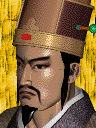
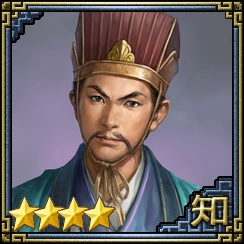
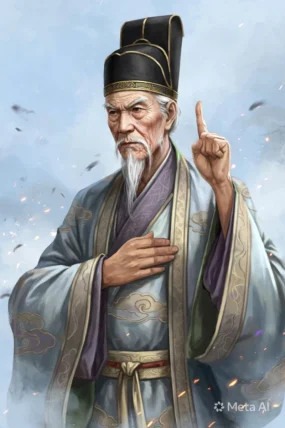
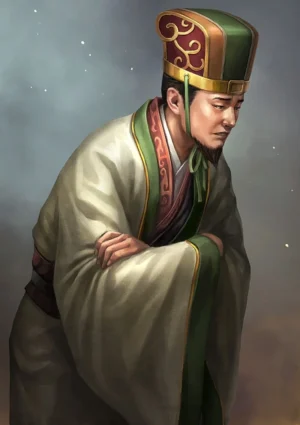
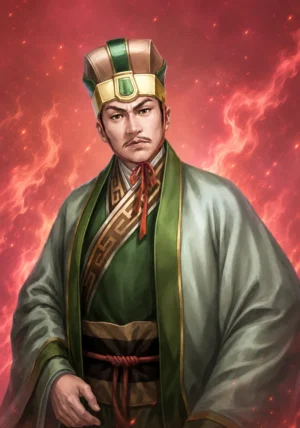
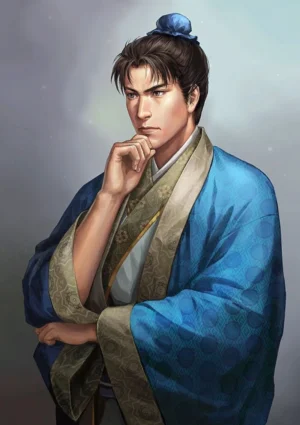
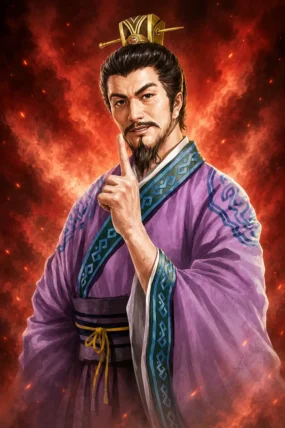
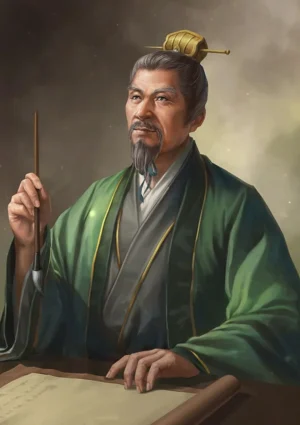
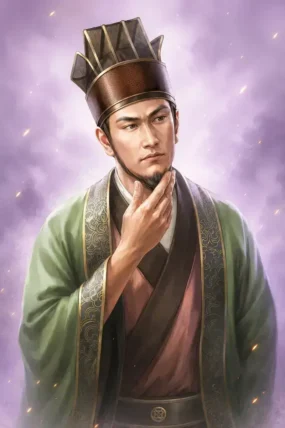
Xun Yu (163–212 AD), courtesy name Wenruo, was a paramount strategist, statesman, and chief counselor to the warlord Cao Cao (曹操, Tào Tháo) during the late Han Dynasty. Hailing from Yingyin in Yingchuan Commandery, he belonged to one of the most prominent scholarly clans of the era. From his youth, he was lauded by the evaluator He Yong (何颙, Hà Ngung) as a strategist possessing the “talent to assist a king” (王佐之才).
Initially entering civil service as a Palace Attendant under the Han court, Xun Yu resigned his post when the tyrant Dong Zhuo (董卓, Đổng Trắc) seized control of Luoyang (洛阳, Lạc Dương). Recognizing that his home commandery of Yingchuan was vulnerable to devastation, he urged his clan to move north. He briefly sought refuge under Han Fu (韩馥, Hàn Phức) and later Yuan Shao (袁绍, Viên Thiệu) in Ji Province. However, Xun Yu quickly realized that Yuan Shao lacked the resolve and decisiveness necessary to restore order to the empire. In 191 AD, Xun Yu departed from Yuan Shao and offered his service to Cao Cao (曹操, Tào Tháo), who joyfully exclaimed, “He is my Zhang Liang!”—referencing the famed master strategist of Emperor Gaozu of Han.
For over two decades, Xun Yu served as Cao Cao’s principal political architect and administrative backbone. During Cao Cao’s campaign against Tao Qian (陶谦, Đào Khiêm) in Xu Province, a major rebellion orchestrated by Zhang Miao (张邈, Trương Mạc) and Chen Gong (陈宫, Trần Cung) invited the formidable warrior Lu Bu (吕布, Lữ Bố) to seize Yan Province. Xun Yu, together with Cheng Yu (程昱, Trình Dục), saved the remaining three towns of Juancheng, Dong’a, and Fanxian, preventing Cao Cao’s total collapse and providing a foothold from which Cao Cao eventually recaptured the province.
In 196 AD, Xun Yu proposed one of the most decisive grand strategies in Chinese history: welcoming Emperor Xian of Han (刘协, Lưu Hiệp) to set up the imperial court at Xuchang (许昌, Hứa Xương). By escorting the sovereign, Cao Cao secured political legitimacy, enabling him to issue imperial decrees to command other warlords under the banner of the Han Dynasty. Xun Yu was also an unparalleled talent scout, introducing key advisers to Cao Cao, including his nephew Xun You (荀攸, Tôn Du), Guo Jia (郭嘉, Quách Gia), Zhong Yao (钟繇, Chung Dao), Chen Qun (陈群, Trần Quần), and Xi Zhicai (戏志才, Hí Chí Tài).
During the fateful Battle of Guandu (200 AD) against Yuan Shao (袁绍, Viên Thiệu), when Cao Cao’s forces ran dangerously low on provisions and Cao Cao contemplated retreating, Xun Yu wrote an urgent letter from the capital. He persuaded Cao Cao that holding the strategic position would break Yuan Shao’s momentum, comparing the struggle to the historic confrontation between Xiang Yu and Liu Bang. His counsel proved correct, culminating in Cao Cao’s decisive victory.
Despite his decades of loyalty to Cao Cao, Xun Yu remained fundamentally loyal to the Han Dynasty. In 212 AD, when Dong Zhao (董昭, Đổng Chiêu) and other officials proposed conferring upon Cao Cao the title of Duke of Wei (魏公) and granting him the Nine Bestowments (九锡), Xun Yu firmly opposed it, asserting that Cao Cao’s mission was to restore the imperial house rather than advance personal honors. This ideological rift deeply alienated Cao Cao. Sent to Shouchun under the guise of rewarding the troops, Xun Yu fell ill and died shortly after. The Records of the Three Kingdoms records that he died of grief and illness, while the Book of the Later Han and popular tradition state that Cao Cao sent him an empty lunchbox—symbolizing that there was no longer any food or place for him in Cao Cao’s state—prompting Xun Yu to commit suicide by drinking poison at the age of 50.
Role in Romance of the Three Kingdoms
In the historical novel Romance of the Three Kingdoms (Tam Quốc Diễn Nghĩa) by Luo Guanzhong (罗贯中, La Quán Trung), Xun Yu is depicted as Cao Cao’s preeminent strategist and administrative mind. He is portrayed as calm, deeply insightful, and upright, often serving as the ethical counterbalance to Cao Cao’s increasingly tyrannical ambitions.
The novel highlights his extraordinary strategic foresights, such as advising Cao Cao on the “Drive the Tiger to Devour the Wolf” (驱虎吞狼) scheme to set Liu Bei (刘备, Lưu Bị) and Lu Bu (吕布, Lữ Bố) against each other, as well as the “Double-Crossed Daggers” strategy. Throughout the early campaigns, Xun Yu is shown managing Xuchang with flawless efficiency, ensuring supply lines remained unbroken while Cao Cao fought far away on the front lines.
His tragic end in Chapter 61 is one of the most poignant episodes in the novel, highlighting the tragic conflict between personal loyalty to a lord and moral commitment to the Han state:
“Cao Cao sent to Xun Yu a vessel of food. Upon opening it, Xun Yu found it completely empty. Understanding the unspoken command, he swallowed poison and died. He was fifty years of age. Posterior generations lamented his fate: ‘Yingchuan’s noble mind possessed a talent divine; He served the rising power to save the royal line. Yet when the Duke of Wei sought crowns beyond his claim, An empty box declared his end, preserving his pure name.'”
Notable Quotes & Famous Sayings
- “To welcome the Emperor to honor the standard of righteousness is the supreme strategy. To act with altruism wins the hearts of the realm; to maintain justice subdues the rebellious.” — Advice to Cao Cao on moving Emperor Xian to Xu.
- “You hold the critical position of the realm and control the key to victory. Although your numbers are fewer, you possess supreme strategy, whereas Yuan Shao, despite his vast forces, cannot utilize them effectively.” — Letter to Cao Cao at the Battle of Guandu.
- “Lord Cao raised his righteous army to rescue the imperial house and bring peace to the realm; his core virtue lies in humility and loyalty. It is inappropriate to accept grand titles for personal elevation.” — Final opposition to Cao Cao becoming Duke of Wei.
Xun Yu — Historical & Literary Timeline
Birth in Yingchuan
Born in Yingyin, Yingchuan Commandery, into the prestigious Xun lineage. Evaluated early in life by He Yong (何颙, Hà Ngung) as a youth with “talent to assist a king.”
Resignation from Court
Appointed Palace Attendant. Following Dong Zhuo (董卓, Đổng Trắc)’s usurpation, he leaves Luoyang to evacuate his family and clan from the impending chaos in Yingchuan.
Joining Cao Cao
Leaves Ji Province after recognizing Yuan Shao (袁绍, Viên Thiệu)’s indecisiveness. Joins Cao Cao (曹操, Tào Tháo), who hails him as “My Zhang Liang.” Appointed Major and chief military adviser.
Defense of Yan Province
When Lu Bu (吕布, Lữ Bố) invades Yan Province with the help of Chen Gong (陈宫, Trần Cung), Xun Yu holds Juancheng alongside Cheng Yu (程昱, Trình Dục), preserving Cao Cao’s territorial foundation.
Welcoming the Emperor
Advises Cao Cao to rescue Emperor Xian (刘协, Lưu Hiệp) and establish Xuchang as the imperial capital, granting Cao Cao ideological supremacy over competing warlords.
Strategic Backbone at Guandu
Manages rear administrative logistics and writes a critical letter urging Cao Cao to maintain his ground at Guandu against Yuan Shao (袁绍, Viên Thiệu), leading to a historic victory.
Opposition to the Duke of Wei & Death
Opposes Cao Cao taking the title Duke of Wei and Nine Bestowments. Receives an empty food container from Cao Cao at Shouchun and commits suicide by poison at age 50.
Key Relationships
Family
- Xun Shu (荀淑, Tôn Thục): His grandfather, a renowned scholar and official known as one of the “Eight Dragons” of the Xun clan.
- Xun Shuang (荀爽, Tôn Sảng): His uncle, who served as the Excellency over the Masses during the late Han period.
- Xun Chen (荀谌, Tôn Thâm): His older brother, who served as a strategist for Yuan Shao during the early warlord era.
- Xun You (荀攸, Tôn Du): His nephew (historically his elder grand-nephew), who served alongside him as a primary strategist for Cao Cao.
- Lady Tang (唐氏, Đường Thị): His wife, the daughter of the influential eunuch Tang Heng.
- Xun Yun (荀恽, Tôn Vận): His eldest son, who married Princess Anyang, a daughter of Cao Cao.
- Xun Yi (荀顗, Tôn Ỷ): His son, who later rose to prominence as a high-ranking official and Grand Tutor during the Jin Dynasty.
- Xun Chan (荀粲, Tôn Xán): His son, recognized as a notable Daoist scholar and philosopher.
Friends
- Guo Jia (郭嘉, Quách Gia): A brilliant strategist whom Xun Yu personally recommended to Cao Cao, becoming a close colleague in the administration.
- Cheng Yu (程昱, Trình Dục): A fellow strategist with whom Xun Yu successfully defended the towns of Juancheng, Dong’a, and Fanxian against Lu Bu in 194 AD.
- Zhong Yao (钟繇, Chung Dao): A trusted associate and scholar whom Xun Yu recommended to Cao Cao for the governance of the western territories.
- Chen Qun (陈群, Trần Quần): A talented administrator introduced to Cao Cao by Xun Yu, later famous for developing the Nine-rank system.
- Sima Yi (司马懿, Tư Mã Ý): A rising talent whom Xun Yu was the first to recommend for imperial service.
Enemies
- Dong Zhuo (董卓, Đổng Trắc): A tyrant whose seizure of the Han capital in 189 AD prompted Xun Yu to resign his post and flee the region.
- Yuan Shao (袁绍, Viên Thiệu): A warlord whom Xun Yu served briefly in 191 AD before departing, having concluded that Yuan Shao lacked the resolve to restore the Han Dynasty.
- Lu Bu (吕布, Lữ Bố): A formidable warrior who invaded Yan Province in 194 AD, forcing Xun Yu to lead the defense of Cao Cao’s remaining strongholds.
- Chen Gong (陈宫, Trần Cung): An advisor who betrayed Cao Cao to invite Lu Bu into Yan Province, positioning himself as a direct adversary to Xun Yu’s defensive efforts.
- Cao Cao (曹操, Tào Tháo): His long-time lord and political partner; their relationship turned adversarial in 212 AD when Xun Yu opposed Cao Cao’s acceptance of the title “Duke of Wei,” leading to Xun Yu’s death.
Other
- Emperor Xian of Han (刘协, Lưu Hiệp): The sovereign to whom Xun Yu remained loyal throughout his career, famously advising Cao Cao to bring the Emperor to Xuchang in 196 AD to secure political legitimacy.
- He Yong (何颙, Hà Ngung): An influential evaluator who recognized Xun Yu’s potential in his youth, famously describing him as a man with the “talent to assist a king.”
In Novel
Chapter 10
- Xun Yu (荀彧, Tuân Úc): Master statesman and strategist from Yingchuan, courtesy name Wenruo (文若); entered Cao Cao’s (曹操, Tào Tháo) service, being hailed by Cao Cao as ‘my Zifang’, and recommended talented scholars including Xun You (荀攸, Tuân Du), Guo Jia (郭嘉, Quách Gia), and Cheng Yu.
Chapter 11
- Xun Yu (荀彧, Tuân Úc): Stationed in Yanzhou, successfully defending Juancheng and keeping Cao Cao’s power base intact during Lu Bu’s (吕布, Lã Bố) surprise invasion.
Chapter 12
- Xun Yu (荀彧, Tuân Úc): Advised Cao Cao (曹操, Tào Tháo) on securing regional agricultural production and subjugating the Yellow Turban remnants at Mount Yang.
Chapter 14
- Xun Yu (荀彧, Tuân Úc): Advised Cao Cao (曹操, Tào Tháo) to welcome Emperor Xian (刘协, Hán Hiến Đế) to Xuchang, establishing the political authority of ‘commanding the nobles in the name of the Emperor’.
Chapter 16
- Xun Yu (荀彧, Tuân Úc): Devised the ‘Drive the Tiger to Devour the Wolf’ stratagem to foment conflict between Liu Bei (刘备, Lưu Bị) and Lu Bu (吕布, Lã Bố).
Chapter 17
- Xun Yu (荀彧, Tuân Úc): Formulated the operational plans to suppress Yuan Shu (袁术, Viên Thuật) in Huainan.
Chapter 18
- Xun Yu (荀彧, Tuân Úc): Advised Cao Cao (曹操, Tào Tháo) to destroy Lu Bu (吕布, Lã Bố) before confronting Yuan Shao (袁绍, Viên Thiệu).
Chapter 21
- Xun Yu (荀彧, Tuân Úc): Cautioned Cao Cao (曹操, Tào Tháo) regarding Liu Bei’s (刘备, Lưu Bị) hidden potential during their garden discussions.
Chapter 22
- Xun Yu (荀彧, Tuân Úc): Analyzed the fatal character flaws of Yuan Shao’s (袁绍, Viên Thiệu) key commanders and advisors prior to the Guandu campaign.
Chapter 24
- Xun Yu (荀彧, Tuân Úc): Advised Cao Cao (曹操, Tào Tháo) on garrisoning Xuchang while launching a swift eastward strike against Liu Bei in Xuzhou.
Chapter 30
- Xun Yu (荀彧, Tuân Úc): Sent a crucial letter from Xuchang urging Cao Cao (曹操, Tào Tháo) to persevere at Guandu, comparing the standoff to Chu-Han history and predicting an imminent turning point.
Chapter 32
- Xun Yu (荀彧, Tuân Úc): Devised strategies to exploit the fratricidal conflict between Yuan Tan (袁谭, Viên Đàm) and Yuan Shang (袁尚, Viên Thượng).
Chapter 33
- Xun Yu (荀彧, Tuân Úc): Advised on administrative pacification of Hebei.
Chapter 38
- Xun Yu (荀彧, Tuân Úc): Coordinated civil and logistics preparation in Xuchang for the grand southern expedition.
Chapter 61
- Xun Yu (荀彧, Tuân Úc): Firmly opposed elevating Cao Cao (曹操, Tào Tháo) to Duke of Wei with the Nine Bestowals out of steadfast loyalty to the Han dynasty; after receiving an empty food box from Cao Cao symbolizing his redundancy, Xun Yu took poison and died at age fifty in 212 AD.
In History
Summary
- Xun Yu (荀彧, Tuân Úc), courtesy name Wenruo, was a principal adviser to Cao Cao and an important political architect of the Wei regime.
Year: 196 AD
- Xun Yu (荀彧, Tuân Úc) strongly supported Cao Cao’s decision to receive and protect Emperor Xian, helping establish Cao Cao’s control of the Han court.
Year: 200 AD
- Xun Yu (荀彧, Tuân Úc) advised Cao Cao during the Guandu campaign.
Year: 212 AD
- Xun Yu (荀彧, Tuân Úc) died after a political disagreement with Cao Cao over the direction of Cao Cao’s authority.
Historical Record
- Xun Yu (荀彧, Tuân Úc) was a real historical statesman and strategist. His political judgment and relationship with Cao Cao are central to the historical record.