
Contents
Biography & Historical Record
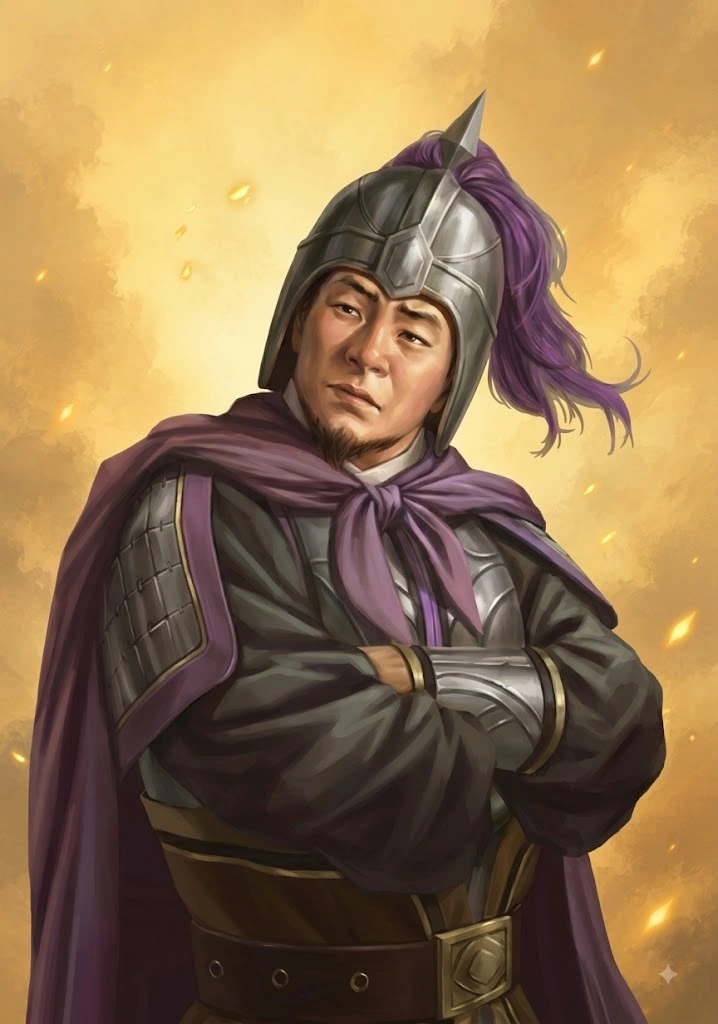
Hui Qu was a military officer and senior administrator serving the warlord Yuan Shu during the late Eastern Han dynasty. Hailing from Langya Commandery (modern-day Linyi, Shandong Province), Hui Qu belonged to the regional gentry class of eastern China. Documented in Chen Shou’s Records of the Three Kingdoms (Sanguozhi – Book of Wu, Biography of Liu Yao, citing the Book of Wu) and Fan Ye’s Book of Later Han (Hou Han Shu – Biography of Yuan Shu), Hui Qu played a prominent role in Yuan Shu’s aggressive territorial expansion across the Huai River and Jiangdong regions, serving as Yuan Shu’s rival appointee for Inspector of Yang Province in direct opposition to the Han court’s legitimate governor Liu Yao.
Following the dissolution of the grand coalition against Dong Zhuo in the early 190s AD, Yuan Shu established his primary power base at Shouchun in Nanyang and Huainan, harboring imperial ambitions to control the prosperous southern region of Yang Province. However, the Eastern Han imperial court in Chang’an officially appointed the respected Han noble Liu Yao as Inspector of Yang Province. To counter imperial authority and establish absolute control over the region, Yuan Shu defied imperial decrees and established his own rival regional administration. Yuan Shu appointed Chen Xiu as Grand Administrator of Danyang Commandery and promoted Hui Qu as Inspector of Yang Province, entrusting him with command of a major expeditionary force to conquer the territory south of the Yangtze River.
Commissioned as Yuan Shu’s regional governor, Hui Qu mobilized his army alongside Yuan Shu’s generals Sun Ben and Wu Jing to launch a fierce military campaign against Liu Yao’s defensive perimeters at Qu’e and Jiangning. However, Liu Yao organized a formidable defense, positioning veteran generals Zhang Ying and Fan Neng along the strategic river crossings of Qu’e and Liling. Hui Qu’s expeditionary forces repeatedly attempted to cross the Yangtze River and break Liu Yao’s defense lines, but they suffered severe tactical reverses and heavy casualties. For over a year, Hui Qu’s offensive remained completely stalemated along the riverbanks, dealing a severe blow to Yuan Shu’s southern strategy before Sun Ce was eventually dispatched to take over command of the Jiangdong campaign. Following the failure of the Yang Province expedition and the subsequent downfall of Yuan Shu after his self-proclamation as Emperor of the short-lived Zhong Dynasty in 197 AD, Hui Qu faded from historical records, retiring into quiet obscurity in the Huai River region.
Role in Romance of the Three Kingdoms
In Luo Guanzhong’s novel Romance of the Three Kingdoms, Hui Qu is featured as a key officer and regional appointee serving under the ambitious warlord Yuan Shu during the early conflict over Yang Province. Introduced during the territorial rivalry between Yuan Shu and the legitimate Han Inspector Liu Yao, Hui Qu represents the faction of warlord-appointed administrators created by Yuan Shu to usurp Han court authority across the Huai River and Jiangnan regions. In the narrative framework of Chapter 15, as Yuan Shu schemes to dominate Shouchun and expand into Jiangdong, Hui Qu is dispatched as Yuan Shu’s rival governor to spearhead the offensive against Liu Yao’s forces at Qu’e. Despite commanding substantial troops, Hui Qu’s campaign founders against Liu Yao’s veteran defenders Zhang Ying and Fan Neng, creating the military stalemate that prompts Sun Ce to request his father Sun Jian’s former troops from Yuan Shu to conquer Jiangdong. Hui Qu’s literary role highlights the chaotic fragmentation of imperial authority during the rise of the warlord era, serving as a testament to the bitter regional struggles that preceded Sun Ce’s unification of Wu.
Hui Qu (惠衢) — Historical & Literary Timeline
Appointed Inspector of Yang Province
Unilaterally appointed Inspector of Yang Province by Yuan Shu in direct opposition to the Han imperial court’s official governor Liu Yao, tasked with spearheading Yuan Shu’s southern expansion.
Expedition Against Qu’e & River Stalemate
Commands Yuan Shu’s expeditionary forces alongside Sun Ben and Wu Jing against Liu Yao; repelled at the Yangtze River crossings by Zhang Ying and Fan Neng, resulting in a prolonged military stalemate.
Aftermath of the Jiangdong Campaign & Historical Obscurity
Replaced in the frontline command by Sun Ce during the conquest of Jiangdong; retires into obscurity following the decline and collapse of Yuan Shu’s Zhong Dynasty in 197 AD.
For detailed historical records, archives, and official chronicles, explore Hui Qu on Wikipedia.
Key Relationships
Family
- No information
Friends
- Sun Ben (孙贲, Tôn Bôn): General under Yuan Shu who co-commanded the Yang Province expedition alongside Hui Qu in c. 194 AD during the offensive against Liu Yao.
- Wu Jing (吴景, Ngô Cảnh): General under Yuan Shu who joined forces with Hui Qu and Sun Ben to launch military operations across the Yangtze River.
- Chen Xiu (陈秀, Trần Tú): Grand Administrator of Danyang Commandery appointed by Yuan Shu to coordinate regional administration alongside Hui Qu.
Enemies
- Liu Yao (刘繇, Lưu Dao): Han court-appointed Inspector of Yang Province whose forces at Qu’e successfully resisted and stalemated Hui Qu’s expedition for over a year.
- Zhang Ying (张英, Trương Anh): Senior commander under Liu Yao who defended the Yangtze River crossings and repeatedly repelled Hui Qu’s assaults.
- Fan Neng (樊能, Phàn Năng): Defensive general under Liu Yao who co-garrisoned strategic points along the riverbanks to block Hui Qu’s advance.
Other
- Yuan Shu (袁术, Viên Thuật): Warlord and ruler who unilaterally appointed Hui Qu as Inspector of Yang Province in c. 193 AD to challenge the Han court’s regional authority.
- Sun Ce (孙策, Tôn Sách): Subordinate general under Yuan Shu who was dispatched to assume frontline command of the southern campaign after Hui Qu’s offensive ground to a halt.
In Novel
Hui Qu (惠衢, Huì Qú) does not have a securely verified named appearance in the supplied edition under the exact Chinese name 惠衢. No chapter is assigned without an exact textual match.
In History
Summary
- Hui Qu (惠衢, Hội Cừ) is an obscure figure with limited surviving biographical information.
Historical Record
- The available evidence does not justify a detailed biography without risking conflation with other similarly named people.
- Classification: Historical / Briefly Attested.