
Contents
Biography & Historical Record
Li Song (died 189 AD), also known as Lisong, was a high-ranking eunuch official and a core member of the notorious Ten Attendants (Shi Changshi) during the late Eastern Han Dynasty. Serving under Emperor Ling of Han, Li Song participated in the factional control of the imperial court, accumulating immense wealth through systemic extortion, selling official titles, and collaborating with fellow eunuchs to marginalize upright Confucian officials. Their unchecked misrule severely weakened the administrative integrity of the Han empire, fueling public outrage and setting the stage for nationwide rebellions. Following the death of Emperor Ling in 189 AD, a fierce political struggle broke out between General-in-Chief He Jin and the powerful eunuch faction. When He Jin conspired with military leaders to eliminate the eunuchs, Li Song joined his associates in the internal court defense and political maneuvering. This violent power struggle provoked elite officers led by Yuan Shao and Cao Cao to storm the palace and massacre the eunuchs. Li Song was captured and executed during the ruthless palace purge, bringing a definitive end to his tyrannical career.
Role in Romance of the Three Kingdoms
In Luo Guanzhong’s epic historical novel Romance of the Three Kingdoms, Li Song is introduced as one of the Ten Attendants, the corrupt clique of eunuchs who dominate Emperor Ling and corrupt the imperial government. In the early chapters, Li Song shares in the spoils of court corruption, perverting the laws and persecuting honest ministers who attempt to restore order.
In Chapter 3, following the death of Emperor Ling, Li Song joins Zhang Rang and Zhao Zhong in political maneuvers against General-in-Chief He Jin, who seeks to exterminate the eunuchs. In Chapter 4, this conflict triggers immediate military retribution as Yuan Shao and Wu Kuang storm the palace with armed forces to slaughter the eunuchs. Li Song is killed during the assault, ending the reign of terror of the Ten Attendants.
Notable Quotes & Famous Sayings
- “The General-in-Chief seeks to destroy our entire faction; if we wait passively, death is certain.” — Li Song discussing the crisis with his fellow eunuchs.
Li Song (栗嵩) — Historical & Literary Timeline
189 AD
Palace Struggles Against He Jin
Following Emperor Ling’s death, Li Song and the Ten Attendants engage in high-stakes political maneuvering against General-in-Chief He Jin over control of the imperial court.
189 AD
The Palace Massacre
As Yuan Shao’s troops breach the palace gates to eradicate the eunuch faction, Li Song is captured and executed during the violent purge of Luoyang.
For detailed historical records, archives, and official chronicles, explore Li Song on Wikipedia.
Key Relationships
Family
- No information
Friends
- Zhang Rang (张让, Trương Nhượng) — Leader of the Ten Attendants and a fellow eunuch official who collaborated with Li Song in court corruption and political maneuvering.
- Zhao Zhong (赵忠, Triệu Trung) — A prominent member of the Ten Attendants who acted alongside Li Song to maintain the eunuch faction’s influence over Emperor Ling.
- Song Dian (宋典, Tống Điển) — A fellow member of the Ten Attendants who shared in the collective political power and eventual downfall of the group.
- Han Kui (韩悝, Hàn Khôi) — A member of the Ten Attendants who participated in the defense of the palace against the forces of He Jin.
- Zhang Gong (张恭, Trương Cung) — A member of the Ten Attendants who served as a political ally within the imperial court.
- Gao Wang (高望, 高望) — A member of the Ten Attendants who worked with Li Song to marginalize Confucian officials.
- Bi Lan (毕岚, Tất Lam) — A member of the Ten Attendants who collaborated in the factional control of the late Eastern Han government.
- Sun Zhang (孙璋, Tôn Chương) — A member of the Ten Attendants who stood with Li Song during the final power struggle in 189 AD.
- Xia Yun (夏恽, Hạ Huy) — A member of the Ten Attendants who joined Li Song in the internal court defense against the military purge.
- Guo Sheng (郭胜, Quách Thắng) — A member of the Ten Attendants who acted as a political associate during the late Han Dynasty.
- Duan Gui (段珪, Đoàn Khuê) — A member of the Ten Attendants who participated in the failed political resistance against General-in-Chief He Jin.
Enemies
- He Jin (何进, Hà Tiến) — General-in-Chief who sought to eliminate the eunuch faction, triggering the violent political conflict that led to Li Song’s death in 189 AD.
- Yuan Shao (袁绍, Viên Thiệu) — Military leader who led the assault on the palace to massacre the Ten Attendants, directly resulting in the execution of Li Song.
- Cao Cao (曹操, Tào Tháo) — Military officer who participated in the 189 AD purge of the palace, contributing to the destruction of the eunuch faction.
Other
- Emperor Ling of Han (汉灵帝, Hán Linh Đế) — The sovereign under whom Li Song served and whose court the Ten Attendants dominated through systemic corruption.
- Empress Dowager Dong (董太后, Đổng Thái Hậu) — Imperial matriarch who maintained a political alliance with the eunuch faction to secure her own influence.
Comrades
Li Song — Historical & Literary Timeline
Ten Attendants in power
One of the Ten Attendants (十常侍) who sold offices, extorted commanders, and dominated the court of Emperor Ling alongside Zhang Rang.
He Jin’s assassination
Plotted with fellow eunuchs to lure He Jin into the palace and kill him; pursued and executed when Yuan Shao’s forces storm the palace after the coup collapses.


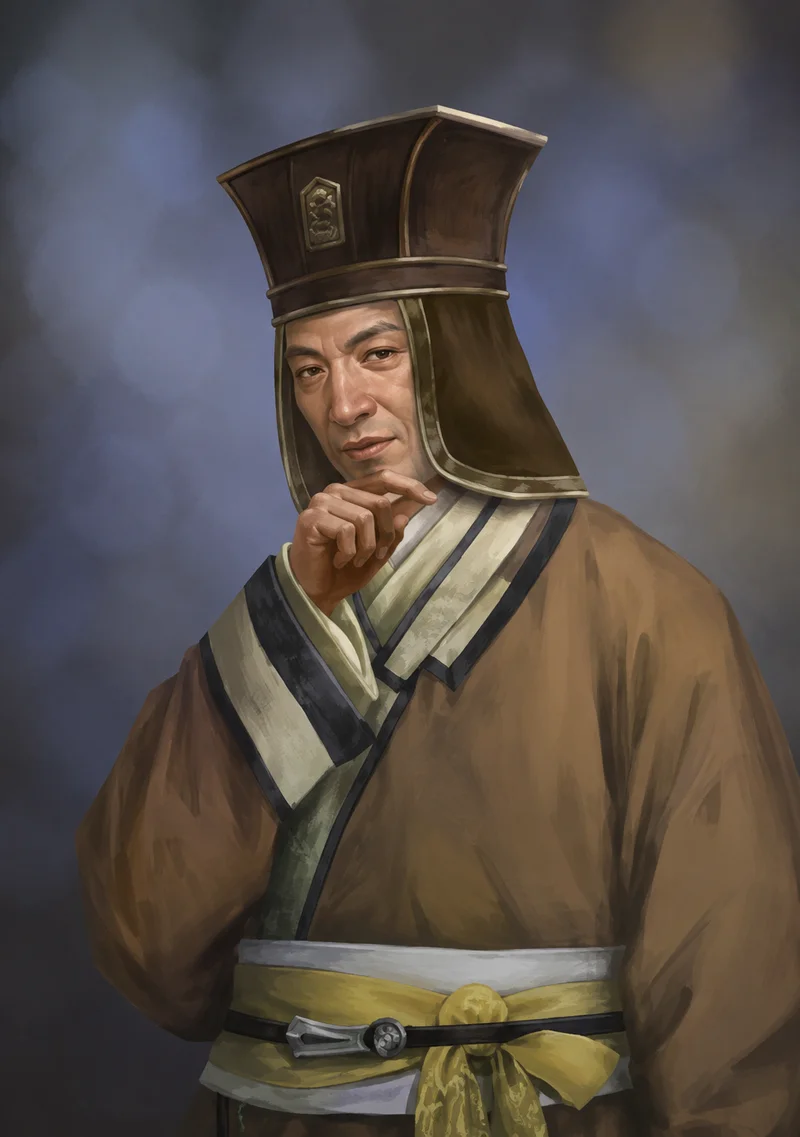

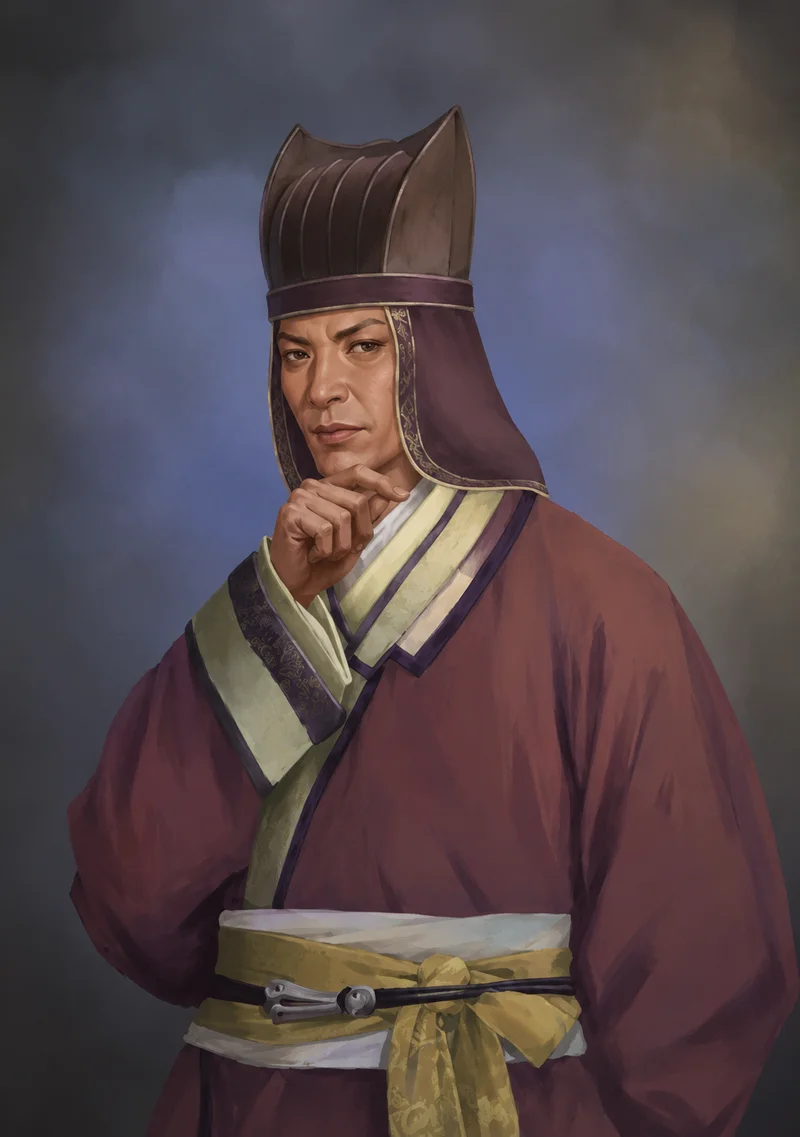


Appearance
In Novel
Li Song (栗嵩, Lật Tung) does not have a named appearance as a character in the supplied Chinese-Vietnamese edition of Romance of the Three Kingdoms. Li Song belongs to the historical group of twelve eunuchs associated with the “Ten Attendants,” but he is not one of the ten eunuchs named by the novel. No chapter should therefore be assigned to him in In Novel from historical material alone.
Chapter 3
- Li Song (栗嵩, Lật Tung): Joined the Ten Attendants’ plot to assassinate He Jin (何进, Hà Tiến) inside the palace after Emperor Ling’s death. When He Jin’s allies stormed the palace, Li Song was hunted down and killed along with the other eunuchs — the event that opened Luoyang to Dong Zhuo’s takeover.
Appearance
In History
Summary
- Li Song (栗嵩, Lật Tung) was a historical Eastern Han palace eunuch associated with the court faction commonly called the Ten Attendants.
- The surviving historical record places Li Song (栗嵩, Lật Tung) within the powerful eunuch establishment at Luoyang. Their influence grew through direct access to Emperor Ling and control of court affairs.
Court Career
- Li Song (栗嵩, Lật Tung) held the rank of palace eunuch during the reign of Emperor Ling of Han and belonged to the same political network as Zhang Rang and Zhao Zhong.
- Individual biographical details about Li Song (栗嵩, Lật Tung) are much less extensive than the surviving accounts of the faction as a whole.
Year: 189 AD
- The collapse of the eunuch faction in 189 AD ended the political environment in which Li Song (栗嵩, Lật Tung) had exercised influence. The surviving sources provide limited individual information beyond his association with the Ten Attendants.
Historical Record
- Li Song (栗嵩, Lật Tung) was a real historical figure. The sources securely place him within the Eastern Han palace eunuch establishment, although the surviving evidence does not justify attributing every later literary episode to him.
Appearance
Famous Allusion
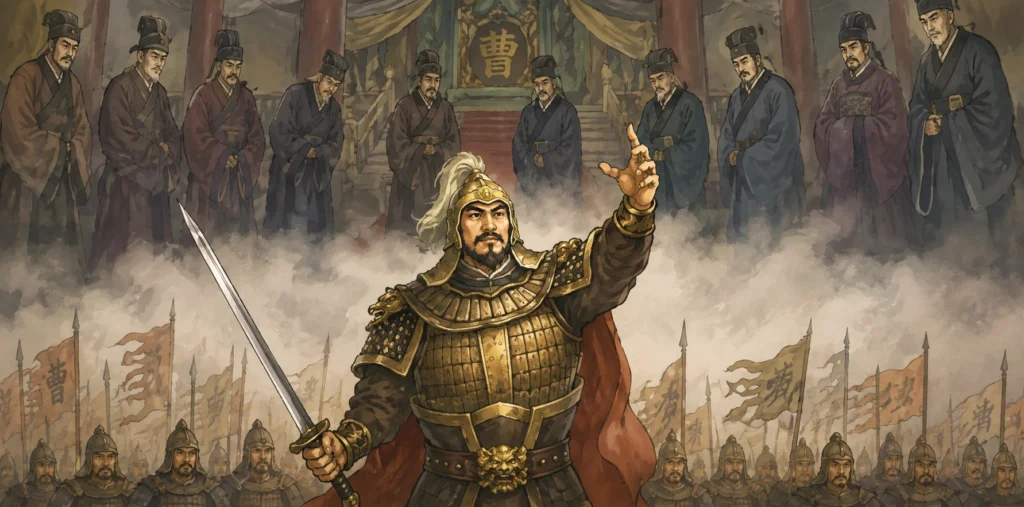
The Ten Eunuchs Behead He Jin - 十常侍斩何进 (Shí cháng shì zhǎn Hé Jìn)