
Contents
Biography & Historical Record
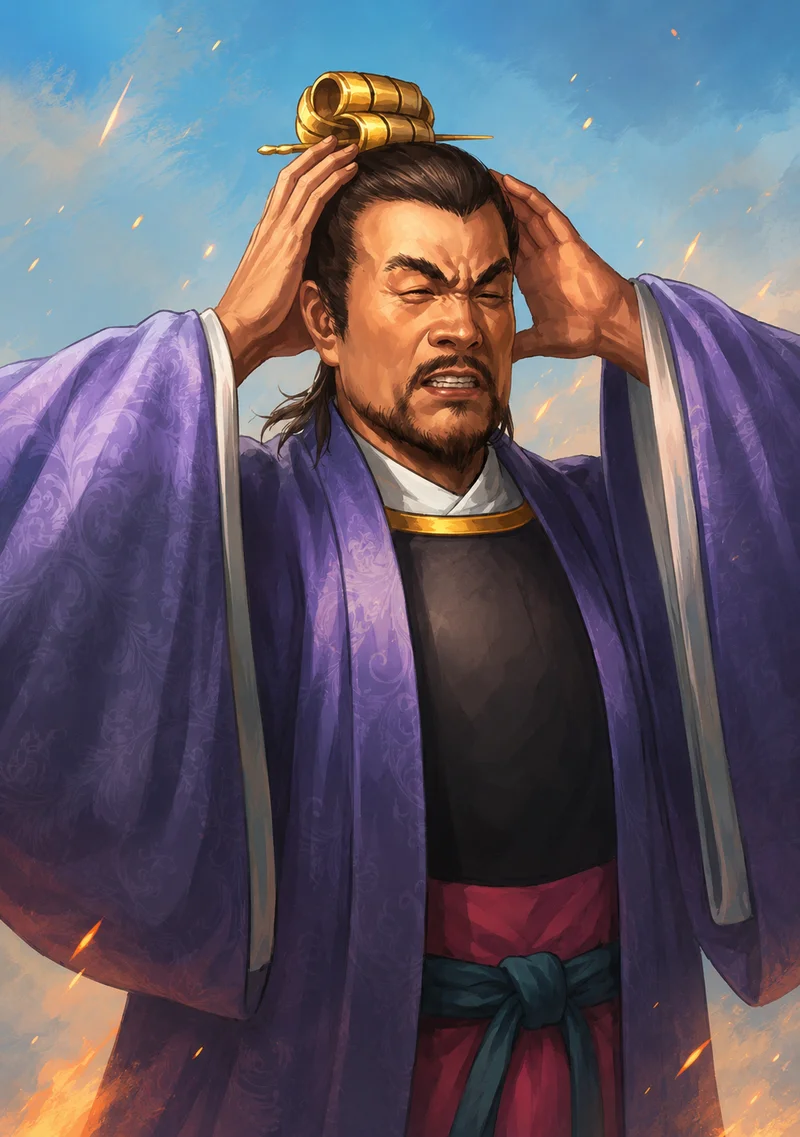
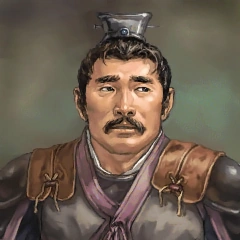
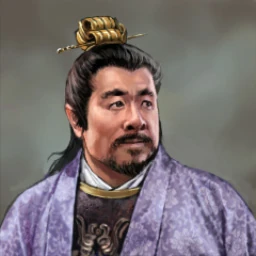
Liu Dai, courtesy name Gongshan, was a prominent Eastern Han dynasty imperial relative, high-ranking magistrate, and Inspector of Yan Province (Yanzhou Cishi) who played a pivotal role in the anti-Dong Zhuo coalition and the early warlord struggles in the Central Plains. Hailing from Mouping County in Donglai Commandery (modern-day Fushan, Yantai, Shandong Province), Liu Dai was an imperial kinsman descended from Liu Fei, King Feihui of Qi (son of Emperor Gaozu of Han). Documented in Chen Shou’s Records of the Three Kingdoms (Sanguozhi – Book of Wei, Biography of Liu Yao, citing the Book of Wei and Book of Heroic Figures/Yingxiong Ji), Fan Ye’s Book of Later Han (Hou Han Shu), and Luo Guanzhong’s classic historical novel Romance of the Three Kingdoms, Liu Dai was universally recognized across China as a refined, cultured, and generous scholar-aristocrat, though his lack of tactical patience and rash military judgment ultimately led to his tragic demise on the battlefield.
During the reign of Emperor Ling of Han, Liu Dai entered imperial service through family prestige and scholarly merit, serving as Palace Attendant (Shiying) and Grand Administrator of Palace Attendants. In 189 AD, following Dong Zhuo’s military usurpation of power in Luoyang, Dong Zhuo attempted to conciliate regional elites by appointing distinguished Han scholar-nobles to govern key border provinces. Under this initiative, Liu Dai was appointed Inspector of Yan Province. However, rather than serving Dong Zhuo’s dictatorial regime, Liu Dai immediately mobilized the military resources of Yan Province and joined the grand regional coalition organized by Cao Cao, Yuan Shao, and Yuan Shu in early 190 AD, encamping his army at Suan Zao alongside Zhang Miao, Bao Xin, and Qiao Mao to block Dong Zhuo’s eastern advance.
During the anti-Dong Zhuo campaign at Suan Zao, severe logistical strain and internal rivalries began to shatter the coalition. When Qiao Mao, the Administrator of Dong郡 (Dong Commandery), refused to share grain provisions with Liu Dai’s army, Liu Dai fell into a rage. In a sudden night raid, Liu Dai stormed Qiao Mao’s encampment, executed Qiao Mao on the spot, and absorbed Qiao Mao’s entire army into his own forces, appointing Wang Gong as Administrator of Dong Commandery. Following the dissolution of the coalition, Liu Dai found himself caught in the regional war between Yuan Shao and Gongsun Zan. Both northern warlords attempted to secure Liu Dai’s alliance: Yuan Shao sent his family to reside in Yan Province as hostages, while Gongsun Zan sent his general Fan Fang with elite white-horse cavalry to assist Liu Dai. When open war erupted between Yuan Shao and Gongsun Zan, both lords demanded that Liu Dai break with the other. Hesitating in deep anxiety, Liu Dai consulted his strategic advisor Cheng Yu, who wisely counseled him to align with Yuan Shao due to Yuan Shao’s proximity and long-term hegemony. Liu Dai followed Cheng Yu’s advice, returning Fan Fang’s cavalry to Gongsun Zan, who was subsequently defeated by Yuan Shao at Jieqiao.
In the summer of 192 AD, a massive horde of over three hundred thousand Yellow Turban rebels from Qing Province invaded Yan Province, plundering towns and burning rural garrisons. Panicked by the immense insurgent wave, Liu Dai resolved to lead his army out immediately to engage the rebels. His senior general Bao Xin strongly warned him against a direct confrontation, arguing: ‘The Yellow Turban rebels number hundreds of thousands, their morale is desperate, and they have no central supply line. Our best strategy is to fortify our cities, maintain a strong defense, and wear them down through attrition until they disperse.’ However, Liu Dai arrogantly dismissed Bao Xin’s cautious strategy and led his vanguard out to engage the insurgent vanguard at Shouzhang. Caught in a fierce engagement against overwhelming rebel numbers, Liu Dai’s frontlines collapsed, and he was slain in action at the age of forty-five. His tragic death left Yan Province leaderless, prompting Bao Xin and local gentry leaders to invite Cao Cao to assume the governorship as Inspector of Yan Province, which laid the historical foundation for Cao Cao’s ultimate rise to power.
Role in Romance of the Three Kingdoms
In Luo Guanzhong’s novel Romance of the Three Kingdoms, Liu Dai appears in Chapter 5, Chapter 6, and Chapter 22 as a prominent regional warlord and later a subordinate general under Cao Cao. Introduced in Chapter 5 as the Inspector of Yan Province and the sixth warlord within the grand eighteen-warlord coalition at Hulao Pass, Liu Dai brings his provincial army under Alliance Leader Yuan Shao to oppose Dong Zhuo. In Chapter 6, during the encampment at Suan Zao, Liu Dai requests a loan of grain from Qiao Mao. When Qiao Mao refuses, Liu Dai angrily forces his way into Qiao Mao’s camp, kills him, and absorbs his troops. In Chapter 22, after Cao Cao secures control of the imperial court, Liu Dai serves as a senior commander in Cao Cao’s army. Following Liu Bei’s revolt in Xu Province and the execution of Che Zhou, Cao Cao dispatches Liu Dai and Wang Zhong with 50,000 troops to capture Xuzhou. Liu Dai boasts that he will easily bring Liu Bei’s head. However, at Xuzhou, Zhang Fei executes a clever night ambush, capturing Liu Dai alive inside his camp. Brought before Liu Bei, Liu Dai is treated with utmost courtesy, fed warm wine, and spared after promising never to fight Shu Han again. When a terrified Liu Dai returns to Xu Province, an enraged Cao Cao orders his execution for failure, but Liu Dai is spared due to the intercession of Kong Rong and Cheng Yu, serving as a memorable literary character whose rash arrogance is contrasted against the martial brilliance of Zhang Fei and the benevolence of Liu Bei.
Liu Dai (劉岱) — Historical & Literary Timeline
Appointed Governor & Joining the Grand Coalition
Appointed Inspector of Yan Province by the imperial court; responds to Cao Cao’s call to arms, marching as the sixth warlord in the eighteen-warlord coalition to Suan Zao and Hulao Pass.
Executing Qiao Mao at Suan Zao
Demands grain provisions from Qiao Mao during the coalition assembly at Suan Zao; upon Qiao Mao’s refusal, storms his camp, kills Qiao Mao, and absorbs his forces.
Consulting Cheng Yu & Aligning with Yuan Shao
Caught in the rivalry between Yuan Shao and Gongsun Zan; follows Cheng Yu’s strategic advice to align with Yuan Shao, returning Fan Fang’s cavalry to Gongsun Zan.
Battle with Yellow Turbans & Death at Shouzhang
Ignores Bao Xin’s warnings and attacks the Qing Province Yellow Turban horde at Shouzhang; killed in action, paving the way for Cao Cao to assume control over Yan Province.
Dispatched Against Liu Bei & Captured at Xuzhou
Dispatched by Cao Cao alongside Wang Zhong to invade Xuzhou; ambushed and captured alive by Zhang Fei in a night attack, spared by Liu Bei, and pardoned by Cao Cao upon return.
Comrades



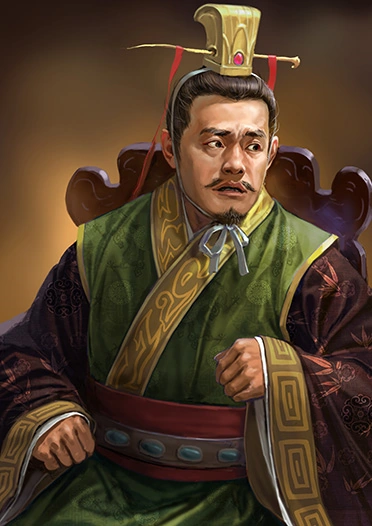


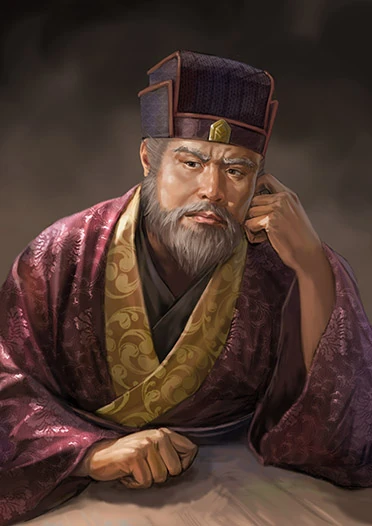
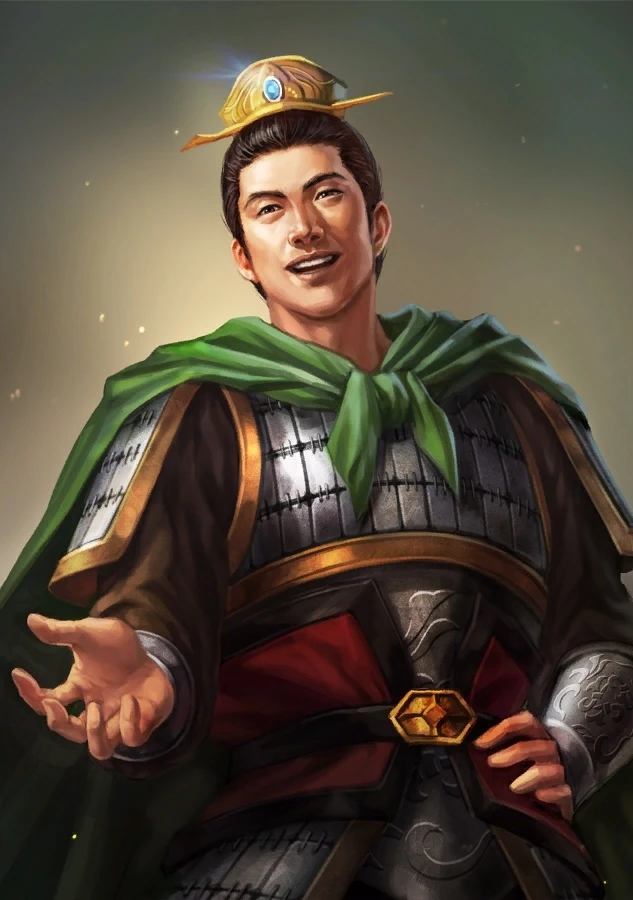

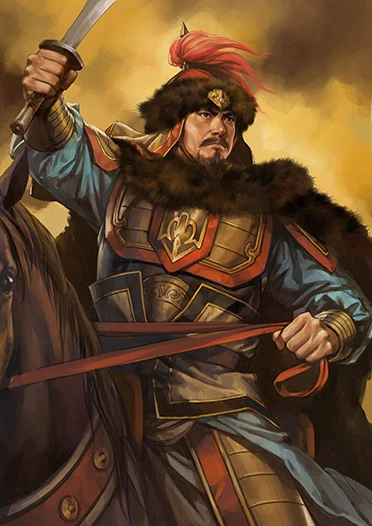
Key Relationships
Family
- Liu Yu (刘舆, Lưu Dư): His father, who served as the Grand Administrator of Cangwu.
- Liu Yao (刘繇, Lưu Dao): His younger brother, a prominent official who served as the Inspector of Yang Province and resisted the expansion of Sun Ce in the Jiangdong region.
- Liu Chong (刘宠, Lưu Sủng): His uncle, a high-ranking imperial official who served as the Grand Tutor during the Eastern Han dynasty.
Friends
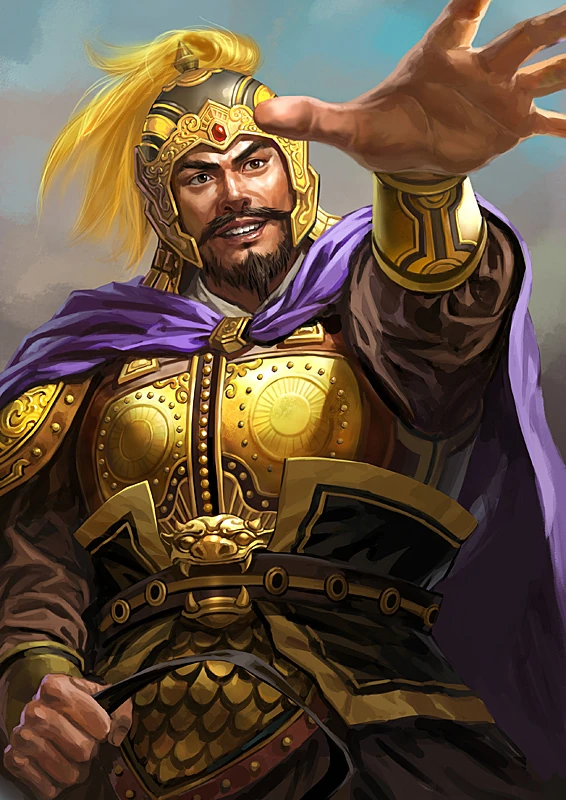
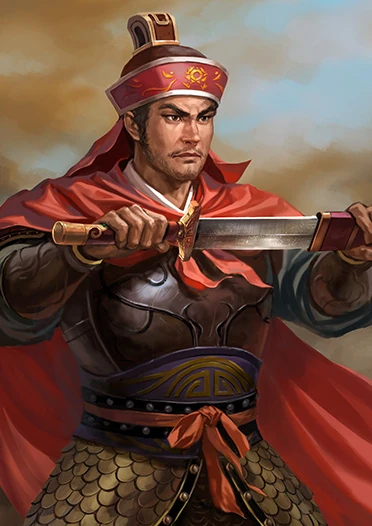
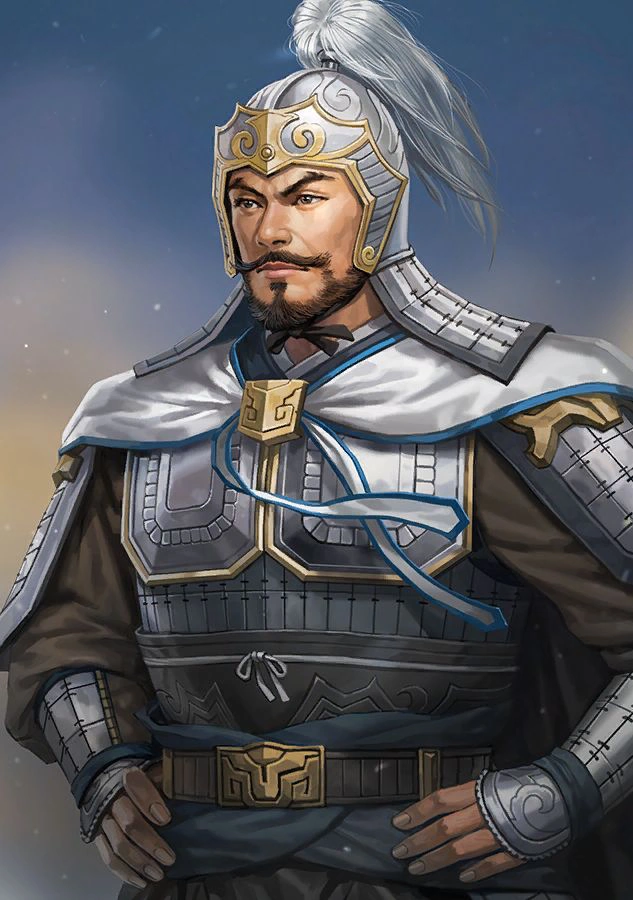
- Bao Xin (鲍信, Bào Tín): A senior general and administrator who served alongside Liu Dai in the anti-Dong Zhuo coalition; he famously warned Liu Dai against engaging the Yellow Turbans in 192 AD and later facilitated Cao Cao’s succession in Yan Province.
- Cheng Yu (程昱, Trình Dục): A brilliant strategist who served as an advisor to Liu Dai; he provided the critical counsel to align with Yuan Shao instead of Gongsun Zan, later entering the service of Cao Cao.
- Wang Zhong (王忠, Vương Trung): A subordinate general who served under Liu Dai during the 199 AD campaign against Liu Bei in Xuzhou.
Enemies
- Dong Zhuo (董卓, Đổng Trác): The tyrannical chancellor whose usurpation of power prompted Liu Dai to join the regional coalition against him in 190 AD.
- Qiao Mao (桥瑁, Kiều Mạo): The Administrator of Dong Commandery whom Liu Dai executed in 190 AD following a violent dispute over grain supplies at the Suan Zao encampment.
- Gongsun Zan (公孙瓒, Công Tôn Toản): A northern warlord who sought an alliance with Liu Dai; Liu Dai ultimately rejected his overtures in favor of Yuan Shao, leading to a breakdown in their relations.
- Qing Province Yellow Turban Rebels (青州黄巾军, Thanh Châu Hoàng Cân Quân): A massive insurgent force that invaded Yan Province in 192 AD; they defeated Liu Dai’s army at Shouzhang, resulting in his death in battle.
- Zhang Fei (张飞, Trương Phi): A Shu Han general who ambushed and captured Liu Dai alive during the Xuzhou campaign in 199 AD.
- Liu Bei (刘备, Lưu Bị): The Warlord of Xuzhou who defeated the invasion force led by Liu Dai and Wang Zhong, though he notably spared Liu Dai’s life after his capture.
Other
- Yuan Shao (袁绍, Viên Thiệu): The supreme commander of the anti-Dong Zhuo coalition; Liu Dai aligned with him on the advice of Cheng Yu during the regional power struggles of 191 AD.
- Cao Cao (曹操, Tào Tháo): A fellow coalition member who eventually assumed control of Yan Province following Liu Dai’s death; in the novel, he served as Liu Dai’s superior during the Xuzhou campaign.
In Novel
Chapter 5
- Liu Dai (刘岱, Lưu Đại): Inspector of Yanzhou, courtesy name Gongshan (公山), who joined the eighteen-warlord coalition against Dong Zhuo (董卓, Đổng Trác) as the fourth commander, participating in the joint operations at Hulao Pass.
Chapter 6
- Liu Dai (刘岱, Lưu Đại): Suffered a critical supply shortage following the withdrawal from Luoyang; when Administrator of Dongjun Qiao Mao (乔瑁, Kiều Mạo) refused his grain loan request, Liu Dai launched a surprise night assault on Qiao Mao’s camp, executed him, and absorbed his troops and provisions.
Chapter 22
- Liu Dai (刘岱, Lưu Đại): Serving as a subordinate general under Cao Cao (曹操, Tào Tháo) alongside Wang Zhong (王忠, Vương Trung), he led a division of fifteen thousand troops to assault Liu Bei (刘备, Lưu Bị) at Xuzhou, but was completely outmaneuvered, captured alive in a night ambush by Zhang Fei (张飞, Trương Phi), and subsequently released unharmed by Liu Bei.
Chapter 23
- Liu Dai (刘岱, Lưu Đại): Returned to Xuchang and reported Liu Bei’s (刘备, Lưu Bị) loyalty and intentions to Cao Cao (曹操, Tào Tháo), barely escaping execution under military discipline through Kong Rong’s (孔融, Khổng Dung) intervention.
In History
Period I
- Liu Dai (刘岱, Lưu Đại, tự Công Sơn), courtesy name Gongshan, was a Han official and the younger brother of Liu You (刘繇, Lưu Dao). He became Governor of Yan Province during the political fragmentation of the late Eastern Han.
Year: 193 AD
- Liu Dai (刘岱, Lưu Đại, tự Công Sơn) fought against the forces of Yuan Shao (袁绍, Viên Thiệu)‘s allies during the struggles in the north. He also came into conflict with Zhang Miao (张邈, Trương Mạo) and other regional leaders.
Year: 194 AD
- Liu Dai (刘岱, Lưu Đại, tự Công Sơn) was killed while fighting the Yellow Turban remnants known as the Qingzhou troops. His death left Yan Province vulnerable and contributed to the subsequent struggle between Cao Cao (曹操, Tào Tháo) and Tao Qian (陶谦, Đào Khiêm).
Summary
- Liu Dai (刘岱, Lưu Đại, tự Công Sơn) was a real historical warlord and provincial governor. He should not be confused with the later literary portrayals of similarly named figures.
Gallery








Famous Allusion
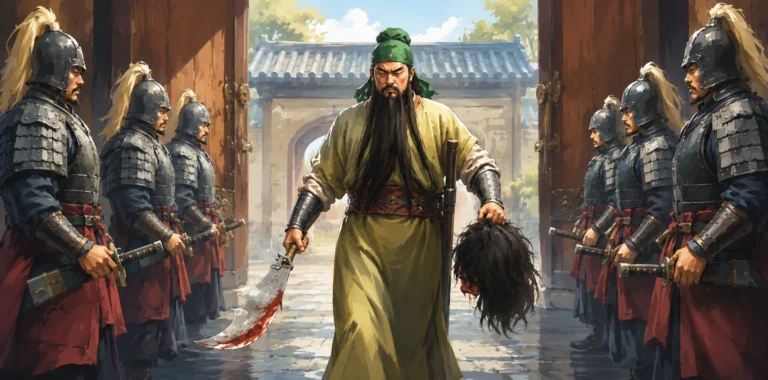
温酒斩华雄, Wēn Jiǔ Zhǎn Huá Xióng, Ôn Tửu Trảm Hoa Hùng
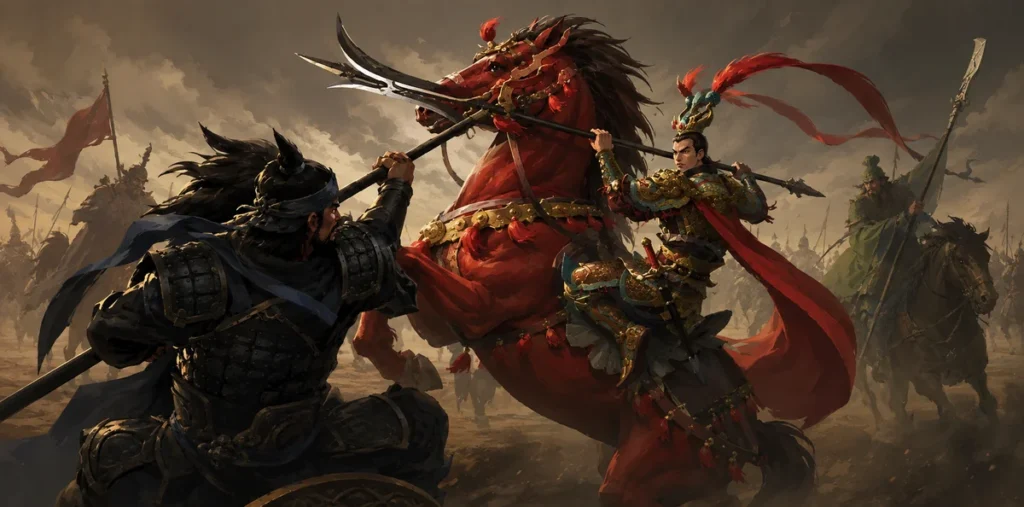
Three Heroes Battle Lu Bu at Hulao Pass - Tam Anh Chiến Lữ Bố