
Contents
Biography & Historical Record
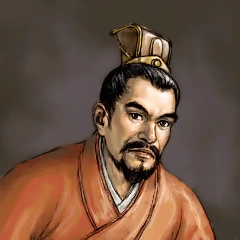
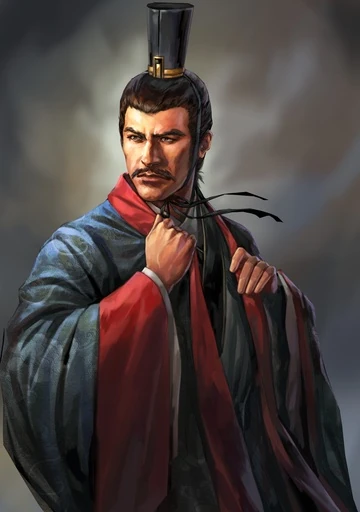
Mao Jie (died 216 AD), courtesy name Xiaoxian, was a prominent politician, strategist, and senior civil administrator who served under the warlord Cao Cao during the late Eastern Han dynasty. Hailing from Pingqiu County, Chenliu Commandery, he began his career as a local administrative clerk and was widely respected for his unyielding integrity, frugality, and strict adherence to moral standards. When civil war broke out, Mao Jie originally planned to seek refuge in Jing Province, but upon learning that Liu Biao lacked grand strategic vision, he turned north and joined Cao Cao in Yan Province.
Mao Jie formulated one of Cao Cao’s foundational grand strategies. Long before the unification of northern China, he advised Cao Cao: ‘Welcome the Emperor to command the disobedient, build up agricultural reserves, and store grain for grand campaigns.’ Cao Cao enthusiastically adopted this strategy, securing Emperor Xian of Han at Xuchang, establishing agricultural colonies (Tuntian), and laying the economic and political foundations for the kingdom of Cao Wei. Later, serving alongside Cui Yan as Master of Writing and Personnel Director, Mao Jie oversaw civil appointments, prioritizing moral purity and personal integrity over family lineage. His rigorous anti-corruption policies transformed government administration, inspiring court officials to adopt modest lifestyles and plain attire. However, following Cui Yan’s execution by Cao Cao in 216 AD, Mao Jie expressed silent grief and resentment. Accused of harboring seditious feelings by political rivals, he was arrested and stripped of his office. Although saved from execution through the intervention of Huan Jie and He Qia, Mao Jie died of grief and illness shortly after his release at his home in 216 AD.
Role in Romance of the Three Kingdoms
In Luo Guanzhong’s historical novel Romance of the Three Kingdoms, Mao Jie is depicted as a highly valued strategist and naval commander serving under Cao Cao. Introduced in Chapter 10 upon the recommendation of Man Chong, Mao Jie immediately impresses Cao Cao with his strategic vision. During the Battle of Red Cliffs in Chapters 47 and 48, after Cao Cao executes his primary naval admirals Cai Mao and Zhang Yun due to Zhou Yu’s forged letter stratagem, Mao Jie and Yu Jin are appointed as joint Naval Commanders to lead Cao Cao’s massive river fleet. Realizing their northern troops are unused to naval warfare, Mao Jie approves the chaining of warships together—a tactical decision that ultimately leaves Cao Cao’s fleet vulnerable to Pang Tong’s chain stratagem and Huang Gai’s devastating fire ship assault. Despite the catastrophic defeat at Red Cliffs, Mao Jie survives the retreat and continues to serve Cao Cao in civil and military logistics until his death.
Mao Jie (毛玠) — Historical & Literary Timeline
Joining Cao Cao and Grand Strategy
Recommended to Cao Cao by Man Chong; formulates the master plan to escort the Han Emperor to Xuchang and establish agricultural colonies to build state wealth.
Escorting Emperor Xian to Xuchang
Assists Cao Cao in welcoming Emperor Xian of Han to Xuchang, establishing the new imperial capital and legal framework.
Appointed joint Naval Commander alongside Yu Jin following the executions of Cai Mao and Zhang Yun; oversees the chained fleet training before the disastrous fire attack at Red Cliffs.
Imprisonment and Death
Arrested following Cui Yan’s execution due to alleged seditious remarks; pardoned and demoted, passing away shortly thereafter from grief and illness.
Key Relationships
Family
- Mao Ji (毛机, Mao Cơ) — Son of Mao Jie; he was granted an official position in the Cao Wei administration following his father’s death in 216 AD.
Friends
- Man Chong (满宠, Mãn Sủng) — A fellow scholar and official who recognized Mao Jie’s talent and recommended him to Cao Cao in 192 AD.
- Cui Yan (崔琰, Thôi Diễm) — A close colleague and fellow official who worked with Mao Jie to oversee personnel appointments; his execution by Cao Cao in 216 AD caused Mao Jie to express grief, leading to his own downfall.
- Yu Jin (于禁, Vu Cấm) — A general who served alongside Mao Jie as a joint Naval Commander during the Battle of Red Cliffs in 208 AD.
- Huan Jie (桓阶, Hoàn Giai) — A senior official who intervened with Cao Cao to save Mao Jie from execution after he was accused of sedition.
- He Qia (和洽, Hòa Cáp) — A senior official who, alongside Huan Jie, successfully petitioned Cao Cao to spare Mao Jie’s life.
Enemies
- Zhou Yu (周瑜, Chu Du) — The Grand Commander of Eastern Wu who orchestrated the strategic deception and naval maneuvers that led to the defeat of Mao Jie’s fleet at Red Cliffs in 208 AD.
- Huang Gai (黄盖, Hoàng Cái) — An Eastern Wu officer who executed the fire ship assault that destroyed the chained fleet commanded by Mao Jie and Yu Jin at Red Cliffs.
Other
- Cao Cao (曹操, Tào Tháo) — The warlord and later King of Wei who served as Mao Jie’s sovereign; he adopted Mao Jie’s foundational strategy of agricultural colonies (Tuntian) and imperial centralization.
- Emperor Xian (汉献帝, Hán Hiến Đế) — The last emperor of the Eastern Han dynasty, whom Mao Jie advised Cao Cao to welcome to Xuchang to legitimize his political authority.
In Novel
Chapter 10
- Mao Jie (毛玠, Mao Giới): Mao Jie serves Cao Cao as a capable civil and military officer during the struggle for Yan Province. He supports Cao Cao’s campaign against Lü Bu and helps organize the administration of the territories Cao Cao recovers.
Chapter 20
- Mao Jie (毛玠, Mao Giới): Mao Jie continues to serve Cao Cao during the political crisis surrounding Emperor Xian and Liu Bei.
Chapter 25
- Mao Jie (毛玠, Mao Giới): Mao Jie remains part of Cao Cao’s administration and participates in the preparations for the Guandu campaign.
Chapter 30
- Mao Jie (毛玠, Mao Giới): Mao Jie continues to support Cao Cao’s administration after the victory over Yuan Shao.
In History
- Mao Jie (毛玠, Mao Giới), courtesy name Xiaoxian (孝先), was a senior administrator of Cao Cao’s government and an important advocate of disciplined government and merit-based appointments.
Early Career
- Mao Jie entered Cao Cao’s service after demonstrating a reputation for personal integrity and administrative ability.
- He was particularly concerned with restoring order and strengthening the state’s fiscal and agricultural foundations.
Administrative Policy
- Mao Jie supported the policy of encouraging agriculture and maintaining military colonies, helping provide the material base needed for Cao Cao’s prolonged campaigns.
- He was also associated with the principle of selecting officials according to ability and reputation rather than wealth or family connections.
Political Influence
- Mao Jie became a significant figure in Cao Cao’s personnel administration. His reputation for impartiality made him respected, but his strict approach also created enemies among powerful officials.
Fall from Office
- Later in Cao Cao’s administration, Mao Jie became involved in a political dispute and was accused by opponents. He lost his position and suffered disgrace.
- The historical account emphasizes that the charges were connected with court politics rather than a collapse of his reputation for administrative competence.
Historical Record
- Mao Jie was a historical figure. His biography appears in Wei Book 12 of the Records of the Three Kingdoms.
Gallery