
Contents
Biography & Historical Record
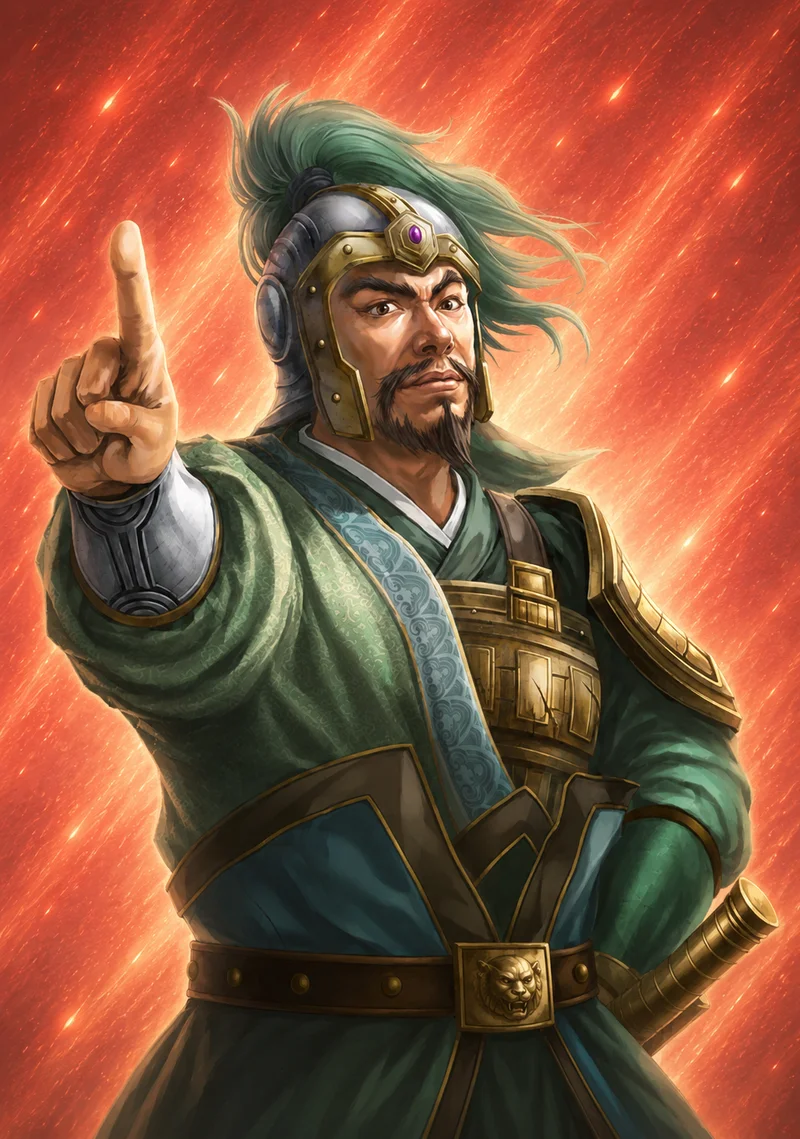
Wang Hun (223–297 CE), courtesy name Xuanchong (Huyền Xung), was a prominent general, statesman, and noble of Cao Wei and the Western Jin dynasty. Hailing from the illustrious Wang clan of Taiyuan in Jinyang, he was the eldest son of the famed Wei Grand General Wang Chang (Vương Xưởng). Known for his composure, administrative capability, and military aptitude, Wang Hun served with distinction through the transition between Cao Wei and the Sima family’s Western Jin dynasty, eventually rising to become one of the Three Excellencies (Sikong and Situ).
During the Cao Wei era, Wang Hun inherited his father’s noble title of Marquis of Jingling and held various administrative and military posts, including Inspector of Henan and later Inspector of Xuzhou and Yangzhou. He took deep charge of the frontier defenses facing Eastern Wu across the Huai River, repeatedly repelling Wu incursions and earning a reputation for defensive prudence and strategic planning.
When Emperor Wu of Jin (Sima Yan) launched the massive conquest of Eastern Wu in 279–280 CE, Wang Hun was appointed Commander of the central front, leading an army from Jiangxi towards Niuzhu. His forces scored a decisive victory at the Battle of Banqiao, annihilating the Wu counteroffensive led by Chancellor Zhang Ti, Shen Ying, and Zhuge Jing, beheading thousands and capturing countless enemy flags. However, after this triumph, Wang Hun hesitated to immediately march directly onto Jianye (the Wu capital), instead reporting to the throne and waiting for further imperial orders. This delay allowed Admiral Wang Jun (Vương Tuấn), sailing down the Yangtze from Sichuan, to accept the surrender of Wu Emperor Sun Hao first. A bitter rivalry ensued between Wang Hun and Wang Jun over military credit, though Sima Yan mediated fairly, promoting both to high status. Wang Hun was enfeoffed as the Duke of Jingling.
In his later years under Emperor Wu and Emperor Hui of Jin, Wang Hun held supreme court offices, including Sikong (Minister of Works) and Situ (Minister over the Masses). He was widely respected for his upright conduct, clan prestige, and measured counsel amidst the growing factional intrigue that presaged the War of the Eight Princes. He passed away peacefully in 297 CE at the age of 75 and was posthumously honored as Duke Yuan of Jingling (Kinh Lăng Nguyên công).
Role in Romance of the Three Kingdoms
In Luo Guanzhong’s historical novel Romance of the Three Kingdoms, Wang Hun appears primarily in Chapter 120 during the grand campaign to conquer Eastern Wu. As Grand General of the front, he commands the central army advancing toward Niuzhu and successfully crushes the defending forces of Prime Minister Zhang Ti. His subsequent dispute with Wang Jun over who deserved the premier credit for taking Jianye is depicted, showcasing court rivalries during Jin’s final unification of the realm.
“Zhang Ti led his army across the river to offer battle, but Wang Hun and his commanders met them with fury. The forces of Wu were shattered at Banqiao, and the waters ran red, signaling the twilight of the Southland.”
— Romance of the Three Kingdoms, Chapter 120
Wang Hun — Historical & Literary Timeline
Birth in Taiyuan
Born into the renowned Taiyuan Wang clan as the eldest son of Grand General Wang Chang.
Inheriting the Marquisate
Upon the death of his father Wang Chang, Wang Hun inherits the title of Marquis of Jingling and enters active military and civil governance in Wei.
Transition to Western Jin
With Sima Yan establishing the Jin dynasty, Wang Hun is appointed to key provincial governorships, guarding the borders against Eastern Wu.
Conquest of Eastern Wu & Battle of Banqiao
Commands the central Jin offensive, crushing Wu Prime Minister Zhang Ti’s counterattack at Banqiao. Competes with Wang Jun over the credit for Sun Hao’s surrender; elevated to Duke of Jingling.
Service as Three Excellencies & Death
Serves as Sikong and Situ during the reign of Emperor Hui. Passes away in 297 CE at the age of 75; bestowed the posthumous name Duke Yuan.
Key Relationships
Family
- Wang Chang (王昶, Vương Xưởng): Father. Legendary Grand General and Minister of Works (Sikong) of Cao Wei who established the military and political supremacy of the Taiyuan Wang clan.
- Lady Zhong Yan (钟琰, Chung Diễm): Wife. Highly accomplished poet, calligrapher, and intellectual noblewoman (niece of Grand General Zhong Hui).
- Wang Shang (王尚, Vương Thượng): Eldest son. Talented young scion of the Wang clan who died prematurely.
- Wang Ji (王济, Vương Tế): Second son. Celebrated scholar-official, master horseman, and imperial son-in-law who married Princess Jingzhao (sister of Emperor Wu of Jin).
- Wang Cheng (王澄, Vương Trừng): Third son. Inherited Wang Hun’s noble title of Duke of Jingling in Western Jin.
- Wang Shen (王深, Vương Thâm): Fourth son. Senior statesman and general who served in the Western Jin administration.
- Wang Ling (王凌, Vương Lăng): Clan elder. Grand Commandant of Cao Wei who led the first Huainan rebellion (251 AD).
Friends
- Sima Yan (司马炎, Tư Mã Viêm): Founding Emperor of Western Jin (Emperor Wu). Trusted Wang Hun implicitly, appointing him Grand General Who Conquers the East (Zhendong Da Jiangjun) and Commander-in-Chief of the northern land invasion column during the conquest of Wu (279–280 AD).
- Sima Zhao (司马昭, Tư Mã Chiêu): Regent of Cao Wei (King of Jin) under whose personal administration Wang Hun served as confidant and cavalry commander.
- Zhou Jun (周浚, Chu Tuấn): Senior vanguard general of Western Jin. Served as Wang Hun’s primary field commander at the decisive Battle of Banqiao (280 AD).
- Jia Chong (贾充, Giả Sung): Grand Commandant of Western Jin who maintained close political alliance with Wang Hun at court.
- Sima You (司马攸, Tư Mã Du): Prince of Qi. Wang Hun courageously defended Sima You against factional slander by Xun Xu, opposing Sima You’s banishment from Luoyang.
Enemies
- Zhang Ti (张悌, Trương Đễ): Final Grand Chancellor of Eastern Wu. Led the supreme 30,000-man Wu defense army across the Yangtze River; intercepted, encircled, and decisively defeated by Wang Hun and Zhou Jun at the Battle of Banqiao (280 AD), where Zhang Ti was killed.
- Sun Zhen (孙震, Tôn Chấn): General of the Left of Eastern Wu. Captured and decapitated by Wang Hun’s vanguard forces during the rout at Banqiao (280 AD).
- Shen Ying (沈莹, Thẩm Oánh): Grand Administrator of Danyang. Commanded 5,000 elite Danyang shock troops against Wang Hun’s lines at Banqiao (280 AD); killed in combat after three failed charges.
- Sun Hao (孙皓, Tôn Hạo): Fourth and final Emperor of Eastern Wu whose northern land defenses were completely dismantled by Wang Hun’s armies (280 AD).
- Wang Jun (王濬, Vương Tuấn): Grand Admiral of Western Jin. Fierce military rival during the 280 AD campaign; Wang Hun hesitated at the Yangtze bank while Wang Jun sailed straight into Jianye to accept Sun Hao’s surrender, triggering a famous post-war court dispute over supreme credit.
Others
- No information
In Novel
Chapter 120
- Wang Hun (王浑, Vương Hồn): Wang Hun is one of the Jin commanders sent against Eastern Wu. He leads a major army during the final invasion and advances toward the Wu heartland. His campaign forms part of the coordinated Jin offensive that overwhelms Sun Hao’s forces and brings the Three Kingdoms period to an end.
History
Summary
- Wang Hun (王浑, Vương Hồn) was a senior general of the Western Jin dynasty and one of the commanders in the conquest of Eastern Wu.
Conquest of Wu
- In 280, Wang Hun commanded Jin forces advancing against Wu along the lower Yangtze region.
- His army played an important role in the final campaign that brought down Sun Hao’s government.
Later Career
- After the reunification, Wang Hun remained an influential military and political figure at the Jin court.
- He became involved in disputes over credit for the conquest and continued to hold high office.
Classification
- Historical.
