
Contents
Biography & Historical Record
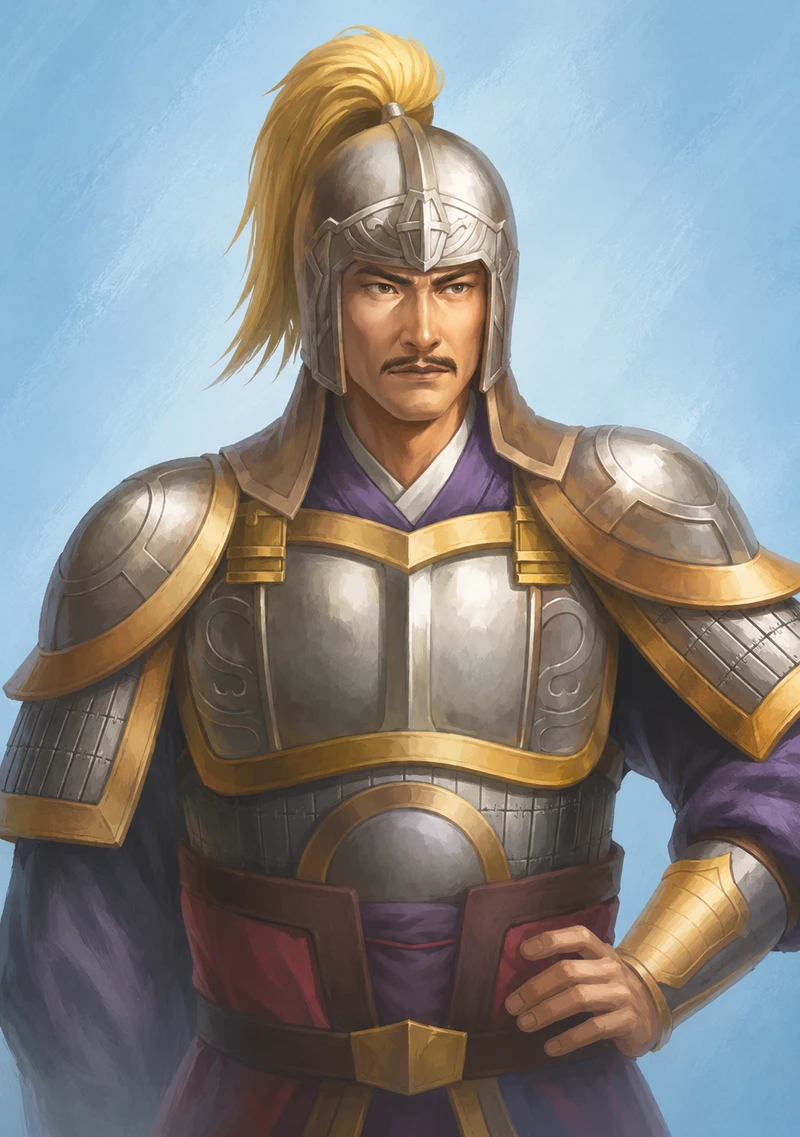
Zhu Gai was a veteran military commander, imperial guard officer, and frontline general of the Cao Wei state during the late Eastern Han dynasty and Three Kingdoms period. Documented in Chen Shou’s official dynastic history Records of the Three Kingdoms (Sanguozhi – Book of Wei, Biography of Xu Huang and Biography of Zhao Yan) and Sima Guang’s Zizhi Tongjian, Zhu Gai was a highly disciplined and capable field officer who played a vital supporting role in securing the northwestern frontiers of Guanzhong and later leading elite capital reinforcements to lift the famous Siege of Fancheng against Guan Yu. Though omitted from the main literary narrative of Luo Guanzhong’s 14th-century historical novel Romance of the Three Kingdoms, authentic historical archives record Zhu Gai as an indispensable imperial guard commander whose timely intervention helped turn the tide of one of the most critical military campaigns of the era.
Following Cao Cao’s decisive military victory over the northwestern warlord coalition led by Ma Chao and Han Sui in 211 AD, the Cao Wei administration faced the enormous task of pacifying and re-integrating thousands of surrendered soldiers across the western marches. Zhu Gai was assigned to serve under Protector of the Army Zhao Yan in the strategic region of Guanzhong. Operating out of the western garrisons, Zhu Gai demonstrated exceptional tactical competence by helping suppress local insurrections, maintaining strict military discipline among mixed regular and surrendered units, and securing the supply routes connecting Chang’an to the western borders.
In 219 AD, during the height of Guan Yu’s grand northern campaign from Jing Province, the strategic fortress of Fancheng was fiercely encircled by Shu Han forces. As floodwaters inundated Cao Ren’s citadel and siege lines tightened, Cao Cao organized a massive relief force under the supreme command of veteran general Xu Huang. To reinforce Xu Huang’s frontline vanguard, Cao Cao dispatched Zhu Gai alongside Yin Shu, entrusting them with twelve elite imperial guard battalions directly from the imperial capital at Xuchang. Joining Xu Huang’s army at Yancheng, Zhu Gai served as a senior deputy commander, assisting Xu Huang in executing a series of brilliant tactical maneuvers and trench-clearing assaults against Guan Yu’s fortified camps. The timely arrival, unwavering discipline, and fierce combat effectiveness of Zhu Gai and Yin Shu’s elite imperial guard reinforcements enabled Xu Huang to shatter Guan Yu’s siege lines at Yancheng and Sizhong, successfully lifting the Siege of Fancheng and securing Cao Wei’s southern frontier.
Famous Quotes & Historical Sayings
In the historical records of Records of the Three Kingdoms (Sanguozhi – Book of Wei, Biography of Xu Huang), historian Chen Shou commemorated the decisive impact of the capital relief forces: ‘When Xu Huang advanced to relieve Cao Ren at Fancheng, Zhu Gai and Yin Shu arrived with twelve elite guard battalions from the capital. United in purpose and strict in discipline, their timely arrival allowed Xu Huang to shatter the enemy encirclement, lifting the siege and securing the realm.’
Zhu Gai (朱蓋) — Historical & Literary Timeline
Pacifying Guanzhong under Zhao Yan
Assigned to serve under Protector of the Army Zhao Yan in Guanzhong; helps suppress local insurrections and maintains strict military discipline across the western frontier garrisons.
Leading Elite Capital Guards to Reinforce Xu Huang
Appointed as a senior imperial guard commander alongside Yin Shu; leads twelve elite capital guard battalions to reinforce Xu Huang at Yancheng, breaking Guan Yu’s siege of Fancheng.
Continued Service Under Cao Wei & Peaceful Passing
Continues serving as a senior military officer under the Cao Wei court following the establishment of the dynasty, living out his remaining years peacefully in office.
For detailed historical records, archives, and official chronicles, explore Zhu Gai on Wikipedia.
Key Relationships
Family
- No information
Friends
- Xu Huang (徐晃, Từ Hoảng): Senior Cao Wei commander under whom Zhu Gai served as a vanguard deputy commander during the relief of the Siege of Fancheng in 219 AD, coordinating assaults to shatter the enemy encirclement.
- Yin Shu (殷署, Ân Thự): Fellow imperial guard general who co-commanded the twelve elite capital battalions alongside Zhu Gai, marching together from Xuchang to reinforce Xu Huang’s army at Yancheng in 219 AD.
- Zhao Yan (赵俨, Triệu Nghiễm): Cao Wei Protector of the Army under whom Zhu Gai served in Guanzhong around 211–212 AD, collaborating to pacify local unrest and maintain military order across the western marches.
- Cao Ren (曹仁, Tào Nhân): Senior general besieged within the flooded citadel of Fancheng in 219 AD, whose defensive lines were saved when Zhu Gai, Yin Shu, and Xu Huang routed the besieging forces.
Enemies
- Guan Yu (关羽, Quan Vũ): Shu Han supreme commander who besieged Fancheng in 219 AD; Zhu Gai participated in the decisive counteroffensive against Guan Yu’s fortified positions at Yancheng and Sizhong, forcing his general retreat.
Other
- Cao Cao (曹操, Tào Tháo): Warlord and King of Wei who served as Zhu Gai’s supreme lord, entrusting him with twelve battalions of elite imperial guards dispatched from the capital to reinforce the frontline at Fancheng in 219 AD.
In Novel
Zhu Gai (朱盖, Chu Cái) does not have a securely verified named appearance in the supplied edition under the exact Chinese name 朱盖. No chapter is assigned without an exact textual match.
In History
Identification
- Zhu Gai (朱盖, Chu Cái) is a minor figure in the Three Kingdoms character tradition.
Historical Evidence
- The exact-name historical record is limited and does not support a detailed independent biography.
- Additional events should only be attached after exact-name verification.
Classification
- Historical / Novel-associated.