


Contents
Biography & Historical Record
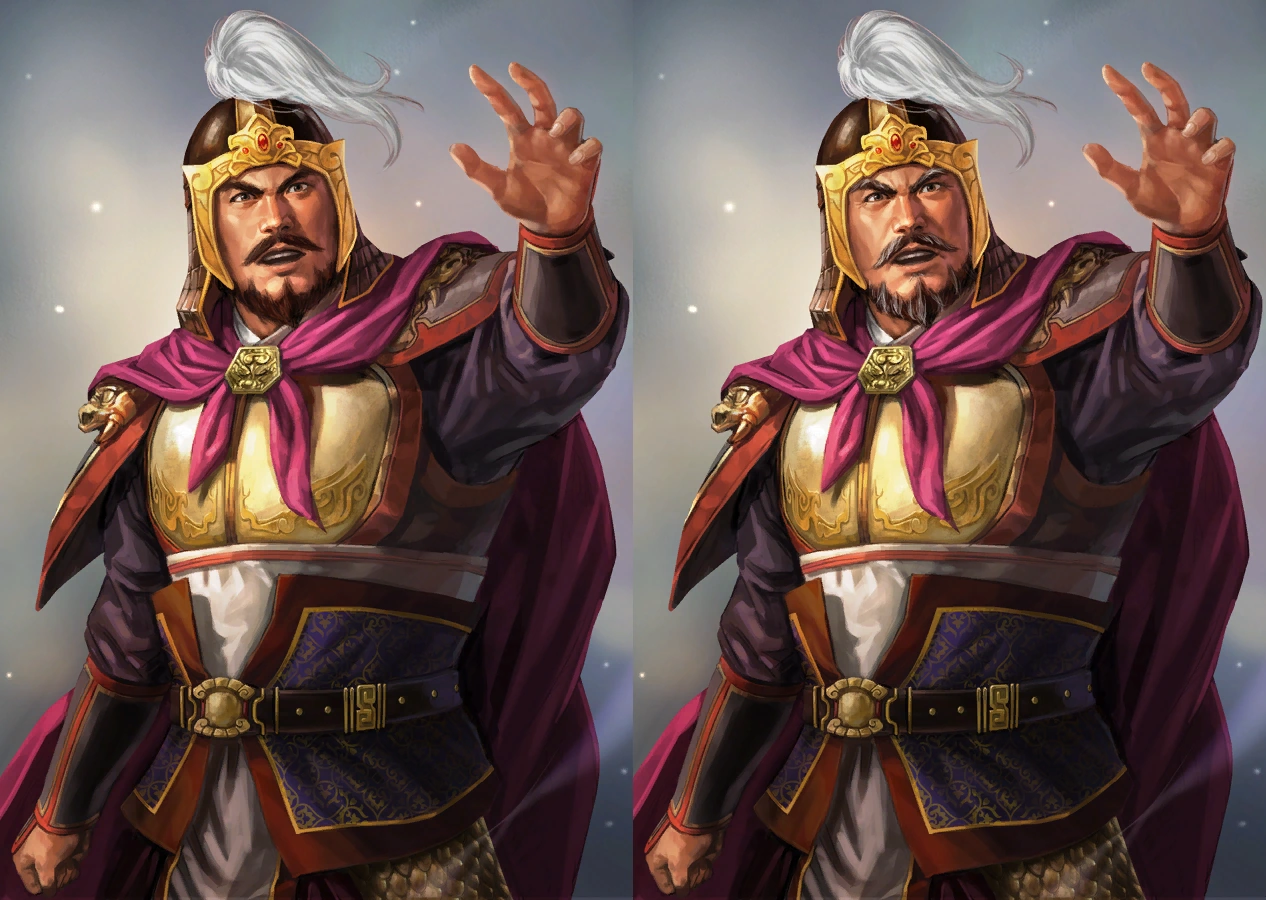
Xu Huang (徐晃, Từ Hoảng), courtesy name Gongming (公明, Công Minh), was an exceptionally distinguished military general serving under the warlord Cao Cao (曹操, Tào Tháo) and later the state of Cao Wei (曹魏, Tào Ngụy) during the late Eastern Han dynasty and Three Kingdoms period. Renowned across China for his absolute discipline, tactical foresight, and levelheadedness under pressure, he was lauded by Cao Cao (曹操, Tào Tháo) as possessing “the style of Zhou Yafu (周亞夫, Chu Á Phu),” referencing the legendary Han dynasty general famous for rigorous military order. Today, he is celebrated as one of the Five Elite Generals (五子良將, Ngũ Tử Lương Tướng) of Wei, alongside Zhang Liao (張遼, Trương Liêu), Yue Jin (樂進, Nhạc Tiến), Yu Jin (于禁, Vu Cấm), and Zhang He (張郃, Trương Cáp).
Xu Huang (徐晃, Từ Hoảng) began his career as a local administrative officer in Hedong Commandery. During the height of the Han central government’s collapse, he became a cavalry commander under the warlord Yang Feng (楊奉, Dương Phụng), who was aligned with the faction of Dong Zhuo (董卓, Đổng Trác). Following the assassination of Dong Zhuo (董卓, Đổng Trác) and during the subsequent destructive power struggles between Li Jue (李傕, Lý Các) and Guo Si (郭汜, Quách Dĩ), Xu Huang (徐晃, Từ Hoảng) recognized the gravity of protecting the sovereign. He wisely advised Yang Feng (楊奉, Dương Phụng) to escort Emperor Xian (漢獻帝, Hán Hiến Đế) back to the ancient capital of Luoyang. When Cao Cao (曹操, Tào Tháo) moved to secure the emperor and consolidate central authority, Xu Huang (徐晃, Từ Hoảng) chose to defect to Cao Cao (曹操, Tào Tháo)’s faction, understanding that Cao Cao (曹操, Tào Tháo) was the only leader capable of restoring unified administrative order to China.
Under Cao Cao (曹操, Tào Tháo)’s leadership, Xu Huang (徐晃, Từ Hoảng) emerged as an indispensable general. During the decisive Battle of Guandu (官渡之戰, Trận Quan Độ) in 200 AD against Yuan Shao (袁紹, Viên Thiệu), Xu Huang (徐晃, Từ Hoảng) executed a critical raid on Yuan Shao (袁紹, Viên Thiệu)’s supply depot at Gushi, inflicting severe logistical damage that crippled the enemy’s advance. He went on to play leading roles in the northern expeditions against the Wuhuan tribes, the pacification of Guanzhong, and the defense of Hanzhong alongside Xiahou Yuan (夏侯淵, Hạ Hầu Uyên).
His military career reached its zenith in 219 AD during the Battle of Fancheng (樊城之戰, Trận Phạn Thành). The legendary general Guan Yu (關羽, Quan Vũ) had besieged the Wei stronghold of Fancheng and completely annihilated Yu Jin (于禁, Vu Cấm)‘s reinforcing armies using a seasonal flood. With Fancheng on the verge of collapse, Xu Huang (徐晃, Từ Hoảng) was dispatched with a relief force of green recruits. Employing brilliant tactical feints, he misled Guan Yu (關羽, Quan Vũ) regarding his primary route of attack and successfully broke the legendary siege. Following this victory, Cao Cao (曹操, Tào Tháo) personally rode out to inspect the camps. While other generals’ troops broke formation to gaze upon their lord, Xu Huang (徐晃, Từ Hoảng)’s soldiers remained in perfect, silent alignment. This prompted Cao Cao (曹操, Tào Tháo) to famously sigh in admiration at his peerless military discipline.
Role in Romance of the Three Kingdoms
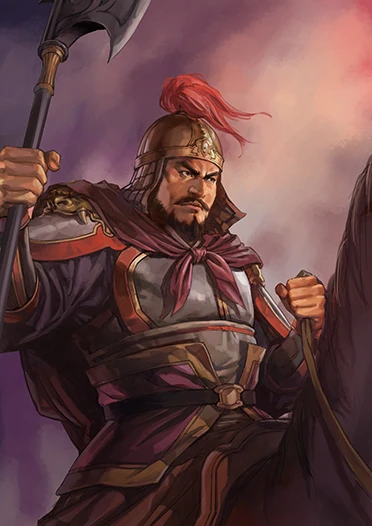
In La Guánzhōng (羅貫中, La Quán Trung)’s epic historical novel Romance of the Three Kingdoms (Tam Quốc Diễn Nghĩa), Xu Huang (徐晃, Từ Hoảng) is popularized as an indomitable warrior wielding a massive Great Axe (大斧, Đại Phủ). He is portrayed as a highly honorable and professional soldier who values martial duty above all personal sentiments.
The novel dramatizes his defection to Cao Cao (曹操, Tào Tháo) in Chapter 14. During a skirmish between the forces of Yang Feng (楊奉, Dương Phụng) and Cao Cao (曹操, Tào Tháo), Xu Huang (徐晃, Từ Hoảng) rides out and duels the fierce Xu Chu (許褚, Hứa Chử) to a draw over fifty grueling rounds. Captivated by Xu Huang (徐晃, Từ Hoảng)’s incredible valor, Cao Cao (曹操, Tào Tháo) tasks his advisor Man Chong (滿寵, Mãn Sủng), an old friend of Xu Huang (徐晃, Từ Hoảng), to secretly infiltrate his camp. Man Chong (滿寵, Mãn Sủng) successfully appeals to Xu Huang (徐晃, Từ Hoảng)’s sense of righteousness, prompting him to leave the inept Yang Feng (楊奉, Dương Phụng) and pledge his loyalty to Cao Cao (曹操, Tào Tháo).
Chapters 73–76 (Guan Yu Floods the Seven Armies; Xu Huang Breaks the Siege at Fancheng): Guan Yu (关羽, Quan Vũ) besieges Cao Ren (曹仁, Tào Nhân) at Fancheng and Xiangyang. In Chapter 74 he damns the Han River and floods Yu Jin (于禁, Vu Cấm)’s relief army — capturing Yu Jin and slaying Pang De (庞德, Bàng Đức). With the walls crumbling, Cao Cao summons Xu Huang (徐晃, Từ Hoảng). In Chapter 75 Xu Huang feints along one route, strikes along another, duels Guan Yu for eighty bouts, and lifts the siege; he publicly offers gold for Guan Yu’s head, declaring that private friendship cannot override public duty. Chapter 76 sees Xu Huang pursue Guan Yu’s retreat across the Mian River — the campaign that ends with Guan Yu’s capture and execution by Sun Quan’s forces, not by Xu Huang’s blade.
One of the most dramatic segments of the novel features his complex relationship with Guan Yu (關羽, Quan Vũ). During Guan Yu (關羽, Quan Vũ)’s temporary stay in Cao Cao (曹操, Tào Tháo)’s camp, the two developed a deep mutual respect and friendship. Yet, years later at the Battle of Fancheng, they face off as opposing commanders. Meeting between the battle lines, they exchange polite, nostalgic greetings. However, Xu Huang (徐晃, Từ Hoảng) immediately turns to his officers and offers a massive reward of gold for Guan Yu (關羽, Quan Vũ)’s head. A shocked Guan Yu (關羽, Quan Vũ) asks how his old friend could be so cold-hearted. Xu Huang (徐晃, Từ Hoảng) famously replies with unwavering determination:
“This is an affair of state. Private friendship must not override public duty.”
In the novel, Xu Huang (徐晃, Từ Hoảng)’s death is given a tragic, heroic theatricality. During the Xincheng Rebellion in 228 AD, while serving under Sima Yi (司馬懿, Tư Mã Ý) to suppress the defector Meng Da (孟達, Mạnh Đạt), Xu Huang (徐晃, Từ Hoảng) leads the vanguard to charge the city gates. He is struck directly in the forehead by an arrow shot by Meng Da (孟達, Mạnh Đạt). He is carried back to camp and dies of his wound at the age of 59, whereas historical records state he died peacefully of illness in 227 AD.
Notable Quotes & Famous Sayings
- “This is an affair of state. Private friendship must not override public duty.” — Delivered to Guan Yu (關羽, Quan Vũ) at the Battle of Fancheng, highlighting his absolute professionalism and loyalty to his state over personal relationships.
- “The ancients always complained of not meeting a worthy master. Now that I have found one, why should I look back?” — Expressed to Man Chong (滿寵, Mãn Sủng) upon choosing to join Cao Cao (曹操, Tào Tháo).
Xu Huang — Historical & Literary Timeline
192 AD
Escorting the Emperor
Serves under the general Yang Feng (楊奉, Dương Phụng) and plays an active role in protecting Emperor Xian (漢獻帝, Hán Hiến Đế) during the treacherous flight from Chang’an to escape Li Jue (李傕, Lý Các) and Guo Si (郭汜, Quách Dĩ).
196 AD
Defection to Cao Cao
Duels Cao Cao (曹操, Tào Tháo)’s top warrior Xu Chu (許褚, Hứa Chử) to a draw. Persuaded by his old acquaintance Man Chong (滿寵, Mãn Sủng), he defects to Cao Cao (曹操, Tào Tháo)’s forces to serve a worthy master.
200 AD — Chapters 26 & 30
Heroics at Guandu
Participates in the Guandu Campaign. Alongside Zhang Liao (張遼, Trương Liêu), he intercepts and defeats the enemy general Wen Chou (文醜, Văn Sú). Later, he leads a raid that successfully burns Yuan Shao (袁紹, Viên Thiệu)’s massive supply train at Gushi.
211 AD — Chapters 58 & 59
The Guanzhong Campaign
Plays a critical strategic role in the campaign against Ma Chao (馬超, Mã Siêu). He successfully leads forces across the Pu Ferry, establishing a vital bridgehead that allows Cao Cao (曹操, Tào Tháo)’s army to bypass the formidable defensive lines.
219 AD
Peak Glory at Fancheng
Dispatched to relieve Fancheng. He executes a brilliant strategy of feinting and surprise assaults to defeat Guan Yu (關羽, Quan Vũ)’s forces and lift the siege. He is highly praised by Cao Cao (曹操, Tào Tháo) for maintaining flawless military discipline.
220 AD
Promoted under Cao Pi
Following Cao Cao (曹操, Tào Tháo)’s death, he pledges his allegiance to Cao Pi (曹丕, Tào Phi), who rewards him with the title of Right General (右將軍) and the Marquis of Yangping.
227 AD
Death and Legacy
In historical records, he dies of illness in 227 AD and is posthumously honored as Marquis Zhuang (壯侯). In the novel, he is shot by the rebel Meng Da (孟達, Mạnh Đạt) at Xincheng and dies of his wounds in 228 AD.
For detailed historical records, archives, and official chronicles, explore Xu Huang on Wikipedia.
Key Relationships
Family
- Xu Gai (徐盖, Từ Cái) — His son who inherited his titles and land following his death.
Friends
- Man Chong (满宠, Mãn Sủng) — A close friend and fellow official who successfully persuaded Xu Huang to defect from Yang Feng to join Cao Cao.
- Zhang Liao (张辽, Trương Liêu) — A fellow member of the Five Elite Generals who frequently served alongside him in major military campaigns, including the defense of the northern borders.
- Guan Yu (关羽, Quan Vũ) — Developed a deep mutual respect and friendship while serving together in Cao Cao’s camp; despite this, they later faced each other as opposing commanders at the Battle of Fancheng in 219 AD.
Enemies
- Yang Feng (杨奉, Dương Phụng) — His initial lord whom he served as a cavalry commander before realizing his incompetence and defecting to Cao Cao.
- Yuan Shao (袁绍, Viên Thiệu) — A major rival whose supply depot at Gushi was destroyed by Xu Huang during the Battle of Guandu in 200 AD.
- Meng Da (孟达, Mạnh Đạt) — The rebel general who, according to the novel, shot the arrow that caused Xu Huang’s fatal wound during the Xincheng Rebellion in 228 AD.
Other
- Cao Cao (曹操, Tào Tháo) — His primary lord who recognized his tactical brilliance, compared him to the legendary Zhou Yafu, and promoted him to one of the Five Elite Generals.
- Emperor Xian (汉献帝, Hán Hiến Đế) — The sovereign whom Xu Huang protected and advised to escort safely to Luoyang during the chaotic power struggles of the late Han dynasty.
- Cao Pi (曹丕, Tào Phi) — The successor to Cao Cao who continued to trust Xu Huang, promoting him to the rank of Right General and granting him the title of Marquis of Yangping.
Appearance

In Novel
Chapter 13
- Xu Huang (徐晃, Từ Hoảng): Distinguished commander under Yang Feng (杨奉, Dương Phụng), courtesy name Gongming (公明), famed for wielding a great battleaxe; he slew Cui Yong in single combat and escorted Emperor Xian (刘协, Hán Hiến Đế) during the flight from Chang’an.
Chapter 14
- Xu Huang (徐晃, Từ Hoảng): Dueled Xu Chu (许褚, Hứa Chử) to a fifty-bout draw before being persuaded by his friend Man Chong (满宠, Mãn Sủng) to defect to Cao Cao (曹操, Tào Tháo).
Chapter 22
- Xu Huang (徐晃, Từ Hoảng): Participated in the vanguard operations during the eastern campaign in Xuzhou.
Chapter 25
- Xu Huang (徐晃, Từ Hoảng): Dueled Yan Liang (颜良, Nhan Lương) for twenty bouts at the Battle of Boma before withdrawing.
Chapter 26
- Xu Huang (徐晃, Từ Hoảng): Fought alongside Zhang Liao (张辽, Trương Liêu) against Wen Chou (文丑, Văn Sú) at Yanford.
Chapter 30
- Xu Huang (徐晃, Từ Hoảng): Ambushed and incinerated Yuan Shao’s (袁绍, Viên Thiệu) northern transport supply train commanded by Han Meng (韩猛, Hàn Mãnh) at Guandu.
Chapter 31
- Xu Huang (徐晃, Từ Hoảng): Participated in the rout of Yuan Shao’s remnants at Cangting.
Chapter 32
- Xu Huang (徐晃, Từ Hoảng): Assisted in the siege and conquest of Jizhou.
Chapter 50
- Xu Huang (徐晃, Từ Hoảng): Protected Cao Cao’s (曹操, Tào Tháo) rear guard during the retreat through Huarong Trail after the fire at Red Cliffs.
Chapter 58
- Xu Huang (徐晃, Từ Hoảng): Command river-crossing detachments along the Wei River to outflank Ma Chao (马超, Mã Siêu).
Chapter 71
- Xu Huang (徐晃, Từ Hoảng): Stationed in Hanzhong to support Xiahou Yuan (夏侯渊, Hạ Hầu Uyên) at Mount Dingjun.
Chapter 72
- Xu Huang (徐晃, Từ Hoảng): Fought Zhao Yun (赵云, Triệu Vân) and Huang Zhong (黄忠, Hoàng Trung) along the Han River.
Chapter 75
- Xu Huang (徐晃, Từ Hoảng): Led the relief army to Fan City, famously dueling his old friend Guan Yu (关羽, Quan Vũ) for eighty bouts and breaking the siege.
Chapter 76
- Xu Huang (徐晃, Từ Hoảng): Pursued Guan Yu’s (关羽, Quan Vũ) retreating army across the Mian River, securing Fan City and Xiangyang for Cao Wei.
Chapter 94
- Xu Huang (徐晃, Từ Hoảng): Marched with Sima Yi (司马懿, Tư Mã Ý) to suppress Meng Da’s (孟达, Mạnh Đạt) rebellion at Xincheng, where he was struck in the forehead by Meng Da’s arrow and died of the wound that night at age fifty-nine.
Appearance
In History
Summary
- Xu Huang (徐晃, Từ Hoảng), courtesy name Gongming (公明), was a Hedong-born officer who served Yang Feng, then Cao Cao (曹操, Tào Tháo), and finally Cao Wei. Cao Cao praised his strict camp discipline as resembling Han general Zhou Yafu. He is grouped among the Five Elite Generals (五子良将) in later tradition.
Year: c. 196 AD
- Defected from Yang Feng to Cao Cao with Man Chong’s persuasion; appointed as a commander in Cao’s growing central army.
Year: 200 AD
- At Guandu, Xu Huang raided Yuan Shao’s supply depot at Gushi (故市), burning wagons and crippling Yuan’s logistics — one of the turning points of the campaign recorded in Sanguozhi, vol. 17 (Xu Huang bio).
Year: 211–219 AD
- Served in the Guanzhong campaign against Ma Chao and in Hanzhong operations alongside Xiahou Yuan. Promoted repeatedly for frontier and supply-line actions.
Year: 219 AD
- When Guan Yu (关羽, Quan Vũ) besieged Fancheng and flooded Yu Jin’s relief force, Cao Cao dispatched Xu Huang with fresh troops. Xu broke the siege, drove Guan Yu’s army from the camp, and restored communications with Fancheng — Cao Cao’s most celebrated praise of Xu Huang dates from this victory.
Year: 227 AD
- Died of illness. Posthumously honored as Marquis Zhuang (壮侯). His son Xu Gai (徐盖) inherited his fief.
Historical Record
- Sanguozhi, vol. 17 — biography of Xu Huang (徐晃传).
- Pei Songzhi annotations preserve Cao Cao’s comparison to Zhou Yafu and details of the Fancheng relief.
- The novel’s death by Meng Da’s arrow at Xincheng (Chapter 94) is fiction; history records natural death in 227 AD.
Appearance
Gallery