

Contents
Biography & Historical Record
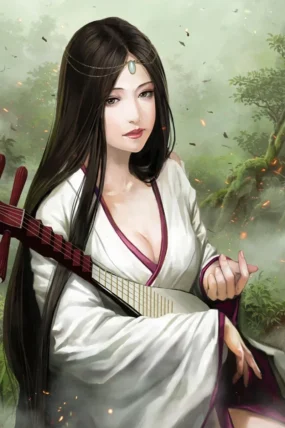
Zou Shi (active 197 AD), widely known as Lady Zou, was a noblewoman during the late Eastern Han dynasty. Historically, she was the widowed wife of Zhang Ji, a military general under the warlord Zhang Xiu. Following Zhang Ji’s death during a military campaign, Lady Zou accompanied her nephew-in-law Zhang Xiu to Wancheng (Wan Commandery), where Zhang Xiu succeeded his uncle’s military forces. Her beauty and noble background placed her at the center of a major historical and political turning point when the warlord Cao Cao arrived and took control of Wancheng.
Role in Romance of the Three Kingdoms
In Luo Guanzhong’s historical novel Romance of the Three Kingdoms, Lady Zou is featured prominently in Chapter 16. When Cao Cao captures Wancheng and pacifies Zhang Xiu, he learns of Lady Zou’s extraordinary beauty and has her brought to his private quarters to become his concubine. This scandalous affair deeply offends Zhang Xiu, who feels intensely dishonored and humiliated. Instigated by his advisor Jia Xu, Zhang Xiu launches a sudden, surprise night attack against Cao Cao’s camp. The ensuing chaos results in the tragic deaths of Cao Cao’s eldest son Cao Ang, his nephew Cao Anmin, and his elite bodyguard Dian Wei, marking one of the most severe personal defeats in Cao Cao’s military career.
Zou Shi (鄒氏) — Historical & Literary Timeline
Encounter with Cao Cao at Wancheng
Following Zhang Xiu’s surrender to Cao Cao in Wancheng, Cao Cao takes Lady Zou as his consort, triggering profound resentment from Zhang Xiu.
The Battle of Wancheng and Retaliation
Prompted by Jia Xu, Zhang Xiu executes a sudden nighttime raid on Cao Cao’s camp to avenge the family dishonor, leading to the dramatic deaths of Dian Wei, Cao Ang, and Cao Anmin.
For detailed historical records, archives, and official chronicles, explore Lady Zou, Zou Shi on Wikipedia.
Key Relationships
Family
- Zhang Ji (张济, Trương Tế) — Her husband, a military general who served under Dong Zhuo and later operated independently until his death.
- Zhang Xiu (张绣, Trương Tú) — Her nephew-in-law and the warlord who succeeded Zhang Ji’s forces at Wancheng.
Friends
- No information
Enemies
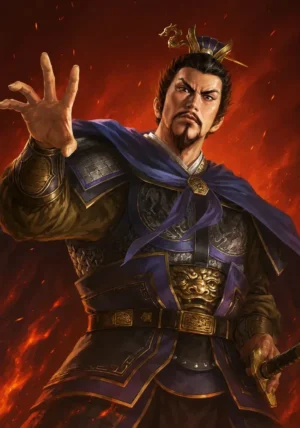
- Cao Cao (曹操, Tào Tháo) — The warlord whose decision to take her as a concubine in 197 AD directly provoked the rebellion at Wancheng.
- Dian Wei (典韦, Điển Vi) — Cao Cao’s elite bodyguard who was killed during the surprise night attack launched by Zhang Xiu in retaliation for the affair.
- Cao Ang (曹昂, Tào Ngang) — Cao Cao’s eldest son who died in 197 AD while sacrificing himself to allow his father to escape the raid.
- Cao Anmin (曹安民, Tào An Dân) — Cao Cao’s nephew who perished alongside Dian Wei and Cao Ang during the chaos of the Wancheng night attack.
Other
- Jia Xu (贾诩, Giả Hủ) — The chief strategist for Zhang Xiu who advised the surprise night attack on Cao Cao’s camp in 197 AD to avenge the dishonor caused by Cao Cao’s involvement with Lady Zou.
In Novel
Chapter 16
- Lady Zou, Zou Shi (邹氏, Trâu Thị): Lady Zou is Zhang Xiu’s aunt and becomes Cao Cao’s favored woman after Cao Cao captures Wancheng. Cao Cao’s decision to take Zhang Xiu’s aunt into his household deeply humiliates Zhang Xiu and helps create the immediate personal grievance behind Zhang Xiu’s sudden attack. Jia Xu recognizes the danger and helps Zhang Xiu prepare a surprise assault on Cao Cao’s camp.
In History
Summary
- Lady Zou, Zou Shi (邹氏, Trâu Thị) was the widow of Zhang Ji and the aunt of Zhang Xiu (张绣, Trương Tú).
- Her existence is supported by early historical tradition, although her characterization is greatly expanded by later literature.
Wancheng Crisis
- When Cao Cao (曹操, Tào Tháo) entered Wancheng after Zhang Xiu’s submission, he took Lady Zou into his household.
- Zhang Xiu subsequently became hostile and, with Jia Xu (贾诩, Giả Hủ)‘s advice, launched the surprise attack that caused the deaths of Cao Ang, Cao Anmin, and Dian Wei (典韦, Điển Vi).
Historical Assessment
- The historical record does not preserve the extensive dialogue, motivations, and romantic characterization found in the novel.
Historical Record
- Lady Zou, Zou Shi (邹氏, Trâu Thị) is best classified as Semi-Historical: the woman is historically attested, while much of the dramatic characterization is literary.