

Contents
Biography & Historical Record
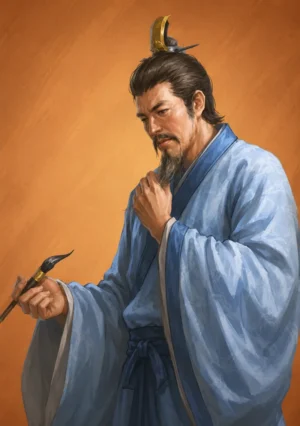
Ruan Ji, courtesy name Sizong, was an immortal Chinese poet, musician, philosopher, calligrapher, and senior Cao Wei official who served as Infantry Colonel (Bubing Xiaowei), for which posterity respectfully revered him as Ruan Bubing. Hailing from Yushi County in Chenliu Commandery (modern-day Qi County, Henan Province), Ruan Ji was the son of Ruan Yu, one of the celebrated Seven Scholars of Jianan who served under Cao Cao. Documented in Fang Xuanling’s Book of Jin (Jin Shu – Biography of Ruan Ji, Volume 49), Chen Shou’s Records of the Three Kingdoms (Sanguozhi), Liu Yiqing’s A New Account of the Tales of the World (Shishuo Xinyu), and Luo Guanzhong’s classic historical novel Romance of the Three Kingdoms, Ruan Ji was historically celebrated as one of the ultimate philosophical pillars and literary souls of the Seven Sages of the Bamboo Grove (Zhulin Qixian) alongside Ji Kang. Navigating the bloodsoaked political purges executed by the Sima clan during the Cao Wei transition to Western Jin, Ruan Ji feigned madness, cultivated perpetual drunkenness, and perfected the art of esoteric poetry to preserve his life, protect his family, and express unyielding contempt for hypocritical usurpation.
Following the Incident at Gaoping Tombs in 249 AD, Regent Sima Yi and his sons Sima Shi and Sima Chi slaughtered hundreds of Cao Wei loyalists, intellectuals, and gentry leaders, establishing an oppressive totalitarian dictatorship in Luoyang. Disgusted by the violence, moral hypocrisy, and ritualistic pretense of the Sima regime, Ruan Ji shunned political ambition and sought spiritual sanctuary in nature, philosophy, and wine. Joining together with like-minded scholars—including Ji Kang, Shan Tao, Liu Ling, Ruan Xian, Xiang Xiu, and Wang Rong—Ruan Ji became a leader of the Seven Sages of the Bamboo Grove. The group gathered in the bamboo forests of Shanyang, engaging in Daoist metaphysics (Xuanxue), playing the qin zither, reciting poetry, and drinking heavily to express their rejection of Confucian political hypocrisy.
To avoid political co-optation by Sima Zhao, Ruan Ji weaponized perpetual drunkenness as an impenetrable defensive shield. When Sima Zhao sought to arrange a royal marriage between his son Sima Yan (the future founding Emperor Wu of Jin) and Ruan Ji’s young daughter to bind Ruan Ji to the Sima faction, Ruan Ji intentionally drank himself into an unconscious stupor for sixty consecutive days. Every time Sima Zhao’s marriage envoys arrived at his residence, they found Ruan Ji utterly senseless from wine, forcing the frustrated regent to abandon the marriage proposal. Furthermore, Ruan Ji was famous for his expressive eyes: when visited by corrupt sycophants or political hypocrites, he stared at them with the cold whites of his eyes (showing disdain); but when meeting soulmates like Ji Kang, he gazed warmly with his dark pupils, giving rise to the famous Chinese idiom ‘looking with white and black eyes.’
Deeply traumatized by the horrors of his era, Ruan Ji frequently hitched his horse carriage and drove aimlessly into the countryside without a destination. When the road ended at a mountain precipice or impassable ravine, he would stop his carriage and weep uncontrollably before turning back, mourning the dead-end fate of free intellectuals under tyrannical rule. In 262 AD, his closest spiritual soulmate, Ji Kang, was falsely accused by Zhong Hui and executed by Sima Zhao. The execution devastated Ruan Ji. Forced by Sima Zhao to compose a formal petition urging Sima Zhao to accept the title of Duke of Jin in late 263 AD, Ruan Ji wrote the document while heavily intoxicated, infusing it with subtle, indifferent prose. Overwhelmed by grief, spiritual isolation, and physical exhaustion following Ji Kang’s death, Ruan Ji passed away a few months later at the age of fifty-four. Ruan Ji left an monumental literary legacy, most notably his eighty-two ‘Yonghuai Shi’ (Poems of My Heart), which revolutionized Chinese five-character poetry through profound allegorical symbolism, Daoist philosophy, and hidden political critique.
Famous Quotes & Historical Sayings
In A New Account of the Tales of the World (Shishuo Xinyu) and Book of Jin (Jin Shu), when Ruan Ji visited the ancient battlefields of Guangling where Liu Bei, Xiang Yu, and Liu Bang once fought, he looked across the desolate landscape and lamented bitterly: ‘This age is upside down, and moral order has collapsed into tyranny. Alas! That there are no true heroes in the world today has allowed mere cowards, scoundrels, and opportunistic worms like the Sima clan to achieve fame!’ Furthermore, regarding his profound grief at the end of the road, historical commentators recorded: ‘Ruan Ji drove his carriage until the road ended, whereupon he wept bitterly and returned, for he mourned not merely the end of the path, but the utter dead-end of righteousness under Heaven.’
Ruan Ji (阮籍) — Historical & Literary Timeline
Shunning Politics & Gathering in the Bamboo Grove
Rejects administrative posts following the rise of Sima Yi; forms the Seven Sages of the Bamboo Grove alongside Ji Kang, Shan Tao, and Liu Ling, practicing Daoist metaphysics and poetry in Shanyang.
Feigning Drunkenness for Sixty Days Against Sima Zhao
Drinks himself into an unconscious stupor for sixty consecutive days to thwart Sima Zhao’s proposal to marry his daughter to Sima Yan, successfully avoiding political co-optation.
Mourning the Execution of Ji Kang
Devastated by the execution of his spiritual soulmate Ji Kang by Sima Zhao and Zhong Hui; weeps at the end of country roads and plunges into profound sorrow and spiritual isolation.
Composing Persuasion Essay & Passing Away at Fifty-Four
Forced while intoxicated to write Sima Zhao’s petition for the ducal title; passes away from grief and exhaustion in late 263 AD at age fifty-four, leaving behind his immortal Yonghuai Shi poems.
For detailed historical records, archives, and official chronicles, explore Ruan Ji on Wikipedia.
Key Relationships
Family
- Ruan Yu (阮瑀, Nguyễn Vũ): Father, a celebrated literary master and one of the Seven Scholars of Jianan who served Cao Cao.
- Ruan Xian (阮咸, Nguyễn Hàm): Nephew, an accomplished musician, philosopher, and fellow member of the Seven Sages of the Bamboo Grove.
- Ruan Hun (阮浑, Nguyễn Hồn): Son, who was raised during the Cao Wei transition to Jin and sought to follow his father’s literary and philosophical path.
Friends
- Ji Kang (嵇康, Kê Khang): Spiritual soulmate, philosopher, musician, and fellow leading figure of the Seven Sages of the Bamboo Grove; his wrongful execution in 262 AD caused Ruan Ji immense sorrow and psychological distress.
- Shan Tao (山涛, Sơn Thao): Senior friend and organizer among the Seven Sages of the Bamboo Grove who preserved their mutual affection even after entering government service.
- Liu Ling (刘伶, Lưu Linh): Close friend and fellow Sage who shared Ruan Ji’s passion for wine, Daoist nonconformity, and natural freedom.
- Xiang Xiu (向秀, Hướng Tú): Intellectual companion, philosopher, and member of the Seven Sages of the Bamboo Grove.
- Wang Rong (王戎, Vương Nhung): Younger companion and fellow scholar among the Seven Sages of the Bamboo Grove.
Enemies
- Sima Zhao (司马昭, Tư Mã Chiêu): Autocratic Regent of Cao Wei who attempted to force a marriage alliance between their families, executed Ji Kang in 262 AD, and coerced Ruan Ji into drafting the formal petition granting Sima Zhao the title of Duke of Jin in 263 AD.
- Zhong Hui (钟会, Chung Hội): Ambitious Wei court official who harbored animosity toward the Bamboo Grove circle and slandered Ji Kang, leading directly to Ji Kang’s execution.
- Sima Shi (司马师, Tư Mã Sư): Dictatorial elder brother of Sima Zhao whose political purges and authoritarian rule compelled Ruan Ji to feign madness and perpetual intoxication to survive.
- Sima Yi (司马懿, Tư Mã Ý): Sima clan patriarch whose coup at Gaoping Tombs in 249 AD extinguished political integrity in Wei and drove Ruan Ji into deep disillusionment with the imperial court.
Other
- Sima Yan (司马炎, Tư Mã Viêm): Son of Sima Zhao and future founding Emperor of the Jin dynasty; Sima Zhao sought to arrange a political marriage between him and Ruan Ji’s daughter, which Ruan Ji thwarted by remaining intoxicated for sixty consecutive days.
- Cao Mao (曹髦, Tào Mao): Fourth Emperor of Cao Wei during whose turbulent reign Ruan Ji held court posts while navigating the dangerous factional struggles between the emperor and the Sima clan.
In Novel
Not Named in Standard ROTK Editions
- Ruan Ji (阮籍, Nguyễn Tịch): The Romance of the Three Kingdoms narrative ends before Ruan Ji’s adult career; he is not securely named under 阮籍 in standard chapter lists. As son of Ruan Yu (阮瑀, Nguyễn Vũ) and heir to Jian’an literary culture, his historical fame belongs to the post-220 Wei–Jin transition and the Seven Sages of the Bamboo Grove rather than to the novel’s military arc.
Literary-Historical Lineage from Jian’an
- Ruan Ji (阮籍, Nguyễn Tịch): The Seven Scholars of Jian’an overview traces Ruan Yu’s musical genius through Ruan Ji and Ruan Xian — Jin-era Bamboo Grove sages the novel does not dramatize. Documented in Shishuo Xinyu and Jin Shu, Ruan Ji continues the Jian’an literary spirit through poetry, qin music, and deliberate withdrawal from Sima tyranny.
In History
Summary
- Ruan Ji (阮籍, Nguyễn Tịch), courtesy name Sizong (嗣宗, Tự Tông), son of Ruan Yu (阮瑀, Nguyễn Vũ), was a Wei–Jin poet, philosopher, and one of the Seven Sages of the Bamboo Grove.
Period I — Wei under the Sima Clan
- Ruan Ji (阮籍, Nguyễn Tịch) served as Infantry Colonel (步兵校尉) but feigned madness and drunkenness to avoid co-optation by Sima Zhao (司马昭, Tư Mã Chiêu) after the purges following the Incident at Gaoping Tombs.
Year: 262–263 AD
- Ruan Ji (阮籍, Nguyễn Tịch) was devastated by Ji Kang’s execution and died shortly after composing Sima Zhao’s ducal petition while intoxicated, leaving the Yonghuai Shi (咏怀诗) cycle.
Historical Record
- Ruan Ji (阮籍, Nguyễn Tịch) biography in Jin Shu 49; anecdotes in Shishuo Xinyu. Son of Jian’an scholar Ruan Yu per Sanguozhi Wei 21.