








Contents
Biography & Historical Record
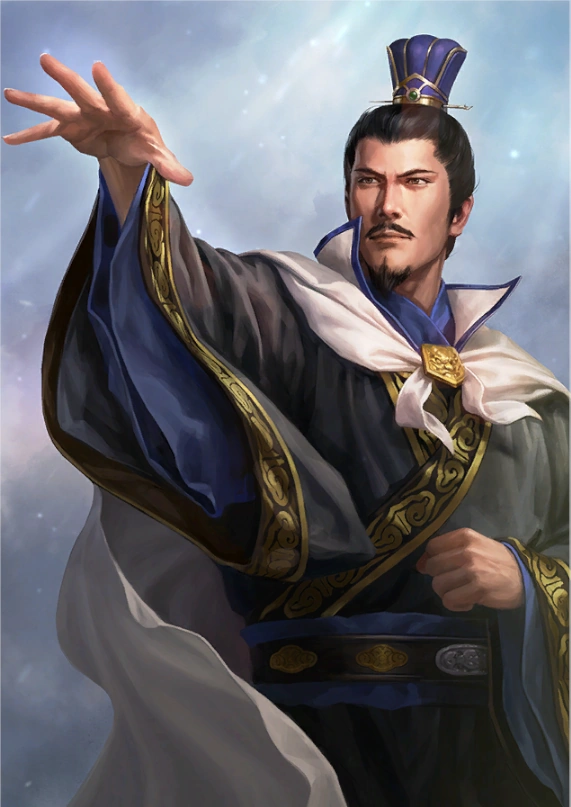
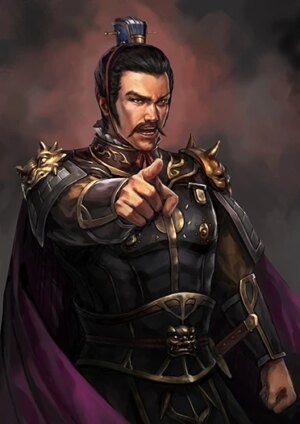
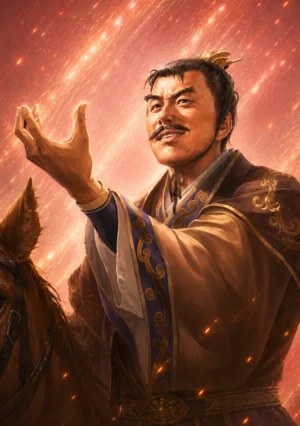
Sima Zhao (211–265 AD), courtesy name Zishang, was a paramount military general, statesman, and regent of Cao Wei during the Three Kingdoms period. Born in Wen County, Henei Commandery (present-day Wen County, Henan), he was the second son of the legendary Wei strategist Sima Yi and Zhang Chunhua, and the younger brother of Sima Shi. Showing sharp military intuition and political cunning from an early age, Sima Zhao accompanied his father and brother on numerous critical campaigns, steadily building his reputation as an influential military commander.
Following the sudden death of his elder brother Sima Shi in 255 AD, Sima Zhao inherited the regency and supreme political control of Cao Wei. He successfully suppressed domestic rebellions in Shouchun, most notably defeating the uprisings led by Guanqiu Jian, Wen Qin, and Zhuge Dan. In 260 AD, when the puppet emperor Cao Mao made a desperate attempt to seize back power by leading an armed force against him, Cao Mao was killed by Cheng Ji under Sima Zhao’s implicit orders—spawning the famous Chinese idiom ‘Everyone in the street knows what Sima Zhao is thinking’ (司马昭之心, 路人皆知). In 263 AD, Sima Zhao launched a massive two-pronged invasion of Shu Han led by Deng Ai and Zhong Hui, successfully forcing Liu Shan’s surrender and bringing an end to the Shu Han dynasty. He was posthumously honored as Emperor Wen of Jin after his son Sima Yan formally established the Jin dynasty.
Role in Romance of the Three Kingdoms
In Luo Guanzhong’s epic novel Romance of the Three Kingdoms, Sima Zhao is portrayed as a shrewd, ambitious, and pragmatic statesman who completes the foundation for the ultimate usurpation of Cao Wei. Introduced alongside his family during the power struggles in Wei, Sima Zhao frequently serves as a key military commander. In Chapter 110, upon the sudden death of Sima Shi, Sima Zhao assumes total command of the military forces at Xuchang, successfully stabilizing the government and subduing subsequent rebellions.
In Chapter 113–114, Sima Zhao faces the invasions of Shu commanded by Jiang Wei, deploying strategic commanders like Deng Ai and Chen Tai to repel them. In Chapter 116–119, following the emperor Cao Mao’s tragic assassination attempt and public outcry, Sima Zhao consolidates absolute dictatorial authority. He ultimately orchestrates the grand conquest of Shu Han in 263 AD, accepting the surrender of Liu Shan and receiving the title King of Jin, thereby setting the stage for the unification of China under the Jin dynasty.
Notable Quotes & Famous Sayings
- “Everyone in the empire knows what is on my mind.” — Sima Zhao responding unashamedly to criticism after the assassination of Emperor Cao Mao.
- “Shu is exhausted and ripe for conquest; if we strike now with thunderous force, they cannot resist!” — Sima Zhao initiating the final invasion strategy against Shu Han.
Sima Zhao (司馬昭) — Historical & Literary Timeline
Assuming Control of the State
Following the sudden death of Sima Shi at Xuchang, Sima Zhao takes over supreme military command and political regency of Cao Wei, continuing his family’s tight control over the imperial court.
Suppressing Zhuge Dan’s Rebellion
Zhuge Dan rebels at Shouchun with allied Wu forces. Sima Zhao personally leads a massive imperial army to besiege Shouchun, eventually capturing the city and executing Zhuge Dan.
Assassination of Emperor Cao Mao
Emperor Cao Mao leads a desperate palace guard to confront Sima Zhao, but officer Cheng Ji slays the emperor on the spot. Sima Zhao executes Cheng Ji’s clan to shift blame, exposing his ultimate ambitions.
The Conquest of Shu Han
Sima Zhao masterminds a dual-pronged invasion of Shu led by Deng Ai and Zhong Hui. Deng Ai crosses the perilous Yin Mountains to capture Chengdu, forcing Liu Shan to surrender and ending Shu Han.
Elevation to King of Jin & Death
Sima Zhao is named King of Jin. He passes away shortly after from a stroke at age fifty-four, leaving his son Sima Yan to depose Wei and establish the Jin dynasty.
For detailed historical records, archives, and official chronicles, explore Sima Zhao on Wikipedia.
Key Relationships
Family
- Sima Yi (司马懿, Tư Mã Ý) — Father and the architect of the Sima family’s rise to power in Cao Wei.
- Zhang Chunhua (张春华, Trương Xuân Hoa) — Mother and matriarch of the Sima clan.
- Sima Shi (司马师, Tư Mã Sư) — Elder brother and predecessor as the regent of Cao Wei; Sima Zhao succeeded him in 255 AD.
- Wang Yuanji (王元姬, Vương Nguyên Cơ) — Wife, noted for her intelligence and political counsel during his regency.
- Sima Yan (司马炎, Tư Mã Viêm) — Eldest son who succeeded Sima Zhao and eventually established the Jin dynasty in 266 AD.
- Sima You (司马攸, Tư Mã Du) — Son who was adopted into the lineage of his uncle Sima Shi.
Friends
- Deng Ai (邓艾, Đặng Ngải) — Military commander who led the daring invasion of Shu Han in 263 AD under Sima Zhao’s orders.
- Zhong Hui (钟会, Chung Hội) — General who commanded the eastern wing of the 263 AD invasion of Shu Han.
- Jia Chong (贾充, Giả Sung) — Trusted confidant and political strategist who served as a key advisor during Sima Zhao’s consolidation of power.
Enemies
- Cao Mao (曹髦, Tào Mao) — The puppet emperor of Wei who was killed in 260 AD by Cheng Ji while attempting to reclaim power from Sima Zhao.
- Zhuge Dan (诸葛诞, Gia Cát Đản) — Wei general who led a major rebellion at Shouchun in 257 AD, which Sima Zhao personally suppressed.
- Jiang Wei (姜维, Khương Duy) — Shu Han regent who led multiple northern expeditions against Sima Zhao’s forces throughout the 250s and 260s.
- Liu Shan (刘禅, Lưu Thiện) — The final emperor of Shu Han who surrendered his kingdom to Sima Zhao’s forces in 263 AD.
Other
- Cheng Ji (成济, Thành Tế) — The officer who carried out the assassination of Emperor Cao Mao in 260 AD; Sima Zhao later executed him and his clan to deflect blame.
Appearance
In Novel
Chapter 106
- Sima Zhao (司马昭, Tư Mã Chiêu): Second son of Sima Yi (司马懿, Tư Mã Ý), courtesy name Zishang (Tử Thượng); accompanied his father on northern frontier campaigns.
Chapter 107
- Sima Zhao (司马昭, Tư Mã Chiêu): Participated in the Gaoping Tombs coup, consolidating the Sima clan’s paramount authority over Cao Wei.
Chapter 108
- Sima Zhao (司马昭, Tư Mã Chiêu): Command northern divisions during military standoffs with Eastern Wu.
Chapter 109
- Sima Zhao (司马昭, Tư Mã Chiêu): Besieged by Jiang Wei (姜维, Khương Duy) at Mount Tieshan before being relieved by Guo Huai (郭淮, Quách Hoài).
Chapter 110
- Sima Zhao (司马昭, Tư Mã Chiêu): Inherited the supreme regency of Cao Wei upon Sima Shi’s death, assuming total control of the imperial court.
Chapter 111
- Sima Zhao (司马昭, Tư Mã Chiêu): Suppressed the major rebellion of Zhuge Dan at Shouchun, pacifying the Huainan region.
Chapter 114
- Sima Zhao (司马昭, Tư Mã Chiêu): Prompted the Emperor Cao Mao to declare ‘everyone knows Sima Zhao’s ambitions’; when Cao Mao led an armed palace revolt, Sima Zhao’s subordinate Cheng Ji killed the Emperor, after which Sima Zhao enthroned Cao Huan.
Chapter 116
- Sima Zhao (司马昭, Tư Mã Chiêu): Mobilized a grand invasion army of two hundred thousand troops under Deng Ai (邓艾, Đặng Ngải) and Zhong Hui (钟会, Chung Hội) to conquer Shu Han.
Chapter 118
- Sima Zhao (司马昭, Tư Mã Chiêu): Accepted the surrender of Shu Han and the abdication of Liu Shan (刘禅, Lưu Thiện), being elevated to King of Jin and granted the Nine Bestowals.
Chapter 119
- Sima Zhao (司马昭, Tư Mã Chiêu): Entertained the captured Duke of Anle Liu Shan at Luoyang, amused by Liu Shan’s indifference to his lost kingdom, and passed away shortly after in 265 AD.
Appearance
In History
Summary
- Sima Zhao (司马昭, Tư Mã Chiêu), courtesy name Zishang, was the second son of Sima Yi and the dominant political figure of Wei during its final years.
Year: 255 AD
- Sima Zhao (司马昭, Tư Mã Chiêu) succeeded his brother Sima Shi as head of the Sima clan and continued consolidating control over Wei.
Year: 263 AD
- Sima Zhao (司马昭, Tư Mã Chiêu) directed the campaign that conquered Shu Han.
Historical Record
- Sima Zhao (司马昭, Tư Mã Chiêu) was a real historical statesman. The later saying “Sima Zhao’s intentions are known to everyone” reflects his reputation for pursuing control of the Wei state.
Appearance
Gallery