

Contents
Biography & Historical Record
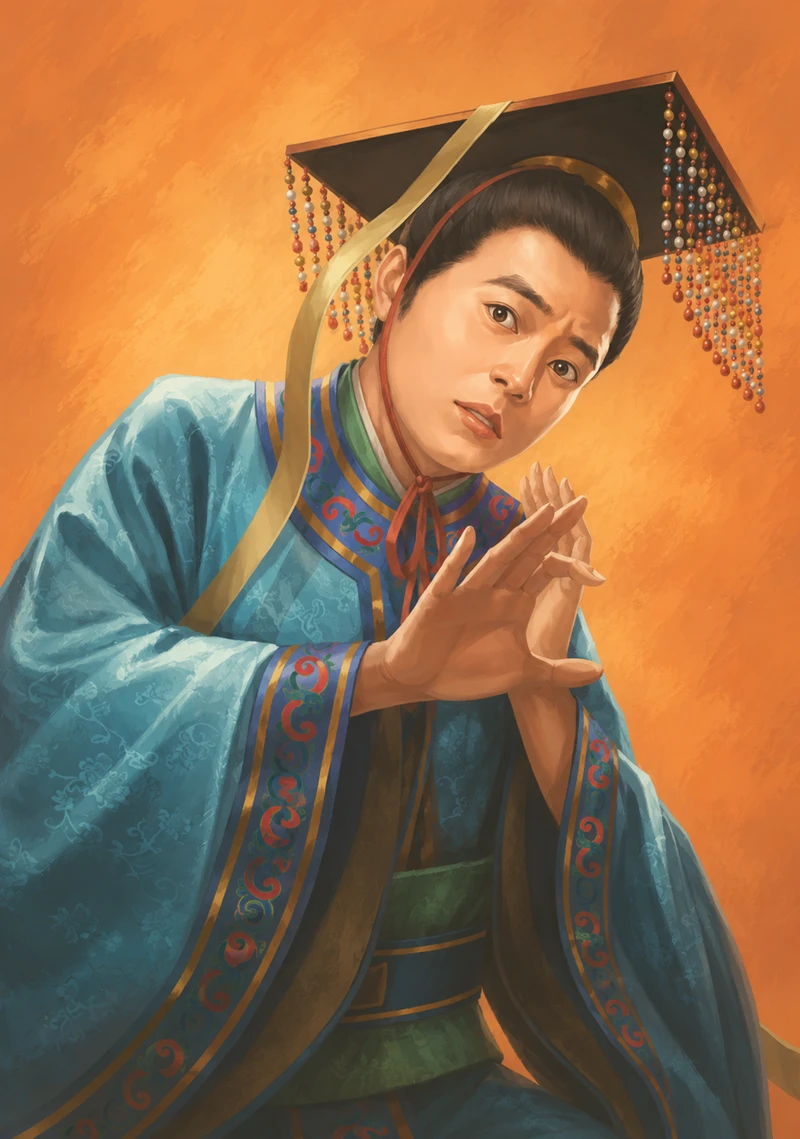
Cao Huan, courtesy name Jingming, originally named Cao Huang, was the fifth and final emperor of the Cao Wei state during the Three Kingdoms period. Born as a royal prince and the son of Cao Yu (Prince of Yan) and grandson of the legendary Cao Cao, Cao Huan was hoisted onto the throne at the tender age of fourteen in 260 AD by the supreme powerbroker Sima Zhao following the tragic assassination of the defiant young Emperor Cao Mao. Documented in Chen Shou’s official dynastic history Records of the Three Kingdoms (Sanguozhi – Book of Wei, Volume 4, Biography of Emperor Chenliu), Cao Huan’s brief reign served as the formal curtain-call for the Cao Wei dynasty, culminating in the historic abdication ceremony that transferred imperial dominance to the Sima clan and established the Western Jin dynasty.
Upon ascending the throne in 260 AD, Cao Huan was entirely a puppet ruler devoid of any real political or military authority, while Sima Zhao wielded absolute control over the imperial court. During his reign, the Cao Wei state achieved its greatest military triumph under Sima Zhao’s directive: the grand invasion and total annexation of Shu Han in 263 AD, which culminated in the surrender of Liu Shan and the destruction of the rival southwestern state. Flushed with this monumental success, Sima Zhao compelled Cao Huan to bestow upon him the supreme title of King of Jin (Jin Wang) alongside nine imperial awards, setting the stage for the final usurpation of the Wei throne.
Following Sima Zhao’s sudden death in 265 AD, his ambitious eldest son Sima Yan inherited the title of King of Jin and quickly moved to finalize the dynastic transition. Recognizing that further resistance was impossible and following the historical precedent set by Cao Pi when he forced the last Han emperor to abdicate forty years prior, Sima Yan pressured Cao Huan to issue an formal abdication decree in December 265 AD (early 266 AD in the Gregorian calendar). Cao Huan formally stepped down from the dragon throne, bringing an end to 45 years of Cao Wei rule and paving the way for the establishment of the Western Jin dynasty. In a rare display of dynastic leniency designed to legitimize the transition, Sima Yan spared Cao Huan and bestowed upon him the prestigious title of Prince of Chenliu (Chenliu Wang). Furthermore, Cao Huan was granted extraordinary imperial privileges: he was permitted to maintain his own royal court, use imperial chariots and ceremonial robes, worship his imperial ancestors using imperial rituals, and was exempted from bowing or prostrating himself before the Jin emperor. Cao Huan lived a long, peaceful, and luxurious life under Western Jin protection, passing away of natural causes in 302 AD at the age of fifty-seven. His princely title was preserved and passed down through his descendants for over two centuries.
Role in Romance of the Three Kingdoms
In the final chapters of Luo Guanzhong’s classic 14th-century historical novel Romance of the Three Kingdoms, Cao Huan appears as the tragic final sovereign of Cao Wei. His introduction follows the heroic martyrdom of Cao Mao, and his reign is depicted as an era of total political paralysis under the heavy shadow of Sima Zhao and Sima Yan. The novel details the dramatic climax where Cao Huan, surrounded by armed guards and overwhelmed by the intimidating pressure of the Sima family, tremblingly affixes his royal seal to the abdication document, bringing the epic saga of the Three Kingdoms toward its unification under the Jin dynasty.
Cao Huan (曹奐) — Historical & Literary Timeline
Ascension to the Throne
Installed as the final Emperor of Cao Wei at age fourteen by Sima Zhao following the assassination of Emperor Cao Mao.
Abdication & Creation as Prince of Chenliu
Pressured by Sima Yan to issue an imperial abdication decree; formally steps down from the throne, ending Cao Wei rule and receiving the title Prince of Chenliu under the Western Jin.
Peaceful Passing in Retirement
Passes away peacefully of natural causes at age fifty-seven while residing in his comfortable retirement estate as the Prince of Chenliu.
For detailed historical records, archives, and official chronicles, explore Cao Huan on Wikipedia.
Key Relationships
Family
- Cao Yu (曹宇, Tào Vũ): Biological father, who held the title of Prince of Yan during the Cao Wei dynasty.
- Cao Cao (曹操, Tào Tháo): Paternal grandfather and founding warlord of the Cao Wei enterprise.
- Cao Mao (曹髦, Tào Mao): Clan cousin and fourth emperor of Cao Wei, whose assassination in 260 AD led to Cao Huan’s installation on the throne.
Friends
- No information
Enemies
- Sima Zhao (司马昭, Tư Mã Chiêu): Dominant regent who placed the fourteen-year-old Cao Huan on the throne as a powerless puppet in 260 AD, wielded absolute court authority, and pressured him for supreme royal honors following the conquest of Shu Han in 263 AD.
- Sima Yan (司马炎, Tư Mã Viêm): Successor to Sima Zhao who forced Cao Huan to sign an imperial abdication decree in late 265 AD (early 266 AD), ending the Cao Wei dynasty and founding the Western Jin dynasty.
Other
- Liu Shan (刘禅, Lưu Thiện): Final emperor of Shu Han who surrendered in 263 AD following the invasion launched under Cao Huan’s nominal imperial reign.
In Novel
Chapter 114
- Cao Huan (曹奂, Tào Hoán): Cao Huan is placed on the Wei throne by Sima Zhao after the death of Cao Mao. He is the final Cao Wei emperor in the novel. His position is largely nominal because the Sima clan controls the government. When Sima Yan is ready to replace Wei with Jin, Cao Huan is forced to abdicate and is subsequently made Prince of Chenliu. The novel’s chapter structure explicitly places Cao Huan’s accession and the later abdication in the final Wei succession narrative. citeturn2search0turn2search33
In History
Summary
- Cao Huan (曹奂, Tào Hoán), originally named Cao Huang, was the fifth and final emperor of Cao Wei.
Accession
- After Emperor Cao Mao was killed in 260 while attempting to confront Sima Zhao, Cao Huan was selected to succeed him.
- Although formally emperor, he possessed little real political power because the Sima clan controlled the Wei state.
Fall of Shu
- During his reign, Wei launched the campaign that destroyed Shu Han in 263.
- Deng Ai and Zhong Hui led the decisive invasion, ending Shu as an independent kingdom.
Abdication
- In 266, Cao Huan abdicated in favor of Sima Yan, ending the Cao Wei dynasty and beginning Jin rule.
- He was granted the title Prince of Chenliu and lived until the early fourth century.
- Classification: Historical.