

Contents
Biography & Historical Record
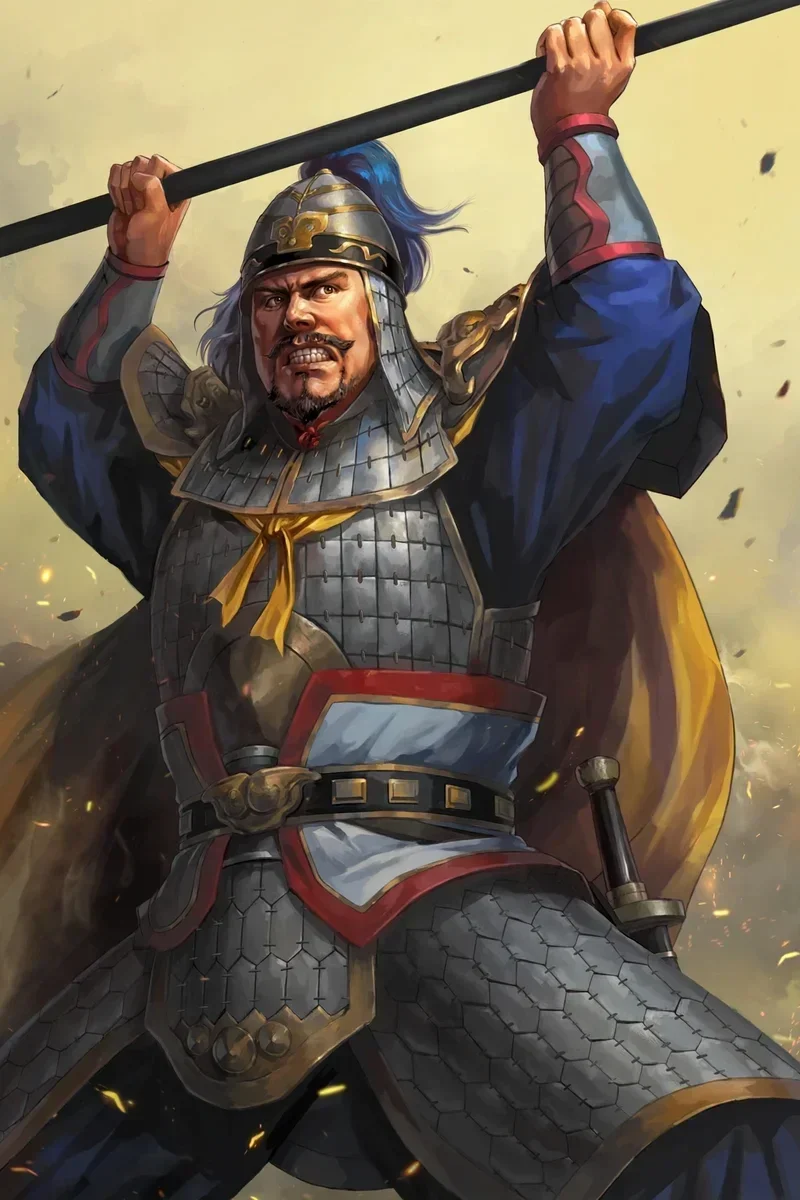
Wang Ping (died 248 AD), courtesy name Ziling, was a prominent military general of the state of Shu Han during the Three Kingdoms period. Originally a native of Puxian, Ba Commandery, Wang Ping started his career serving under various regional forces, initially joining Cao Cao’s army during the Hanzhong Campaign. However, after defecting to Liu Bei’s camp, he quickly demonstrated exceptional tactical ability, bravery, and sound military judgment. He rose through the ranks under Zhuge Liang, earning deep trust due to his meticulous defensive skills and discipline. Following Zhuge Liang’s death, Wang Ping played a critical role in defending Shu’s borders. His finest military achievement occurred in 244 AD at the Battle of Xingsheng, where, despite commanding a heavily outnumbered garrison, he successfully utilized local terrain and fortifications to repel a massive invasion force led by the Wei regent Cao Shuang. Wang Ping passed away in 248 AD, remembered as a steadfast, reliable, and brilliant commander of the northern frontier.
Role in Romance of the Three Kingdoms
In Luo Guanzhong’s historical epic Romance of the Three Kingdoms, Wang Ping is introduced as a military officer who initially serves Cao Cao under General Zhang He during the campaigns in Hanzhong. Due to a disagreement and tactical dispute with Zhang He regarding encampments at Mount Dingjun, Wang Ping defects to Liu Bei’s camp, providing valuable intelligence that helps Shu forces secure victory.
As the narrative progresses, Wang Ping becomes one of Zhuge Liang’s most trusted frontline generals during the Northern Expeditions. In Chapter 97, when Ma Su recklessly ignores Zhuge Liang’s strict orders and insists on encamping on a barren hill at Jieting, Wang Ping repeatedly and desperately remonstrates with him, warning of impending disaster. When Ma Su’s stubbornness leads to a crushing defeat by Zhang He, Wang Ping displays remarkable courage and leadership by rallying his own small unit, beating drums to create the illusion of reinforcements, and safely withdrawing his troops back to safety while covering the retreating army. For this heroic feat, Zhuge Liang heavily rewards Wang Ping and elevates his status. Later, during Jiang Wei’s and Zhuge Liang’s campaigns, Wang Ping continues to serve as an unbreakable shield for Shu Han, famously defending Xingsheng against Cao Shuang’s overwhelming invasion force in Chapter 107.
Notable Quotes & Famous Sayings
- “If we camp on top of a barren hill with no water supply, and the enemy cuts off our access, our entire army will collapse in chaos without a fight! General Ma, please heed my advice!” — Wang Ping pleading with Ma Su at Jieting.
Wang Ping (王平) — Historical & Literary Timeline
Defection to Liu Bei
While serving under Zhang He during the Hanzhong Campaign, Wang Ping defects to Shu Han after his tactical warnings are ignored, providing crucial assistance to Liu Bei’s forces.
The Defeat at Jieting
Wang Ping serves as Ma Su’s deputy at Jieting. When Ma Su rejects his strategic advice, Wang Ping maintains discipline, covers the retreat after the defeat, and safely withdraws his men.
Defense of Xingsheng
Commanding the garrison at Hanzhong, Wang Ping brilliantly repels a 100,000-strong Wei invasion led by Cao Shuang, utilizing strategic defensive passes to secure a major victory for Shu.
For detailed historical records, archives, and official chronicles, explore Wang Ping on Wikipedia.
Key Relationships
Family
- No information
Friends
- Zhuge Liang (诸葛亮, Gia Cát Lượng): Prime Minister of Shu Han who recognized Wang Ping’s tactical acumen and promoted him to high command, relying on him as a trusted frontline general during the Northern Expeditions.
- Jiang Wei (姜维, Khương Duy): A prominent Shu Han military leader whom Wang Ping supported during the later campaigns to defend the northern borders.
Enemies
- Zhang He (张郃, Trương Cáp): Wang Ping’s former superior in the Wei army during the Hanzhong Campaign; their tactical disagreements led to Wang Ping’s defection, and they later faced each other as battlefield rivals at Jieting in 228 AD.
- Ma Su (马谡, Mã Tốc): A fellow Shu officer whose refusal to heed Wang Ping’s warnings at the Battle of Jieting in 228 AD led to a disastrous defeat, forcing Wang Ping to lead a desperate rearguard action to save the retreating army.
- Cao Shuang (曹爽, Tào Sảng): The Wei regent who led a massive invasion force against Hanzhong in 244 AD, only to be decisively repelled by Wang Ping’s defensive strategy.
Other
- Liu Bei (刘备, Lưu Bị): The founding Emperor of Shu Han who accepted Wang Ping’s defection from the Wei army, integrating him into the Shu military hierarchy.
Appearance
In Novel
Chapter 72
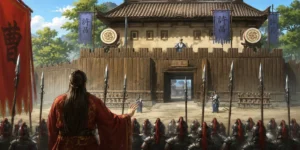
- Wang Ping (王平, Vương Bình): Wang Ping is serving Wei under Xu Huang during the Hanzhong campaign. When Xu Huang proposes crossing the Han River and attacking the Shu army, Wang Ping repeatedly warns that the position will be dangerous if the army has to retreat. Xu Huang ignores him and crosses the river. Huang Zhong and Zhao Yun then attack from both sides and drive the Wei troops into the Han River, causing heavy losses. Xu Huang blames Wang Ping for not rescuing him, but Wang Ping answers that he had warned him beforehand. That night Wang Ping sets fire to the Wei camp, throws the army into confusion, and leaves with his own troops. He crosses the river and defects to Liu Bei. Wang Ping gives Liu Bei a detailed account of the Han River terrain, and Liu Bei appoints him General Who Assists the Army and uses him as a guide in the campaign for Hanzhong.
Chapter 95
- Wang Ping (王平, Vương Bình): Zhuge Liang assigns Wang Ping to accompany Ma Su in defending Jieting. Wang Ping immediately recognizes the danger of abandoning the main road and urges Ma Su to build a fortified camp at the strategic junction. When Ma Su insists on occupying the mountain, Wang Ping asks for 5,000 soldiers so that he can establish a supporting camp and create a defensive link with Ma Su. Wang Ping sends a written map and an urgent report to Zhuge Liang explaining that Ma Su has ignored the proper deployment. When Zhang He attacks, Wang Ping fights but is forced to withdraw. After Ma Su’s mountain position collapses, Wang Ping joins Wei Yan and later rescues him from encirclement. He then fights his way with Wei Yan and Gao Xiang toward Yangping Pass after Wei forces seize the surrounding positions. His conduct at Jieting contrasts sharply with Ma Su’s refusal to listen and becomes one of the reasons Zhuge Liang continues to trust him.
Chapter 97
- Wang Ping (王平, Vương Bình): Wang Ping remains one of the experienced Shu commanders retained for the continuing northern campaigns after the disaster at Jieting. He is part of the senior military establishment supporting Zhuge Liang’s renewed attack on Wei.
Chapter 101
- Wang Ping (王平, Vương Bình): Wang Ping continues to serve as one of Shu’s dependable field commanders during Zhuge Liang’s later northern operations. His importance comes from his practical battlefield experience and his willingness to follow the Chancellor’s orders without the overconfidence that had ruined Ma Su at Jieting.
Appearance
In History
Summary
- Wang Ping (王平, Vương Bình), courtesy name Ziquan, was a distinguished Shu Han general who rose from a comparatively humble background to become one of Shu’s most dependable frontier commanders.
- He was especially important in the defense of Hanzhong and in the campaigns against Wei after the death of Zhuge Liang (诸葛亮, Gia Cát Lượng).
Early Career
- Wang Ping (王平, Vương Bình) originally served under Cao Wei. He surrendered to Shu during the campaign associated with Hanzhong and entered the service of Liu Bei (刘备, Lưu Bị).
Year: 228 AD
- During the first Northern Expedition, Wang Ping (王平, Vương Bình) served under Ma Su (马谡, Mã Tốc) at Jieting. When Ma Su abandoned the strategically important position, Wang Ping warned against the move and preserved a portion of the army after the defeat.
- His conduct at Jieting greatly increased his reputation for discipline and practical military judgment.
Year: 244 AD
- As Wei invaded Hanzhong under Cao Shuang (曹爽), Wang Ping (王平, Vương Bình) defended the Shu position. He avoided a premature decisive engagement and used the terrain and fortified positions to force the Wei army to withdraw.
Later Career
- After Wei Yan (魏延, Ngụy Diên)‘s death, Wang Ping became one of the principal military figures responsible for protecting Hanzhong. He served as a senior commander under Jiang Wei (姜维, Khương Duy)‘s generation of Shu leaders.
- Wang Ping (王平, Vương Bình) died in 248 AD after a career marked by defensive warfare and administrative responsibility.
Historical Record
- Wang Ping (王平, Vương Bình) was a real historical general. The Sanguozhi portrays him as a capable commander whose caution, discipline, and defense of Hanzhong were among his principal strengths.