
Contents
Biography & Historical Record of Ding Gu
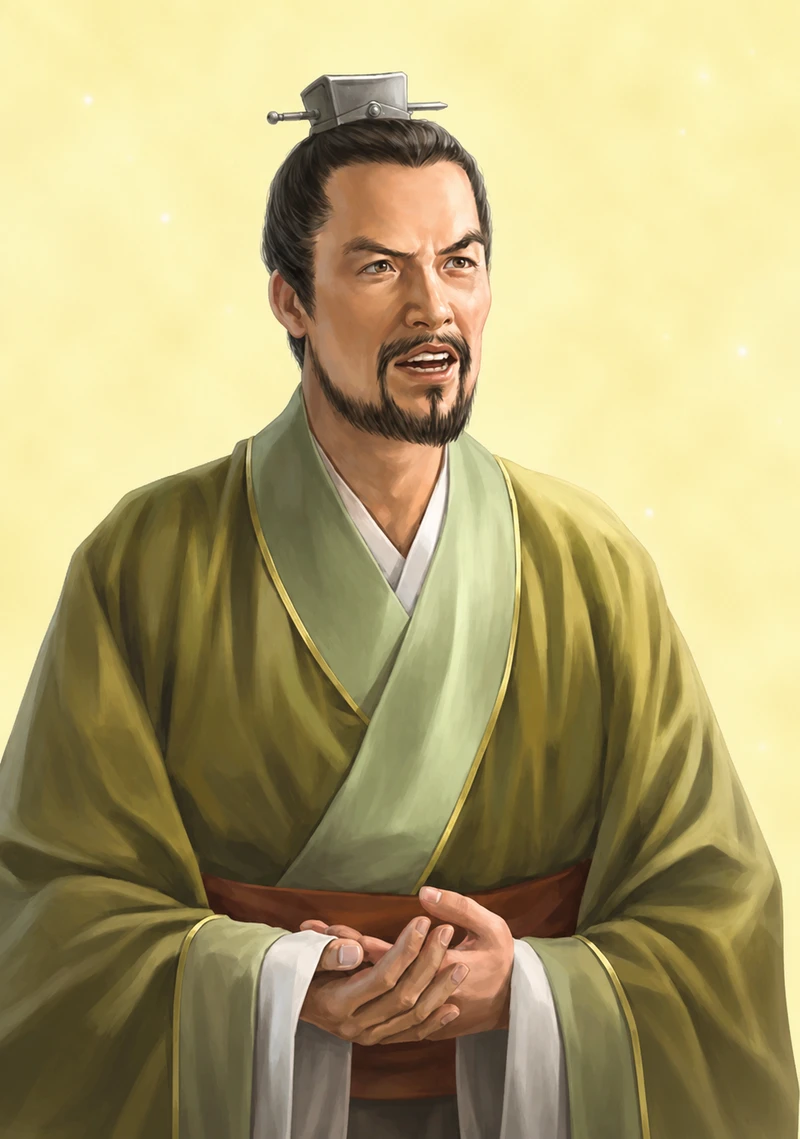
Ding Gu (丁固, courtesy name Zichan), originally hailing from Shanyin in Kuaiji Commandery, was a prominent high-ranking minister of Eastern Wu during the late Three Kingdoms period. Renowned for his integrity and administrative ability, he eventually rose to the venerable rank of Minister over the Masses (司徒, Situ), one of the esteemed Three Excellencies.
According to historical anecdotes recorded in the Jiang Biao Zhuan and featured in the Soushen Ji, when the future minister was a young official, he experienced a remarkable dream where a pine tree grew directly from his abdomen. A local prognosticator astutely noted that the Chinese character for pine (松) is composed of ‘wood’ (木) and ‘duke’ (公), predicting that within eighteen years he would attain ducal ministerial honors. This prophecy proved completely accurate.
During the reign of Emperor Sun Xiu, he served faithfully as Minister of Works. In 264 AD, following the monarch’s untimely death and amid escalating pressure from the newly founded Jin dynasty, Chancellor Puyang Xing and General Zhang Bu collaborated with Ding Gu to install Sun Hao upon the imperial throne. Under Sun Hao’s volatile reign, he was elevated to Minister over the Masses and managed to protect court stability until his death in 273 AD.
Role in Romance of the Three Kingdoms
In Luo Guanzhong’s classic novel Romance of the Three Kingdoms, Ding Gu appears briefly as a respected senior minister deliberating imperial succession during the perilous autumn of Eastern Wu’s dynasty.
Chronological Timeline
Auspicious Dream
Dreamt of a pine tree on his abdomen, foretelling his rise to supreme ministerial status.
Minister of Works
Assumed high office during the administrative reorganization under Emperor Sun Xiu.
Throne Succession
Co-sponsored the enthronement of Sun Hao and attained the rank of Minister over the Masses.
Death in Office
Passed away peacefully while faithfully holding Eastern Wu’s top civilian post.
Key Relationships
Allies & Associates
- Sun Xiu: Third Emperor of Eastern Wu who first elevated him to high ministerial rank.
- Sun Hao: Final Emperor of Wu whose coronation was facilitated by top senior ministers.
- Puyang Xing & Zhang Bu: Influential court leaders who governed alongside him during the succession crisis.
- Lu Kai: Chancellor of the Left and respected elder statesman of late Wu.
Rivals & Threats
- Sun Chen: Tyrannical military regent whose factional control destabilized the Wu royal court.
- Sima Yan: Founding Emperor of Western Jin whose expansionist campaigns placed unrelenting pressure on Eastern Wu.
In Novel
Chapter 120
- Ding Gu (丁固, Đinh Cố): Ding Gu serves in the late Wu court. During the final instability of Wu, he becomes involved in the struggle surrounding Sun Hao’s rule and the state’s defense. His name appears among the officials and commanders attempting to preserve the Wu government as Jin prepares the final invasion.
In History
Early Career
- Ding Gu (丁固, Đinh Cố), courtesy name Zijian, was an Eastern Wu official from Kuaiji. He was known for learning and administrative ability.
Government Service
- Ding Gu rose through the Wu bureaucracy and became a respected civil official. His career continued through the reigns of several Wu emperors.
256 AD
- He eventually reached the office of Imperial Chancellor. His appointment reflected the importance of experienced Kuaiji officials in the Wu administration.
Legacy
- Ding Gu is remembered primarily as a senior administrator rather than a battlefield commander. His career illustrates the continued role of educated civil officials in the later Eastern Wu government.