


Contents
Biography & Historical Record
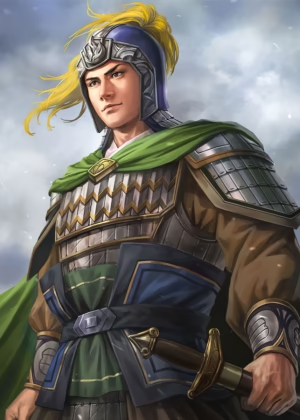
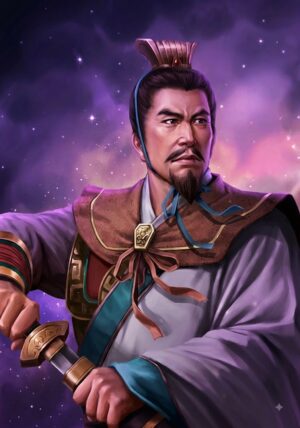
Lu Kai (198–269 AD), courtesy name Jingfeng, was a prominent military general and politician of Eastern Wu during the Three Kingdoms period. Born in Fuchun, Wu Commandery (modern-day Fuyang, Zhejiang), he was a nephew of the famous Wu general Lu Xun. Lu Kai was known for his sharp intellect, absolute integrity, and unwavering loyalty to the state of Wu. He fearlessly spoke truth to power, often admonishing rulers and officials when state policies strayed from righteousness. Throughout his career, he held various high-ranking military and administrative posts, eventually rising to the position of Chancellor of the Left (左丞相) under Sun Hao. Despite the growing corruption and tyranny of Sun Hao’s later reign, Lu Kai persistently submitted memorials advising moral rectitude, making him one of the last great pillar statesmen of Eastern Wu before his death in 269 AD at the age of seventy-two.
Role in Romance of the Three Kingdoms
In Luo Guanzhong’s epic novel Romance of the Three Kingdoms, Lu Kai appears as a steadfast and upright official dedicated to preserving the governance and stability of Eastern Wu. He is portrayed as a voice of reason within the imperial court, maintaining the high standards of integrity established by earlier Wu leaders like Zhou Yu, Lu Su, and Lu Xun.
Lu Kai frequently participates in court deliberations regarding strategic alliances, military deployments, and domestic reforms. His deep familial connection to Lu Xun and his courageous opposition to corrupt factions underscore his vital role as a guardian of Wu’s political foundation during times of internal turmoil and external pressure from Jin and Wei.
Notable Quotes & Famous Sayings
- “A loyal official speaks words that grate upon the ear, yet serve the state; a truly wise ruler listens to counsel to avoid ruin.” — Lu Kai advising moderation and integrity in court.
Lu Kai (陸凱) — Historical & Literary Timeline
Beginning Official Service in Wu
Lu Kai enters official service under Sun Quan, demonstrating early administrative competence and military leadership during campaigns against regional rebellions.
Guarding the Southern Frontiers
Following the death of Sun Quan, Lu Kai takes on greater responsibilities in commanding forces and securing Wu’s borders against northern incursions from Wei.
Appointment as Chancellor of the Left
Under the reign of Sun Hao, Lu Kai is promoted to Chancellor of the Left, where he attempts to steer the government away from extravagance and tyranny through repeated honest memorials.
Passing Away
Lu Kai passes away due to illness at the age of seventy-two, leaving behind a legacy as an unyielding defender of righteousness within Eastern Wu.
For detailed historical records, archives, and official chronicles, explore Lu Kai on Wikipedia.
Key Relationships
Family
- Lu Xun (陆逊, Lục Tốn) — Uncle and renowned Grand Marshal of Eastern Wu, whose legacy of integrity and service Lu Kai sought to uphold.
Friends
- Hua Xiu (华覈, Hoa Hạch) — A fellow official and scholar who served alongside Lu Kai in the imperial court, often sharing his concerns regarding the state of the administration.
Enemies
- Sun Hao (孙皓, Tôn Hạo) — The final emperor of Eastern Wu whose tyranny and corruption were the primary targets of Lu Kai’s persistent and courageous memorials.
- Sima Zhao (司马昭, Tư Mã Chiêu) — Ruler of the state of Cao Wei who, along with his successor, represented the primary external threat to the stability of Eastern Wu.
- Sima Yan (司马炎, Tư Mã Viêm) — The first emperor of the Jin dynasty whose military pressure and expansionist policies threatened the sovereignty of Eastern Wu.
Other
- Sun Quan (孙权, Tôn Quyền) — The founding emperor of Eastern Wu who recognized Lu Kai’s administrative talents and appointed him to early government positions.
In Novel
Chapter 120
- Lu Kai (陆凯, Lục Khải): After Sun Hao becomes emperor of Wu, he appoints Lu Kai and Wan Yu as his two left and right chancellors. Sun Hao moves the capital to Wuchang and spends extravagantly, causing the state treasury to become exhausted and the people to suffer. Lu Kai alone dares to confront him. He submits a detailed memorial warning that Wu has no reserve of grain for even one year, that officials are oppressing the population, that the court is filled with corrupt favorites, and that excessive palace spending is draining the state. He also argues that Wuchang is a poor and dangerous capital and urges Sun Hao to return to Jianye, reduce compulsory labor, dismiss corrupt officials, reduce the number of palace women, and restore sound government. Sun Hao is displeased by the memorial, but Lu Kai’s warning is one of the novel’s final major statements about the internal decay that will lead to Wu’s destruction.
In History
Summary
- Lu Kai (陆凯, Lục Khải), courtesy name Jingfeng, was a senior Eastern Wu official who became particularly important in the final decades of Wu.
- He was a member of the Lu family of Wu commandery and served as a major political figure under Sun Xiu (孙休) and Sun Hao (孙皓).
Early Career
- Lu Kai (陆凯, Lục Khải) belonged to the prominent Lu family and entered Wu service as an official. His career included military and administrative assignments in the southern territories.
Year: 266 AD
- After Sun Hao (孙皓) became emperor, Lu Kai (陆凯, Lục Khải) rose to high office. He became Chancellor and a leading political figure in the court.
Counsel to Sun Hao
- Lu Kai (陆凯, Lục Khải) repeatedly criticized abuses of power and urged the emperor to reduce punishments, restrain arbitrary officials, and govern in accordance with established institutions.
- His memorials are important historical evidence for the political problems of late Wu.
Death
- Lu Kai (陆凯, Lục Khải) died in 280 AD, shortly before the final collapse of Eastern Wu to the Jin dynasty.
Historical Record
- Lu Kai (陆凯, Lục Khải) was a real historical statesman. His surviving memorials provide unusually valuable evidence about the government and political problems of late Eastern Wu.