




Contents
Biography & Historical Record
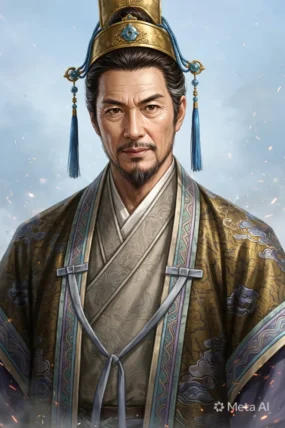
Guo Yi, courtesy name Boyi, was a high-ranking court official and scholar-statesman of the Cao Wei state during the late Eastern Han dynasty and the early Three Kingdoms period. Hailing from Yangdi in Yingchuan Commandery, he was the only son and direct heir of Guo Jia, the legendary chief strategist whose brilliant counsels enabled Cao Cao to unify northern China. Documented in Chen Shou’s official dynastic history Records of the Three Kingdoms (Sanguozhi – Book of Wei, Biography of Guo Jia) as well as Wang Chang’s Family Admonitions (Jiajie), Guo Yi’s historical legacy was deeply shaped by his father’s monumentally celebrated service to the state of Cao Wei and his own subsequent career in the imperial court.
In 207 AD, Guo Jia tragically died of illness at the age of thirty-seven during Cao Cao’s grueling northern campaign against the Wuhuan tribes at Mount Bailang. Devastated by the loss of his most cherished adviser, Cao Cao wept bitterly and took the orphaned Guo Yi directly into his own household, raising him with imperial favor and granting him inheritance of his father’s hereditary title, Marquis of Yang Village (Yangting Hou). As Guo Yi grew into adulthood, he demonstrated sharp intelligence, extensive erudition, and rapid comprehension of statecraft. Recognizing his academic talents and noble pedigree, the imperial court appointed him Gentleman of the Yellow Gate (Huangmen Shilang), a prestigious secretarial office providing direct access to the emperor and central administration.
Despite his scholarly brilliance, Guo Yi inherited his father’s famously eccentric, untamed, and non-conformist personality. Contemporary historical assessments noted that while Guo Yi possessed refined intelligence, his personal conduct lacked strict adherence to conventional Confucian decorum and ritual propriety. In his celebrated ethical treatise Jiajie, the prominent Wei statesman Wang Chang cited Guo Yi as an example of a man of remarkable talent whose unconventional lifestyle and disregard for formal manners rendered him an unsuited role model for younger generations. Guo Yi served dutifully throughout his tenure in office until his death from illness, receiving the honorable posthumous title Marquis Zhen (Marquis of Integrity).
Role in Romance of the Three Kingdoms
In Chapter 33 of Luo Guanzhong’s classic 14th-century historical novel Romance of the Three Kingdoms, Guo Yi is introduced in a poignant, commemorative scene following the death of his genius father, Guo Jia. The novel details how Guo Jia, on his deathbed during the Wuhuan campaign, leaves behind a sealed secret plan that instructs Cao Cao on how to peacefully secure Liaodong and execute the fleeing Yuan brothers without losing a single soldier.
When Guo Jia’s posthumous strategy succeeds perfectly—resulting in Gongsun Kang delivering the salted heads of Yuan Shang and Yuan Xi to Cao Cao’s headquarters—Cao Cao is overcome with profound grief and tears, lamenting that had Guo Jia lived, the state would have benefited even further. To honor Guo Jia’s incomparable merit and sacrifice, Cao Cao officially confirms Guo Yi’s inheritance of his father’s noble marquisate, appoints him Gentleman of the Yellow Gate, and grants his household a generous imperial stipend to ensure he is raised with the highest honors. While Guo Yi does not reappear in later military campaigns, his literary inclusion serves as an enduring tribute to the legendary bond between Cao Cao and Guo Jia.
Guo Yi (郭奕) — Historical & Literary Timeline
207 AD — Death of Guo Jia & Imperial Adoption
Adopted by Cao Cao & Inheriting the Marquisate
Following Guo Jia’s death during the Wuhuan expedition, Cao Cao adopts the orphaned Guo Yi into his household, confirming his inheritance of the Marquisate of Yang Village in gratitude for Guo Jia’s secret plan.
c. 220s AD — Historical Record
Serving as Gentleman of the Yellow Gate
Appointed as Gentleman of the Yellow Gate in the Cao Wei court, earning renown for his sharp intellect and scholarly knowledge while displaying an eccentric, unconventional personal demeanor.
c. mid-3rd Century AD — Historical Record
Passing Away and Posthumous Enfeoffment
Passes away in office due to illness; granted the posthumous title Marquis Zhen, leaving his son Guo Shen to inherit the family peerage.
For detailed historical records, archives, and official chronicles, explore Guo Yi on Wikipedia.
Key Relationships
Family
- Guo Jia (郭嘉, Quách Gia) — Father; celebrated chief strategist of Cao Cao whose counsel unified northern China.
- Guo Shen (郭慎, Quách Thận) — Son; succeeded Guo Yi as Marquis of Yang Village after Guo Yi’s death.
- Guo Lie (郭烈, Quách Lịch) — Grandson; served as a court official during the Jin Dynasty.
Friends
- Cao Cao (曹操, Tào Thao) — Adoptive guardian and patron; took Guo Yi into his household after Guo Jia’s death and granted him the marquisate and court position.
Enemies
- Yuan Shang (袁尚, Nguyễn Thượng) — Son of Yuan Shao; his defeat in Liaodong was effected by the posthumous strategy of Guo Jia, which Guo Yi inherited.
- Yuan Xi (袁熙, Nguyễn Hy) — Son of Yuan Shao; similarly defeated as part of the same campaign linked to Guo Jia’s plan.
Other
- Cao Pi (曹丕, Tào Phi) — First Emperor of Cao Wei; under his reign Guo Yi served as Gentleman of the Yellow Gate.
- Xun Yu (荀彧, Tôn Dụ) — Chief administrator of Cao Cao who originally recommended Guo Jia to imperial service, establishing the Guo family’s prominence.
- Wang Chang (王昶, Vương Sưởng) — Senior Wei statesman; cited Guo Yi as an example of talent with unconventional conduct in his ethical treatise.
In Novel
Chapter 34
- Guo Yi (郭奕, Quách Dịch): Guo Yi is the son of Guo Jia. After Guo Jia dies, Cao Cao takes the boy into his household and treats him with favor. His appearance is primarily familial and commemorative, showing Cao Cao’s continuing affection for his deceased strategist and his care for Guo Jia’s family.
History
Summary
- Guo Yi (郭奕, Quách Dịch) was a member of the Guo family associated with the political and scholarly elite of the late Han and Wei periods.
Family Background
- He was connected with Guo Huai and the prominent Guo family, although the historical record concerning this individual is comparatively limited.
Classification
- The available evidence does not justify attributing achievements of other Guo family members to him.
- Classification: Historical / Briefly Attested.