
Contents
Biography & Historical Record
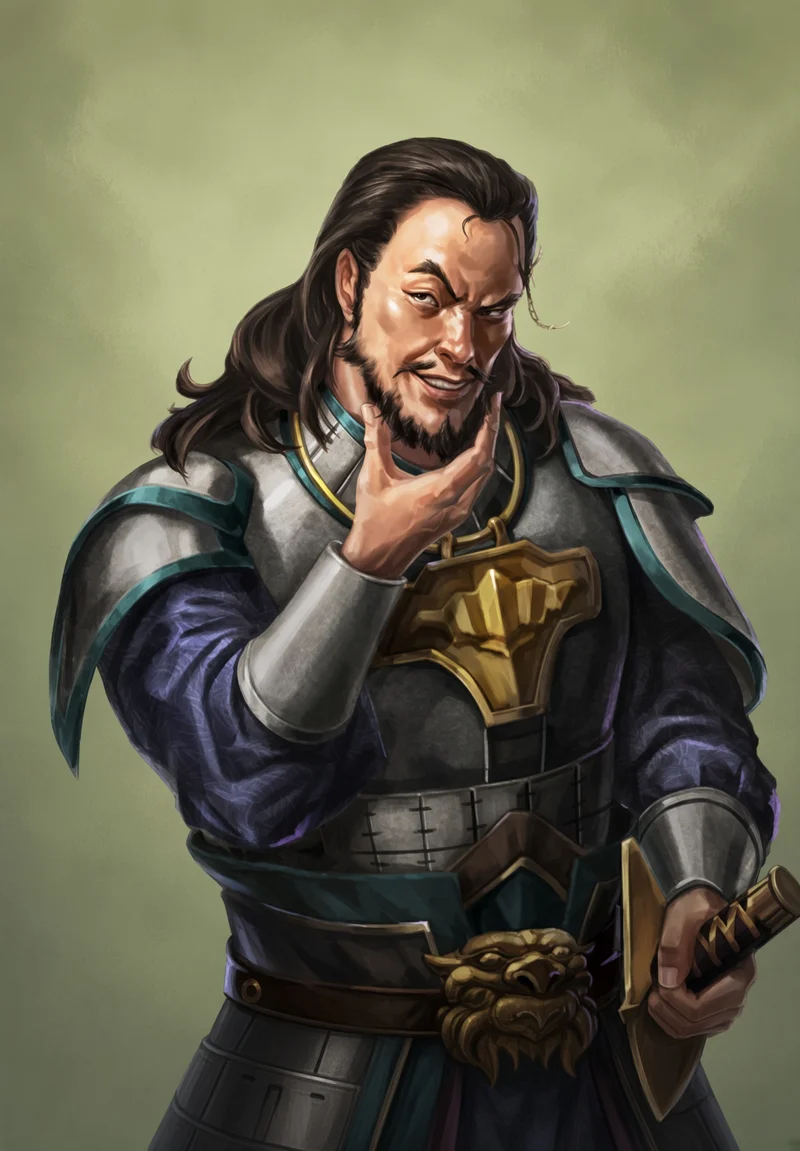
Guo Ma was a military officer of Eastern Wu whose massive insurrection in Guangzhou during the twilight of the Three Kingdoms period dealt a fatal blow to the state’s military readiness. Serving as a Personal Troop Commander (Buku Du) under Xiu Yun, the Grand Administrator of Hepu, Guo Ma commanded deeply loyal forces stationed in the far southern frontier. Documented in Chen Shou’s official dynastic history Records of the Three Kingdoms (Sanguozhi – Book of Wu, Biography of Sun Hao) as well as Sima Guang’s Zizhi Tongjian, Guo Ma’s historical significance lies in his role as the ultimate catalyst that exposed the terminal weakness of Eastern Wu, directly precipitating the Jin Dynasty’s all-out conquest of the realm in 279–280 AD.
In 279 AD, Xiu Yun died of illness in Guangzhou. In response, the autocratic court of Eastern Wu’s last emperor, Sun Hao, made plans to disband and redistribute Xiu Yun’s long-standing personal troops among various other regional commanders. Unwilling to be separated from their hereditary lineage, and deeply incensed by Sun Hao’s oppressive, high-handed census enforcement and exorbitant tax levies in Guangzhou, the soldiers rallied behind Guo Ma. Exploiting the widespread civil resentment, Guo Ma launched a sweeping armed rebellion across Guangzhou and Jiaozhou. He executed the Imperial Military Inspector Shi Shu, assassinated the Grand Administrator of Nanhai Liu Lue, and forcibly expelled the Inspector of Guangzhou Xu Qi. Guo Ma proclaimed himself General Who Pacifies the South and Commander-in-Chief of Military Affairs for Giao and Guang Provinces, establishing an independent rebel stronghold that engulfed the entire southern frontier.
The sudden rebellion threw the Wu court at Jianye into complete panic and disarray. Sun Hao was forced to strip critical defensive garrisons along the northern border to assemble a punitive expedition of over 17,000 troops, commanded by senior generals Deng Xiu, Tao Jun, and Tao Huang, to march south and suppress Guo Ma. This massive redeployment of troops away from the Yangtze River line left Eastern Wu’s northern defenses severely depleted and exposed. Recognizing this unprecedented strategic vulnerability, Jin generals Wang Jun and Du Yu urgently submitted memorials to Sima Yan (Emperor Wu of Jin), urging an immediate, full-scale invasion of Wu. While Eastern Wu’s southern forces remained bogged down in a grueling campaign against Guo Ma, the Jin army launched a massive six-pronged invasion across the Yangtze, capturing Jianye in 280 AD and receiving Sun Hao’s unconditional surrender. Guo Ma’s rebellion dissolved amidst the total collapse of the state, leaving his final fate unrecorded in historical texts.
Role in Romance of the Three Kingdoms
In Chapter 120 of Luo Guanzhong’s classic 14th-century historical novel Romance of the Three Kingdoms, Guo Ma appears as the pivotal catalyst whose southern insurrection triggers the final collapse of Eastern Wu. The novel depicts the urgent arrival of emergency messengers at Sun Hao’s court reporting that Guangzhou general Guo Ma has risen in open revolt, expelling Inspector Xu Qi, slaying Inspector Shi Shu, and mobilizing thousands of rebel troops.
Luo Guanzhong utilizes Guo Ma’s rebellion as the final straw that breaks the back of Eastern Wu’s resistance. Faced with an internal uprising in the far south, Sun Hao is compelled to dispatch his remaining loyal armies and competent generals away from the northern riverfront to quell the revolt. This fatal strategic distraction leaves the northern border along the Yangtze completely undefended, allowing the Jin commanders Wang Jun, Du Yu, and Lu Kang’s successors to sweep down the river unopposed. Guo Ma’s revolt in Chapter 120 is thus presented as the ultimate straw that fulfills the mandate of heaven, directly enabling Sima Yan to unify the realm under the Jin Dynasty.
Guo Ma (郭馬) — Historical & Literary Timeline
Instigating Uprising in Guangzhou
Rallies Xiu Yun’s former troops against Wu’s troop redistribution policies and heavy taxation; slays Inspector Shi Shu, assassinates Liu Lue, expels Xu Qi, and self-identifies as General Who Pacifies the South.
Forcing Sun Hao to Divert Northern Defenses
Forces Emperor Sun Hao to mobilize over 17,000 troops under Deng Xiu and Tao Jun to march south to suppress the revolt, drastically weakening the northern Yangtze riverfront defenses.
Catalyzing the Fall of Eastern Wu
Guo Ma’s rebellion ties down Wu’s army in the south, allowing Jin armies under Wang Jun and Du Yu to invade across the Yangtze unopposed, capturing Jianye and ending the Three Kingdoms period.
For detailed historical records, archives, and official chronicles, explore Guo Ma on Wikipedia.
Key Relationships
Family
- No information
Friends
- Xiu Yun (虞允, Ngô Độn) – Grand Administrator of Hepu; Guo Ma served as his personal troop commander, and after Xiu Yun’s death the troops formerly under Xiu Yun formed the core of Guo Ma’s rebellion, reflecting a close military alliance.
Enemies
- Sun Hao (孙皓, Tôn Hạo) – Last emperor of Eastern Wu; his oppressive taxation and troop‑redistribution orders in 279 AD triggered Guo Ma’s uprising.
- Shi Shu (石舒, Thạch Thư) – Imperial Military Inspector of Guangzhou; executed by Guo Ma during the opening phase of the revolt.
- Liu Lue (刘略, Lưu Lược) – Grand Administrator of Nanhai; assassinated by Guo Ma’s rebel forces in 279 AD.
- Xu Qi (徐岐, Từ Kỳ) – Inspector of Guangzhou; expelled from the province by Guo Ma’s troops.
- Tao Huang (陶璜, Đào Hoàng) – Governor of Jiaozhou sent by Sun Hao to suppress the rebellion; directly opposed Guo Ma’s forces.
- Tao Jun (陶濬, Đào Tuấn) – Wu general who co‑led the 17,000‑troop expedition dispatched in 279 AD to quell Guo Ma’s insurrection.
- Deng Xiu (邓秀, Đặng Tú) – Wu general who jointly commanded the punitive southern campaign against Guo Ma.
- Du Yu (杜预, Đỗ Dự) – Jin general who exploited Guo Ma’s revolt as a pretext for the 280 AD Jin invasion of Wu.
- Wang Jun (王浚, Vương Tuấn) – Jin general who similarly used the southern uprising to launch the final Jin conquest of Eastern Wu.
Other
- Sima Yan (司马炎, Tư Mã Diêm) – Emperor Wu of Jin; his decision to launch the decisive 280 AD invasion of Eastern Wu was prompted by the strategic vulnerability exposed by Guo Ma’s rebellion.
In Novel
Chapter 120
- Guo Ma (郭马, Quách Mã): Guo Ma is a Wu military officer involved in the final political and military crisis of Eastern Wu. His appearance belongs to the period when Sun Hao’s government is collapsing under the Jin invasion. His role is brief and connected with the late Wu military command rather than with an extended independent campaign.
History
Summary
- Guo Ma (郭马, Quách Mã) was a military commander who rebelled against the government of Eastern Wu during the final decades of the Three Kingdoms.
Rebellion in Jiaozhi
- Guo Ma led a major uprising in the southern territories of Wu during the reign of Emperor Sun Hao.
- His rebellion reflected the serious administrative and military difficulties faced by Wu in its southern frontier.
Suppression
- The Wu government dispatched forces to suppress the rebellion.
- The revolt was eventually brought under control, although it demonstrated the weakening authority of the late Wu regime.
- Classification: Historical.