
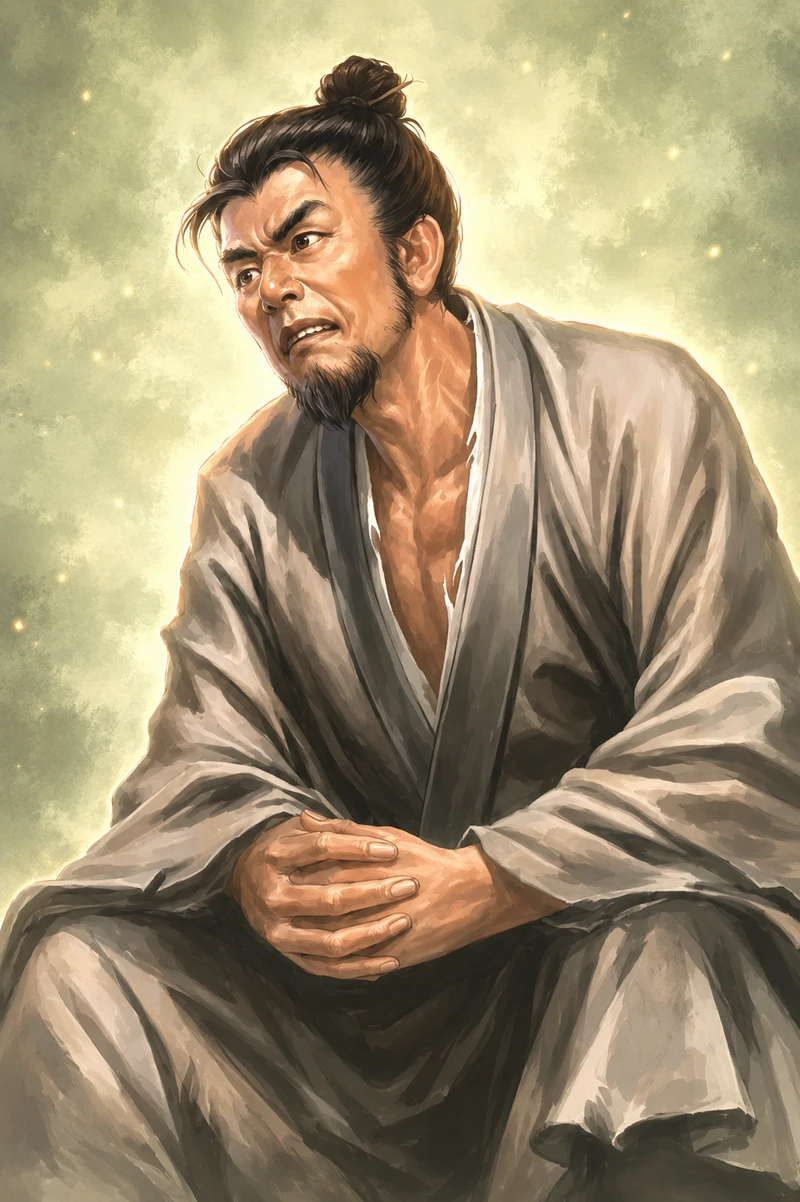
Here is the exhaustive biography of Han Song (韓嵩 / 韩嵩), courtesy name Degao (德高) (c. 154 – ?), a senior adviser to Liu Biao who urged submission to Cao Cao, was nearly executed for his counsel, and later rose to high office under Wei, incorporating historical records and the narrative of Romance of the Three Kingdoms.
Contents
Early Life and Service under Liu Biao
Han Song was a native of Nanyang (or Yiyang in Jing Province according to some records). Though from a poor family he was noted for diligence in youth. During the Yellow Turban Rebellion he took refuge in the south and eventually entered the service of Liu Biao, rising to the posts of Attendant Officer and Gentleman of the Household (從事中郎). He became one of the more clear-sighted voices at the Jingzhou court, consistently arguing that Liu Biao should recognise the growing power of Cao Cao and avoid open confrontation.
The Embassy to Xu and Near-Execution (c. 199–200)
When both Cao Cao and Yuan Shao sent envoys to Jingzhou seeking Liu Biao’s favour, Liu Biao consulted his officers. Han Song advised that the province should align itself with Cao Cao. Liu Biao therefore dispatched Han Song to Xu to observe the situation. Before departing, Han Song frankly warned his lord:
If the imperial court bestows an office upon me, I shall no longer be able to serve Your Lordship.
At Xu, Cao Cao received him with marked courtesy, appointed him Palace Attendant (侍中) and concurrently Governor of Lingling, and sent him back to persuade Liu Biao. Upon his return Han Song praised the order and strength of Cao Cao’s court, refused to reveal any secrets that might be used against Xu, and went so far as to urge Liu Biao to send a son to the capital as a hostage—a gesture of goodwill that would secure Jingzhou’s position. Liu Biao flew into a rage, accused him of treason, killed his escort, and ordered his execution. Lady Cai (or, in the novel, Kuai Yue / Kuai Liang) interceded, arguing that it was unjust to put a man to death merely for having correctly foreseen the court’s actions. Han Song’s life was spared; he was instead imprisoned.
Release and Service under Cao Cao (208 onward)
After Cao Cao took Jingzhou in 208 following Liu Biao’s death and Liu Cong’s surrender, Han Song was released from prison. Cao Cao appointed him Grand Herald (大鴻臚) and treated him with the courtesy due an old acquaintance. Historical records note that Han Song, together with Kuai Yue and Fu Xun, had earlier counselled Liu Cong to submit; the novel is less explicit about the circumstances of his release but preserves his elevation to high ministerial rank under Wei. His later years and exact death date are not recorded.
Romance of the Three Kingdoms Portrayal
The novel places the embassy episode in Chapter 23, during the period when Cao Cao and Yuan Shao were already manoeuvring for supremacy. The sequence of events—Han Song’s warning before departure, the honourable reception at Xu, the return with praise for Cao Cao and the suggestion of a hostage son, Liu Biao’s fury, and the intercession that saves his life—follows the historical outline closely. The novel assigns the intercession primarily to Kuai Liang rather than Lady Cai, but otherwise preserves Han Song’s character as a candid, far-sighted adviser whose loyalty to the broader Han order outweighed narrow provincial allegiance.
Han Song (韓嵩) — Historical & Literary Timeline
c. 184–190s AD — Flight South and Entry into Liu Biao’s Service
From Nanyang to Jingzhou
Took refuge in the south during the Yellow Turban upheaval; later joined Liu Biao’s administration and rose to senior advisory rank (Attendant Officer / Gentleman of the Household).
c. 199–200 AD — Embassy to Cao Cao at Xu
“If the court bestows office upon me…”
Advised Liu Biao to side with Cao Cao. Sent to Xu to observe; warned in advance that any imperial appointment would end his service to Jingzhou. Cao Cao treated him with deference, named him Palace Attendant and Governor of Lingling, and sent him back to persuade Liu Biao.
c. 200 AD — Imprisonment
Near-Execution and Reprieve
Returned praising Cao Cao’s court and urging that a son be sent as hostage. Liu Biao ordered his death for treason; Lady Cai (novel: Kuai Liang) interceded and the sentence was reduced to imprisonment.
208 AD — Release and Appointment under Cao Cao
Grand Herald of Wei
After Cao Cao secured Jingzhou, Han Song was freed from prison and appointed Grand Herald (大鴻臚). He thereafter served the Wei regime with the honour due a man who had early recognised the correct alignment of power.
Historical Note
Han Song exemplifies the difficult position of provincial advisers caught between local loyalty and the emerging central power of Cao Cao. His frank prediction that an imperial appointment would transfer his allegiance, his subsequent praise of Xu, and his near-execution illustrate both the clarity of his political judgment and the insecurity of Liu Biao’s court. The novel preserves the essential drama while assigning the life-saving intercession to Kuai Liang; history records his later elevation to Grand Herald after 208. In both accounts he stands as a rare voice of pragmatic realism in Jingzhou—one that Liu Biao could neither fully accept nor, in the end, destroy.
For detailed historical records, archives, and official chronicles, explore Han Song on Wikipedia.
Key Relationships
Family
- No father, mother, spouse, or children are recorded for Han Song (韩嵩, Hàn Tung) in the Jing Province notices of the Sanguozhi / Pei annotations or in Luo Guanzhong’s novel. He appears as a gentry adviser from Yiyang (Nanyang), not as a dynastic clan head.
Friends
- Liu Biao (刘表, Lưu Biểu) — Jingzhou governor Han Song serves as senior envoy and counsellor. The bond breaks when Han Song praises Cao Cao (曹操, Tào Tháo) and urges realistic submission; Liu Biao imprisons him (novel Ch. 23; historical suspicion of divided loyalty).
- Kuai Yue (蒯越, Khoái Việt) — Fellow realist on Jing’s staff; after Liu Biao’s death they jointly counsel Liu Cong (刘琮, Lưu Tông) to surrender Jing to Cao Cao (novel Ch. 40).
Enemies
- Cai Mao (蔡瑁, Sái Mạo) — Jing faction rival who works to discredit Han Song after the Xu mission; embodies the Cai–Kuai struggle over whether Jing should resist or accommodate Cao Cao.
- Liu Biao (刘表, Lưu Biểu) — Patron turned persecutor when frank advice is read as treason; imprisonment (with life spared) is the novel’s and history’s shared turning point.
Other
- Cao Cao (曹操, Tào Tháo) — Object of Han Song’s embassy to Xu/Xuchang. Impressed by Han Song’s integrity, Cao Cao grants high court rank; Han Song later serves the Cao–Wei order after Jing’s surrender. Political counterpart and eventual sovereign, not a personal friend during the Liu Biao years.
- Liu Cong (刘琮, Lưu Tông) — Heir who follows Han Song / Kuai Yue’s surrender counsel in 208, transferring Jing’s heartland to Cao Cao.
- Liu Qi (刘琦, Lưu Kỳ) — Elder son of Liu Biao on the opposite succession track; the surrender debate that frees Han Song from prison is the same Jing crisis that strands Liu Qi outside the Cai-dominated settlement.








In Novel
Chapter 23
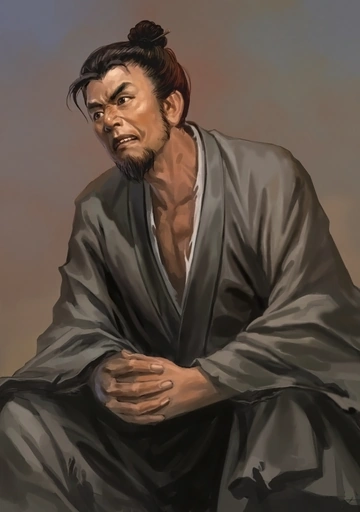
- Han Song (韩嵩, Hàn Tung), courtesy name Degao (德高, Đức Cao): Senior adviser under Liu Biao (刘表, Lưu Biểu), sent to Xu/Xuchang to observe Cao Cao (曹操, Tào Tháo). On return he frankly praises Cao Cao’s governance and urges submission; Liu Biao, inflamed by factional slander (notably from the Cai circle), imprisons him for suspected divided loyalty.
Chapter 40
- Han Song (韩嵩, Hàn Tung): Freed after Liu Biao’s death; with Kuai Yue (蒯越, Khoái Việt) he advises Liu Cong (刘琮, Lưu Tông) to surrender Jingzhou to Cao Cao, completing the realist line he first spoke in Chapter 23.
In History
Period I
- Han Song (韩嵩, Hàn Tung (Hàn Tống)), courtesy name Degao, was a learned official from Yiyang who served Liu Biao (刘表, Lưu Biểu) in Jing Province. He was respected for his learning and integrity.
Year: 208 AD
- Han Song (韩嵩, Hàn Tung (Hàn Tống)) was sent by Liu Biao to observe Cao Cao (曹操, Tào Tháo) and assess the political situation. After returning, Han Song praised Cao Cao’s authority and advised Liu Biao to consider submission. Liu Biao suspected him of divided loyalty and imprisoned him, although he ultimately spared his life.
Year: 208 AD
- Han Song (韩嵩, Hàn Tung (Hàn Tống)) remained in Jing Province during the succession crisis following Liu Biao’s death. His political advice favored accommodation with Cao Cao, and the eventual surrender of Liu Cong helped bring Jing Province under Cao Cao’s control.
Period II
- Han Song (韩嵩, Hàn Tung (Hàn Tống)) later served the Cao Wei administration. His surviving biography emphasizes his scholarship, loyalty to the imperial institution, and willingness to speak frankly even when his advice was unwelcome.
Gallery