
Contents
Biography & Historical Record
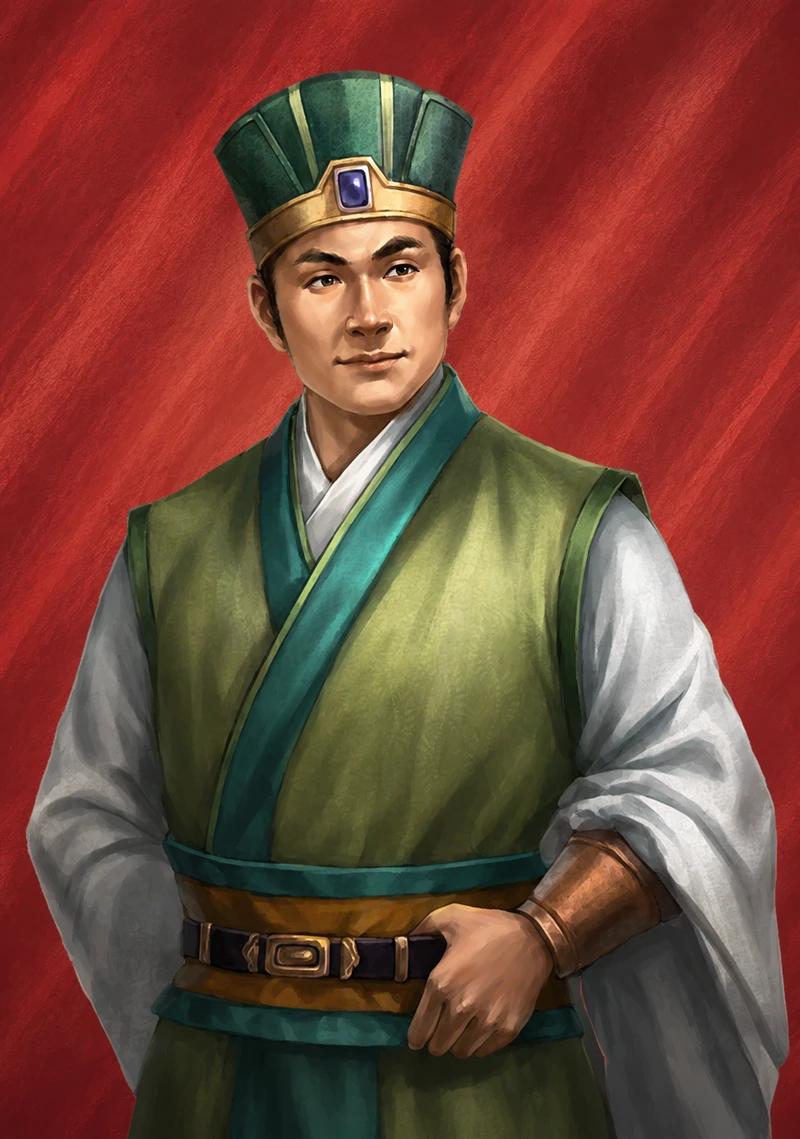
Meng Zong, courtesy name Gongwu, later renamed Meng Ren to observe imperial naming taboos during the reign of Sun Hao, was an illustrious statesman, venerable high chancellor, and globally celebrated paragon of Confucian filial piety who served the Eastern Wu state across multiple imperial reigns. Hailing from Jiangxia Commandery, Meng Zong is immortalized throughout East Asian history as one of the Twenty-Four Filial Exemplars (Ershisi Xiao) for the legendary miracle of ‘Weeping to Sprout Bamboo Shoots in Winter’ (Ku Zhu Sheng Sun). Documented in Chen Shou’s official dynastic history Records of the Three Kingdoms (Sanguozhi – Book of Wu, Biographies of Three Sovereigns and Sun Hao), Gan Bao’s Jin Ji, and the Chu Guo Xianxian Zhuan, Meng Zong rose through relentless personal diligence, absolute incorruptibility, and profound administrative competence to reach the highest ministerial dignity of Eastern Wu, serving as Minister of Works (Sikong).
Meng Zong lost his father in early childhood and was raised solely by his devoted mother, Lady Meng. Recognizing her son’s exceptional intellect, Lady Meng sent him to study under the renowned Confucian master and later Grand Commander Lu Xun in Nanyang. During his studies, Lady Meng crafted a massive, thick hemp blanket for him to share with fellow impoverished scholars, instilling in him the virtues of humility, broad-minded benevolence, and scholarly fellowship. Lu Xun recognized Meng Zong’s extraordinary potential, predicting that he would become a pillar of the realm. Meng Zong entered the civil administration of Eastern Wu, serving as Chief of Piaoyang and Grand Administrator of Yuzhang. Throughout his regional governorships, he earned universal adoration for his righteous jurisprudence, low taxation, and personal frugality, weaving his own fishing nets and tending vegetables to avoid burdening the public treasury.
The immortal legend associated with Meng Zong occurred during his youth while caring for his ailing mother. In the depths of a freezing winter, Lady Meng fell critically ill and expressed a desperate longing for fresh bamboo shoot broth. In the bitter cold and heavy snow, bamboo shoots did not grow. Unable to find any fresh shoots in the frozen mountains, Meng Zong embraced the snow-covered bamboo stalks and wept tears of blood in despair, crying out to Heaven in filial grief. His profound devotion moved Heaven and Earth: miraculously, the frozen earth cracked open, and fresh, tender green bamboo shoots sprouted through the snow. Meng Zong harvested the miraculous shoots, boiled a nourishing broth for his mother, and nursed her back to complete health. This extraordinary act cemented Meng Zong’s eternal status as a supreme moral archetype of East Asian culture.
Following the accession of Sun Xiu in 258 and later Sun Hao in 264, Meng Zong was summoned to the imperial court at Jianye to steady the deteriorating administration. In 268, he was elevated to the paramount office of Minister of Works (Sikong), overseeing national infrastructure, agricultural hydraulic projects, and royal court ceremonies. Amidst Sun Hao’s tyrannical excesses and unpredictable temper, Meng Zong utilized his unimpeachable moral authority and venerable stature to gently counsel restraint, protect innocent officials, and ensure the orderly functioning of state logistics. He passed away peacefully in office in 271 during the Baoding era; his passing was deeply mourned by the scholar-officials and common people of Eastern Wu, who revered him as both a sagacious minister and the immortal embodiment of filial virtue.
Role in Romance of the Three Kingdoms
In Chapter 120 of Luo Guanzhong’s classic 14th-century historical novel Romance of the Three Kingdoms, Meng Zong is revered as a venerable and righteous elder statesman of Eastern Wu whose moral stature and high administrative wisdom stood as a final beacon of virtue during the decline of the southern dynasty.
In Chapter 120, as the novel chronicles the final decades of Eastern Wu leading up to the Jin conquest, Meng Zong is introduced holding the supreme office of Minister of Works. In a court increasingly corrupted by tyrannical purges and the sycophancy of favorites like Cen Hun, Meng Zong represents the golden age of Wu’s founding virtue, carrying forward the Confucian integrity instilled by his former master Lu Xun.
The novel highlights Meng Zong’s role during the defensive deliberations in the imperial court. When Western Jin begins mobilizing massive naval armadas in Sichuan and the northern frontiers under Du Yu and Wang Jun, Meng Zong joins loyal statesmen in submitting earnest petitions urging Emperor Sun Hao to strengthen river defenses, heed the military advice of Grand Marshal Lu Kang, and alleviate the heavy burdens placed upon the civilian population. Luo Guanzhong commemorates Meng Zong’s illustrious heritage in historical verse, celebrating both his legendary filial piety that caused winter bamboo to sprout from frozen ground and his steadfast dedication to the preservation of the southern realm.
Meng Zong (孟宗) — Historical & Literary Timeline
Studying Under Lu Xun & Filial Miracle
Studies classical statecraft under master Lu Xun; weeps in the frozen bamboo forest out of deep filial piety for his sick mother, miraculously causing fresh bamboo shoots to sprout from the snow.
Incorruptible Regional Administration
Serves as Grand Administrator of Yuzhang; earns widespread praise for personal frugality, fair judicial administration, and benevolent welfare policies for displaced commoners.
Appointed Minister of Works (Sikong)
Elevated to Minister of Works under Sun Hao; renames himself Meng Ren due to imperial taboo and oversees state engineering, hydraulic works, and court administrative discipline.
Passing Away in Office & Immortal Legacy
Passes away peacefully in office in 271; immortalized as one of China’s Twenty-Four Filial Exemplars and venerated across generations as a paragon of filial devotion.
Key Relationships
Family
- Lady Meng (孟氏, Mạnh Thị): Mother. Virtuous, devoted matriarch who raised Meng Zong in poverty; when she fell ill in mid-winter craving bamboo shoot broth, Meng Zong’s filial tears thawed the frozen earth and caused fresh shoots to sprout, establishing his renown in the *Twenty-Four Filial Exemplars*.
Friends
- Lu Xun (陆逊, Lục Tốn): Grand Chancellor and Commander of Eastern Wu. Venerated teacher and mentor under whom Meng Zong studied Confucian classics and governance principles in his youth.
- Lu Kang (陆抗, Lục Kháng): Grand Marshal of Eastern Wu (son of Lu Xun). Respected companion and senior statesman who defended the borders while Meng Zong maintained civil governance at court.
- Sun Xiu (孙休, Tôn Hưu): Third Emperor of Eastern Wu (Emperor Jing). Highly valued Meng Zong’s pristine filial virtue, moral integrity, and administrative talent, elevating him to high imperial office.
- Sun Hao (孙皓, Tôn Hạo): Fourth and final Emperor of Eastern Wu. Appointed Meng Zong to the supreme civil office of Minister of Works (Sikong), renaming him Meng Ren to observe the imperial taboo on the character *Zong*.
- He Shao (贺邵, Hạ Thiệu): Upright court minister of Eastern Wu. Close ministerial colleague who shared Meng Zong’s dedication to moral righteousness and court rectitude.
- Lu Kai (陆凯, Lục Khải): Chancellor of the Left of Eastern Wu. Allied with Meng Zong in upholding traditional governance and remonstrating against royal excess.
Enemies
- Cen Hun (岑昏, Sầm Hôn): Corrupt and sycophantic court official under Sun Hao. Promoted extravagant construction projects and sycophancy that directly opposed Meng Zong’s austere, Confucian principles.
- Sima Yan (司马炎, Tư Mã Viêm): Founding Emperor of Western Jin (Emperor Wu). Formulated the grand multi-pronged invasion plans to conquer Eastern Wu, threatening the dynasty Meng Zong served until his death in 271 AD.
Others
- No information
In Novel
Meng Zong (孟宗, Mạnh Tông) does not have a securely verified named appearance in the supplied edition under the exact Chinese name 孟宗. No chapter is assigned without an exact textual occurrence.
History
Summary
- Meng Zong (孟宗, Mạnh Tông), also known as Meng Ren, was an official of Eastern Wu associated with the late Three Kingdoms and early Western Jin period.
Service and Reputation
- He served in the Wu administration and was known for his competence and filial reputation.
- Traditional accounts preserve stories emphasizing his devotion to his mother, contributing to his later reputation among the examples of filial piety.
Later Career
- Meng Zong continued to hold office during the later Wu period.
- His career extended into the period when Wu was facing increasing pressure from the northern Jin state.
Classification
- Historical / Traditionally Attested.