
Contents
Biography & Historical Record
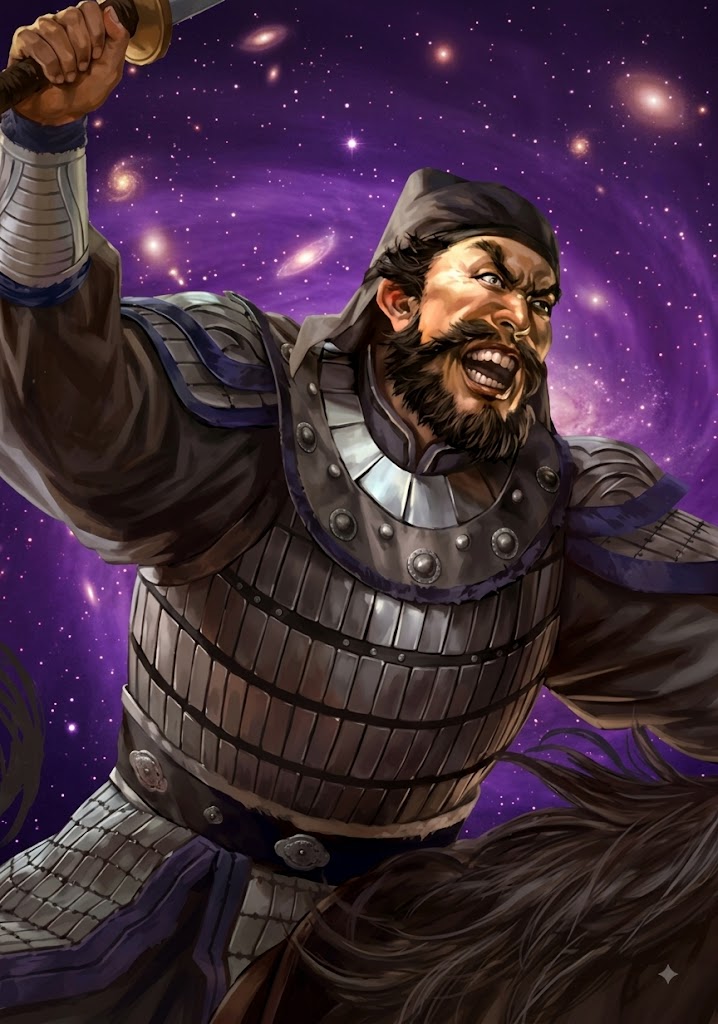
Qu Yan (historically transliterated as Cu Yen or Khuc Dien in Vietnamese scholarship) was a formidable military commander, insurgent leader, and local warlord who dominated Xiping Commandery in Liang Province (modern-day Qinghai Province, China) during the late Eastern Han dynasty and early Three Kingdoms period. Hailing from the powerful, landowning Qu clan—one of the most entrenched, martial gentry families along the northwestern frontier—Qu Yan is documented in Chen Shou’s Records of the Three Kingdoms (Sanguozhi – Book of Wei, Biography of Su Ze and Biography of Zhang Ji) and Sima Guang’s Zizhi Tongjian. Historically, Qu Yan embodied the fierce, fiercely independent frontier warlord tradition of Liang Province. Celebrated for his martial bravery and cunning political opportunism, he repeatedly launched major rebellions that severed vital trade and diplomatic corridors connecting the Central Plains with the Western Regions, causing immense strategic disruption to the Cao Wei regime before his dramatic execution in 220 AD.
Between 215 and 219 AD, following Cao Cao’s military victories over Ma Chao and Han Sui, the northern court established nominal imperial control over Liang Province. However, local gentry clans remained deeply hostile to central taxation and imperial authority. Taking advantage of Cao Cao’s total military commitment to the Hanzhong Campaign against Liu Bei, Qu Yan allied with Xing Chu, the Grand Administrator of Xiping, and other local chieftains to ignite a massive northwestern rebellion. Leading thousands of elite nomadic cavalrymen, Qu Yan overran imperial outposts, slaughtered local magistrates, and blocked all transit along the Silk Road. Facing overwhelming expeditionary forces dispatched by Cao Cao, Qu Yan executed a tactical, feigned surrender, offering nominal allegiance while secretly preserving his military cadre and waiting for another opportunity to strike.
In early 220 AD, following Cao Cao’s death in Luoyang and Cao Pi’s succession as King of Wei, the northern court was preoccupied with the imperial transition. Recognizing the central government’s temporary vulnerability, Qu Yan tore up his peace treaties and launched a second, even larger insurrection in Xiping Commandery. To expand his rebellion, Qu Yan dispatched secret envoys to neighboring commanderies, inciting local administrators and non-Han Qiang and Di tribal chieftains to rise in arms. In response, the Cao Wei court appointed the formidable Senior General Su Ze as General Who Subdues Shu and dispatched him alongside Inspector Zhang Ji to launch a comprehensive counter-insurgency campaign.
Knowing that Su Ze commanded disciplined, veteran Wei legions that could defeat his forces in an open battle, Qu Yan devised a treacherous counter-plan. He dispatched envoys to Su Ze, declaring his desire to surrender a second time. Qu Yan then led a small, personal escort into Su Ze’s military headquarters under the guise of paying formal homage, while secretly concealing a razor-sharp dagger inside his robes. Qu Yan intended to assassinate Su Ze during the imperial banquet, throw the Wei high command into total disarray, and signal his hidden forces outside to surround and annihilate the Wei army. However, the veteran commander Su Ze saw completely through Qu Yan’s duplicity. The moment Qu Yan stepped into the command tent, Su Ze signaled hidden executioners, who sprang forth and restrained Qu Yan. Su Ze thundered with indignation, exposing Qu Yan’s repeated treachery before the assembled generals, and ordered him instantly decapitated in front of the troops. Deprived of their cunning leader, Qu Yan’s rebel army collapsed in utter panic and was swiftly annihilated by Su Ze, permanently restoring imperial order to Xiping.
Famous Quotes & Historical Sayings
In the historical records of Records of the Three Kingdoms (Sanguozhi – Book of Wei), historian Chen Shou recorded the stern judgment rendered upon Qu Yan’s repeated treachery and inevitable downfall: ‘Qu Yan relied upon the entrenched power of the Qu clan in Xiping, using the vastness of the desert frontier to hold imperial authority in utter contempt. Twice he rebelled, and twice he offered feigned surrenders, harboring the treacherous heart of a wild wolf! His attempt to assassinate the Wei commander was nothing more than a desperate trick before Su Ze’s brilliant statecraft. His decapitation at Su Ze’s headquarters stands as a stern, enduring warning to all treacherous warlords who seek to destabilize the realm through deceit.’
Qu Yan (麴演) — Historical & Literary Timeline
Rebelling Against Cao Cao & Feigning Surrender
Allies with Xing Chu to launch a major rebellion in Xiping during Cao Cao’s Hanzhong Campaign; severs Western Region trade routes before offering a feigned surrender to preserve his forces.
Rebelling in Xiping & Inciting Neighboring Commanders
Rebels a second time in Xiping following Cao Cao’s passing; incites neighboring commanderies and tribal chieftains to rise against the newly established Cao Wei regime.
Concealed Dagger Plot & Decapitation at Su Ze’s Camp
Attempts a feigned surrender and concealed-dagger assassination against Wei commander Su Ze; exposed upon entering the command tent and executed on the spot, resulting in the total collapse of his rebel army.
For detailed historical records, archives, and official chronicles, explore Qu Yan on Wikipedia.
Key Relationships
Family
- No information
Friends
- Xing Chu (邢楚, Hình Sở): Grand Administrator of Xiping who allied with Qu Yan during their joint insurrection across Liang Province between 215 and 219 AD, severing imperial trade routes.
- You Chu (游楚, Du Sở): Regional administrator and political contemporary in Liang Province who was actively involved in frontier governance during the northwestern uprisings.
Enemies
- Su Ze (苏则, Tô Tắc): Senior Cao Wei commander who saw through Qu Yan’s feigned surrender and concealed-dagger assassination plot in 220 AD, having him apprehended and summarily executed on the spot.
- Zhang Ji (张既, Trương Ký): Cao Wei Inspector of Liang Province who co-directed the counter-insurgency campaign alongside Su Ze to crush Qu Yan’s rebel forces and restore imperial control.
Other
- Cao Cao (曹操, Tào Tháo): King of Wei whose military preoccupation during the Hanzhong Campaign (215–219 AD) gave Qu Yan the opportunity to launch his initial rebellion in Xiping.
- Cao Pi (曹丕, Tào Phi): Emperor Wen of Cao Wei whose imperial succession in 220 AD prompted Qu Yan’s second uprising, leading to imperial orders to eliminate the insurgent leader.
In Novel
Chapter 57
In History
Summary
- Qu Yan (麴演, Cù Yến) was a local military leader in the Hexi corridor during the late Eastern Han.
Political Activity
- Qu Yan operated in the complex political environment of Liangzhou and the Hexi commanderies, where local rulers, Han officials and regional military leaders competed for influence.
- He was involved in shifting alliances and conflicts among the regional powers.
Conflict and Death
- His political position ultimately collapsed amid the struggles between local forces and the expanding authority of Cao Wei.
Historical Record
- Classification: Historical.