
Contents
Biography & Historical Record
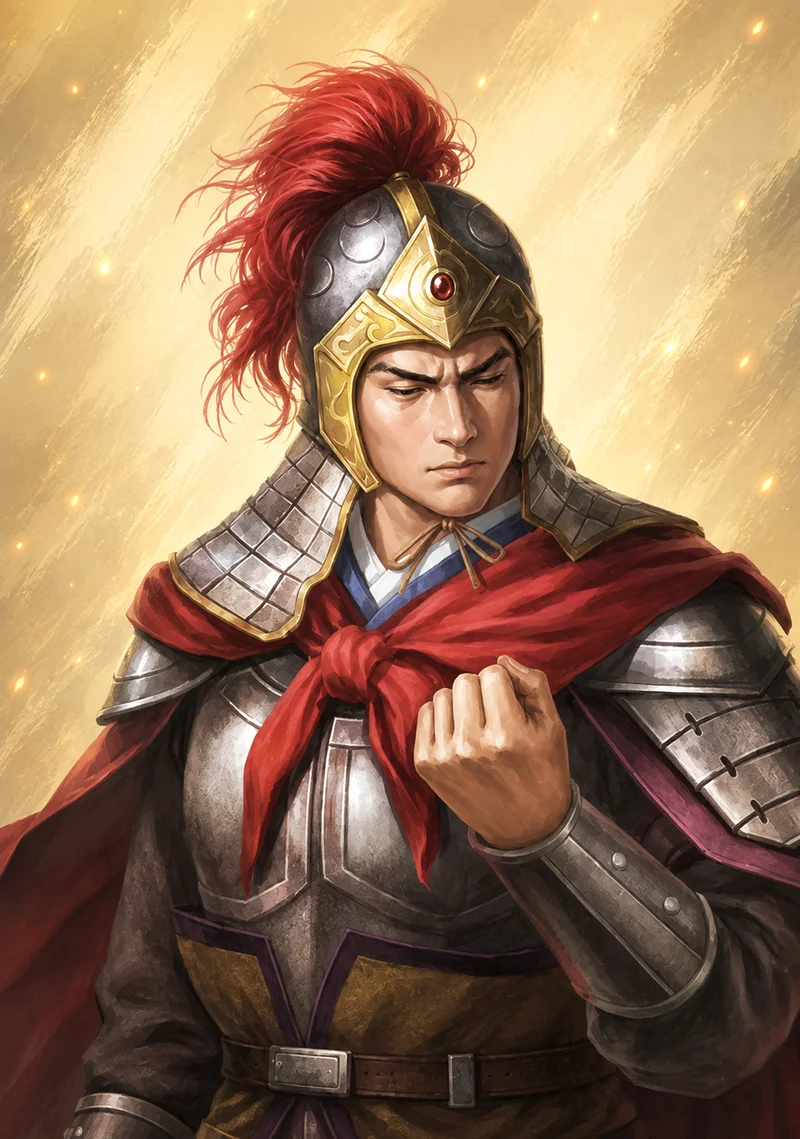
Sun Xiu, courtesy name Yancai, was a prominent imperial general, frontier grand commander, and high-ranking statesman who served the Eastern Wu state and subsequently the Western Jin dynasty during the late Three Kingdoms and early Jin periods. Born in Fuchun within Wu Commandery, Sun Xiu was an aristocratic scion of the Sun imperial clan, being the great-grandson of Sun Kuang (the fourth son of foundational warlord Sun Jian) and the son of General Sun Tai. Endowed with a dignified bearing, profound military acumen, deep popularity among garrison troops, and immense prestige within the royal family, Sun Xiu rose to become General of the Vanguard (Qian Jiangjun) and Commander-in-Chief of Xiakou (Xiakou Dudu), holding supreme military authority over the vital river defenses of the middle Yangtze River. Documented extensively in Chen Shou’s official dynastic history Records of the Three Kingdoms (Sanguozhi – Book of Wu, Biography of Sun Hao and Biography of Sun Kuang), Fang Xuanling’s Book of Jin (Jin Shu – Biography of Sun Xiu), and Sima Guang’s Zizhi Tongjian, Sun Xiu is historically renowned for his dramatic defection to Western Jin in 270 to escape the paranoid purges of Emperor Sun Hao, and for his poignant lamentation upon the eventual fall of Eastern Wu in 280.
During the reign of Eastern Wu’s fourth and final ruler, Sun Hao, the imperial court descended into pervasive paranoia, autocracy, and widespread bloodshed. Because Sun Xiu possessed high royal lineage, formidable military talent, and direct control over the elite garrisons stationed at the strategic bastion of Xiakou, he was viewed by Sun Hao with intense jealousy and suspicion. In 270, Sun Hao dispatched his confidant, Chief Clerk He Ding, leading an armed retinue of five thousand troops under the pretext of conducting royal hunts along the riverlands, while secretly maneuvering to surround Xiakou and execute Sun Xiu. Recognizing the mortal danger and realizing that remaining in Jiangdong meant certain extermination for his entire household, Sun Xiu took decisive action: in the twelfth month of 270, he gathered his family, trusted lieutenants, and several hundred elite veteran soldiers, boarded a fleet of warships under cover of darkness, and crossed the northern waters to surrender to Western Jin.
Upon arriving in the northern realm, Sun Xiu was received with extraordinary grandeur by Emperor Wu of Jin (Sima Yan). Seeking to incentivize further defections from the southern nobility and demoralize Eastern Wu’s border defenders, Sima Yan showered Sun Xiu with supreme honors, elevating him to General of Agile Cavalry (Biaoji Jiangjun), Palace Attendant (Shizhong), and Opening of the Office with Equal Honors to the Three Excellencies (Kaifu Yitong Sansi), while ennobling him as the Duke of Kuaiji. Furthermore, Sima Yan arranged a prestigious marriage alliance, bestowing Lady Kuai (a noblewoman of the distinguished Kuai clan of Xiangyang and cousin of the imperial consort) as Sun Xiu’s primary wife. In the Western Jin court, Sun Xiu conducted himself with exemplary humility, discretion, and frugality, avoiding political factions and maintaining strict personal integrity.
In 280, when Western Jin launched its grand six-pronged invasion that culminated in the capture of Jianye and the unconditional surrender of Sun Hao, the court of Luoyang erupted in jubilant celebration, with civil and military officials congratulating Emperor Wu on the historic reunification of China. Amidst the imperial revelry, Sun Xiu excused himself from the court banquet on grounds of sudden illness. Returning to his private residence, Sun Xiu faced toward the south, wept bitter tears of grief, and uttered his famous historical lament: ‘In former days, when the General Who Crushes the Traitors (Sun Ce) was a mere youth with an auxiliary command, he founded this magnificent enterprise from nothing! Today, the scion Sun Hao has cast away the entire southern empire and thrown it to the dust in a single morning. Blue Heaven above, what sorrow is this!’ Following the fall of Wu, Sun Xiu was demoted in titular rank to General of Pacifying the South as the strategic necessity of court propaganda faded, but he continued to be treated with great respect. He lived out his remaining years in Luoyang, passing away of illness in 301.
Role in Romance of the Three Kingdoms
In Chapter 120 of Luo Guanzhong’s classic 14th-century historical novel Romance of the Three Kingdoms, Sun Xiu is depicted as an upright and prestigious imperial general of Eastern Wu whose forced flight to Western Jin underscores the disastrous internal tyranny of Sun Hao that shattered the morale of Jiangdong’s defenders.
In Chapter 120, the novel chronicles the catastrophic decline of Eastern Wu under the tyrannical and superstitious reign of Emperor Sun Hao. As Sun Hao executes virtuous ministers, skins the faces of dissenting courtiers, and wastes state treasuries on lavish palaces, deep terror spreads throughout the armed forces. Sun Xiu, serving as Area Commander of Xiakou and holding the rank of General of the Vanguard, commands the primary river defense fleet with great distinction, earning the deep love of his soldiers and the gentry of Jing Province.
However, Sun Hao becomes deeply alarmed by Sun Xiu’s growing prestige and royal lineage. Listening to the slander of palace favorites, Sun Hao dispatches trusted agents with military units to Xiakou under the guise of an imperial hunting inspection, intending to ambush and behead Sun Xiu. Forewarned of the plot by loyal scouts, Sun Xiu laments the blindness of the southern sovereign: ‘Our ancestors shed blood to carve out the six commanderies of Jiangdong, yet today the throne is held by a tyrant who slaughters his own kin! If I stay, my entire household will be butchered for no crime!’
Taking his family, trusted officers, and hundreds of loyal garrison veterans, Sun Xiu crosses the Yangtze River to yield his allegiance to Emperor Wu of Jin (Sima Yan). Sima Yan welcomes Sun Xiu with grand imperial ceremonies, granting him the seal of General of Agile Cavalry and the noble title Duke of Kuaiji, holding him up as a shining example of southern submission. Luo Guanzhong highlights Sun Xiu’s defection as the definitive turning point that hollowed out Eastern Wu’s river defenses, illustrating how Sun Hao’s relentless cruelty alienated the finest commanders of the Sun clan and cleared the path for Western Jin’s triumphant conquest of the Three Kingdoms.
Sun Xiu (孫秀) — Historical & Literary Timeline
Commander-in-Chief of Xiakou & Frontier Defense
Serves as General of the Vanguard and Commander of Xiakou; commands elite riverine garrisons along the middle Yangtze and earns immense prestige within the Sun imperial clan.
Escaping Sun Hao’s Purge & Yielding to Sima Yan
Discovers Sun Hao’s covert assassination plot via He Ding; leads his family and hundreds of veteran troops across the Great River to surrender to Emperor Wu of Jin.
Elevated to General of Agile Cavalry & Duke of Kuaiji
Appointed General of Agile Cavalry and Duke of Kuaiji with Equal Honors to the Three Excellencies; weds Lady Kuai and serves in Luoyang with exemplary modesty and prudence.
Weeping for Sun Ce’s Legacy & Passing in Luoyang
Faces south and weeps bitterly over Sun Hao’s surrender and the destruction of Sun Ce’s foundational empire; lives peacefully in Luoyang until his passing in 301.
Key Relationships
Family
- Sun Jian (孙坚, Tôn Kiên): Great-great-grandfather. Posthumously Emperor Wulie, the Tiger of Jiangdong.
- Lady Wu (吴夫人, Ngô Phu Nhân): Great-great-grandmother. Revered matriarch of the Sun clan.
- Sun Kuang (孙匡, Tôn Khuông): Great-grandfather. Fourth son of Sun Jian and founder of Sun Xiu’s ancestral lineage branch.
- Sun Ce (孙策, Tôn Sách): Great-granduncle. Conqueror of Jiangdong.
- Sun Quan (孙权, Tôn Quyền): Great-granduncle. Founding Emperor Da of Eastern Wu.
- Sun Tai (孙泰, Tôn Thái): Father. Senior military officer who served as Area Commander of Caoshi and fell in battle defending Eastern Wu against Cao Wei (234 AD).
- Lady Kuai (蒯氏, Khoái Thị): Wife. Noble daughter of Kuai Jun belonging to the prominent Kuai clan of Xiangyang, wedded to Sun Xiu in Western Jin.
- Sun Hao (孙皓, Tôn Hạo): Distant cousin. Fourth and final Emperor of Eastern Wu whose paranoid court terror and targeted purges compelled Sun Xiu to defect to Jin in 270 AD.
Friends
- Sima Yan (司马炎, Tư Mã Viêm): Founding Emperor of Western Jin (Emperor Wu). Welcomed Sun Xiu’s defection with lavish ceremony in 270 AD, appointing him Senior General of Agile Cavalry (Piaoji Da Jiangjun) and ennobling him as Duke of Kuaiji.
- Jia Chong (贾充, Giả Sung): Grand Commandant of Western Jin. Senior statesman who welcomed and interacted with Sun Xiu at the Luoyang imperial court.
- Du Yu (杜预, Đỗ Dự): Grand General of Western Jin whose southern invasion was substantially aided by Sun Xiu’s strategic intelligence on the middle Yangtze riverways (280 AD).
- Wang Jun (王濬, Vương Tuấn): Grand Admiral of Western Jin whose naval armada capitalized on the demoralization of the Wu frontier garrisons caused by Sun Xiu’s defection.
Enemies
- Sun Hao (孙皓, Tôn Hạo): Tyrannical Emperor of Eastern Wu. Grew deeply suspicious of Sun Xiu’s popular military command at Xiakou; dispatched his trusted agent He Ding with thousands of troops under the pretext of a royal hunt to assassinate Sun Xiu, forcing Sun Xiu to flee north to Jin (270 AD).
- He Ding (何定, Hà Định): Chief Clerk and corrupt palace favorite of Sun Hao. Dispatched to Xiakou with elite troops in 270 AD to execute the covert assassination of Sun Xiu.
- Cen Hun (岑昏, Sầm Hôn): Sycophantic courtier under Sun Hao whose manipulative political intrigues accelerated the purges of imperial clan generals like Sun Xiu.
Others
- No information
In Novel
Chapter 120
- Sun Xiu (Wu) (孙秀, Tôn Tú): Sun Xiu is a Wu prince and military figure who defects to Jin during the final period of Eastern Wu. His defection provides the Jin court with an additional member of the Wu ruling family and illustrates the internal fragmentation of Sun Hao’s state.
History
Summary
- Sun Xiu (孙秀, Tôn Tú) was a member of the Sun clan of Eastern Wu and a military and political figure of the later Three Kingdoms period.
Service in Wu
- He held office and military responsibilities under the Wu court.
- His career developed during the increasingly unstable final decades of Eastern Wu.
Later Life
- The surviving record is less extensive than that of the emperor Sun Xiu and should not be conflated with him.
Classification
- Historical / Briefly Attested.