




Contents
Biography & Historical Record
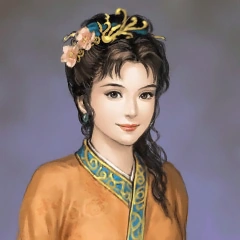
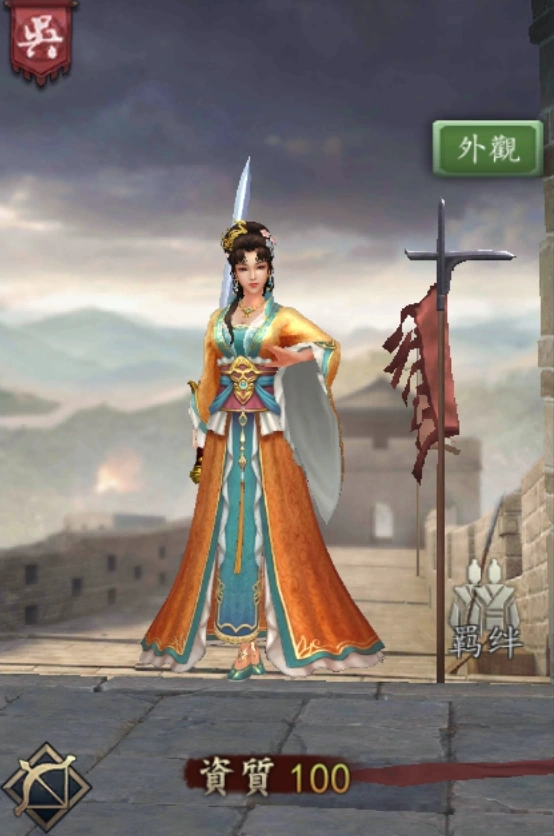
Xiaoqiao (小乔, Tiểu Kiều) — literally “Younger Qiao” — is the traditional name for the younger daughter of the Qiao family of Wan (皖城乔氏), paired with her elder sister Daqiao (大乔, Đại Kiều) as the celebrated Two Qiaos (二乔) of Jiangdong. In the Romance of the Three Kingdoms and game tradition she is a daughter of the Qiao patriarch (Qiao Xuan / 乔国老 / 桥公); historically Sanguozhi records only that Zhou Yu (周瑜, Chu Du) married a Qiao daughter after Sun Ce captured Wan in 199 AD, without the personal name “Xiaoqiao.”
Unlike Daqiao, who becomes a widow in Chapter 29, Xiaoqiao remains Zhou Yu’s wife through Wu’s rise and the Red Cliffs crisis — making her the emotional center when Zhuge Liang (诸葛亮, Gia Cát Lượng) provokes Zhou Yu in Chapter 44 by implying Cao Cao (曹操, Tào Tháo) would imprison the Two Qiaos in the Bronze Bird Terrace. Historically she bore Zhou Yu sons Zhou Xun (周循) and Zhou Yin (周胤); a daughter is said to have married Crown Prince Sun Deng (孙登). After Zhou Yu’s death in 210 AD she is remembered in mourning at his funeral arc (novel Chapter 57).
Father: Novel vs History
In the novel (priority for Diaochan wiki): Chapter 15 pairs the Two Qiaos with Sun Ce and Zhou Yu after the conquest of Wan; appendix and game rosters name their father Qiao Xuan (桥玄). Chapter 44’s Lord Qiao the National Elder (乔国老, Kiều Quốc Lão) speaks in the marriage-diplomacy thread as Zhou Yu’s father-in-law. The wiki Father box lists one entry — Qiao Xuan, Qiao Guolao, Qiao Gong — matching the linked post title.
In history: Sanguozhi (Wu 1) names only the Qiao clan at Wan; the father is an unnamed Lord Qiao (桥公), and Pei Songzhi cautions against equating him with minister Qiao Xuan. The prose below keeps both traditions; the wiki avatar consolidates them into the single patriarch article at Qiao Xuan, Qiao Guolao, Qiao Gong.
Role in Romance of the Three Kingdoms
Chapter 15 (Jiangdong conquest arc): After Sun Ce and Zhou Yu take Lujiang and Wan County, Zhou Yu weds the younger Qiao daughter — Xiaoqiao — while Sun Ce marries Daqiao, binding the Two Qiaos to the Sun–Zhou coalition.
Chapter 44 (Zhuge Liang Incites Zhou Yu with Words; Sun Quan Decides to Fight at the River): At Chaisang, Zhuge Liang recites Cao Zhi’s Bronze Bird Terrace Ode with the line “揽二乔于东南兮” — to clasp the Two Qiaos in the southeast. Zhou Yu, hearing that Cao Cao’s southern campaign aims to seize Xiaoqiao (his living wife) and the widowed Daqiao, strikes the table and vows war. Xiaoqiao does not speak in the scene, but she is the living stake that turns Zhou Yu’s private rage into Wu’s commitment to Red Cliffs.
Chapter 57 (Zhou Yu Dies After a Fit of Anger; Zhuge Liang Mourns at the River): After Zhou Yu dies at Baqiu (巴丘), aged thirty-six, the novel depicts Xiaoqiao in deep mourning during the funeral procession at Lujiang — the human cost behind the strategist who fought for the Two Qiaos’ honor at Chaisang.
Xiaoqiao (小乔) — Historical & Literary Timeline
Chapter 15
Marriage to Zhou Yu (novel)
Zhou Yu takes Xiaoqiao after securing Wan; Sun Ce marries Daqiao — the Two Qiaos alliance that defines Jiangdong romance lore.
199 AD
Marriage to Zhou Yu (history)
Sun Ce captures Wan; Zhou Yu marries the younger Qiao daughter per Sanguozhi, Wu 1 — no given name “Xiaoqiao” in the primary text.
Chapter 44
Bronze Bird ode provocation
Zhuge Liang’s recitation enrages Zhou Yu over the Two Qiaos — Xiaoqiao is the living wife whose capture Cao Cao is said to desire.
210 AD / Ch. 57
Widowed at Zhou Yu’s death
Zhou Yu dies at Baqiu; Xiaoqiao mourns at the Lujiang funeral — historical death year 210, novel Chapter 57 arc.
For detailed historical records, archives, and official chronicles, explore Xiao Qiao on Wikipedia.
Key Relationships
Family
- Father Qiao Xuan, Qiao Guolao, Qiao Gong (桥玄 / 乔国老 / 桥公) — novel/game patriarch of the Two Qiaos; historical 桥公 of Wan (see Father wiki and combined article).
- Sister Daqiao (大乔, Đại Kiều): Elder of the Two Qiaos; married Sun Ce, widowed Chapter 29.
- Husband Zhou Yu (周瑜, Chu Du): Grand Commander of Wu; married Xiaoqiao in 199 AD.
- Sons Zhou Xun (周循, Chu Tuần) and Zhou Yin (周胤, Chu Dận); daughter Lady Zhou (周氏) said to have married Sun Deng (historical tradition).
Friends
- Sun Ce (孙策, Tôn Sách): Brother-in-law; co-conqueror of Wan with Zhou Yu.
- Sun Quan (孙权, Tôn Quyền): Wu ruler and Zhou Yu’s lord through the Red Cliffs era.
- Daqiao (大乔, Đại Kiều): Elder sister and fellow Two Qiaos symbol in Chapters 44 and 48.
Enemies
- Cao Cao (曹操, Tào Tháo): In Chapter 44’s literary framing, his Bronze Bird Terrace ambition threatens to “lock away” the Two Qiaos — the insult that commits Zhou Yu to war.
Other
- Zhuge Liang (诸葛亮, Gia Cát Lượng): Deliberately cites the Two Qiaos ode to manipulate Zhou Yu (Chapter 44); later attends Zhou Yu’s funeral rites (Chapter 57).
- Cao Zhi (曹植, Tào Thự) and Du Mu (杜牧, Đỗ Mục): Poetic sources of the “二乔” image in Chapters 44 and 48.
- Lord Qiao the National Elder (乔国老): Father-in-law figure in Chapter 44 diplomacy with Sun Quan.
- Sun Deng (孙登, Tôn Đăng): Wu crown prince; traditional husband of Xiaoqiao’s daughter.
In Novel
Chapter 15 (Jiangdong conquest arc)
- Xiaoqiao (小乔, Tiểu Kiều): Younger daughter of the Qiao house at Wan; Zhou Yu takes her as wife when he and Sun Ce secure Lujiang — paired with Sun Ce’s marriage to Daqiao.
Chapter 44
- Xiaoqiao (小乔, Tiểu Kiều): Not on stage, but central to the scene — Zhuge Liang’s Bronze Bird ode implies Cao Cao will seize her and Daqiao; Zhou Yu vows war to defend his wife’s honor.
Chapter 48
- Xiaoqiao (小乔, Tiểu Kiều): Invoked in Cao Cao’s feast boast and Du Mu’s Red Cliffs quatrain (“铜雀春深锁二乔”) as symbolic stakes of the southern campaign.
Chapter 57
- Xiaoqiao (小乔, Tiểu Kiều): Mourns Zhou Yu at his funeral procession after his death at Baqiu — the widow’s grief closing her arc with the Grand Commander.
In History
Summary
- Xiaoqiao (小乔) is the customary name for the younger Qiao sister who married Zhou Yu after Wan County fell in 199 AD — semi-historical labeling not found in Chen Shou’s text.
Year: 199 AD
- Zhou Yu marries a daughter of the Qiao clan at Wan when Sun Ce captures the commandery (Sanguozhi, Wu 1).
Year: 210 AD
- Zhou Yu dies at Baqiu; Xiaoqiao becomes a widow — backdrop to novel Chapter 57 mourning.
Historical Record
Gallery