
Contents
Biography & Historical Record
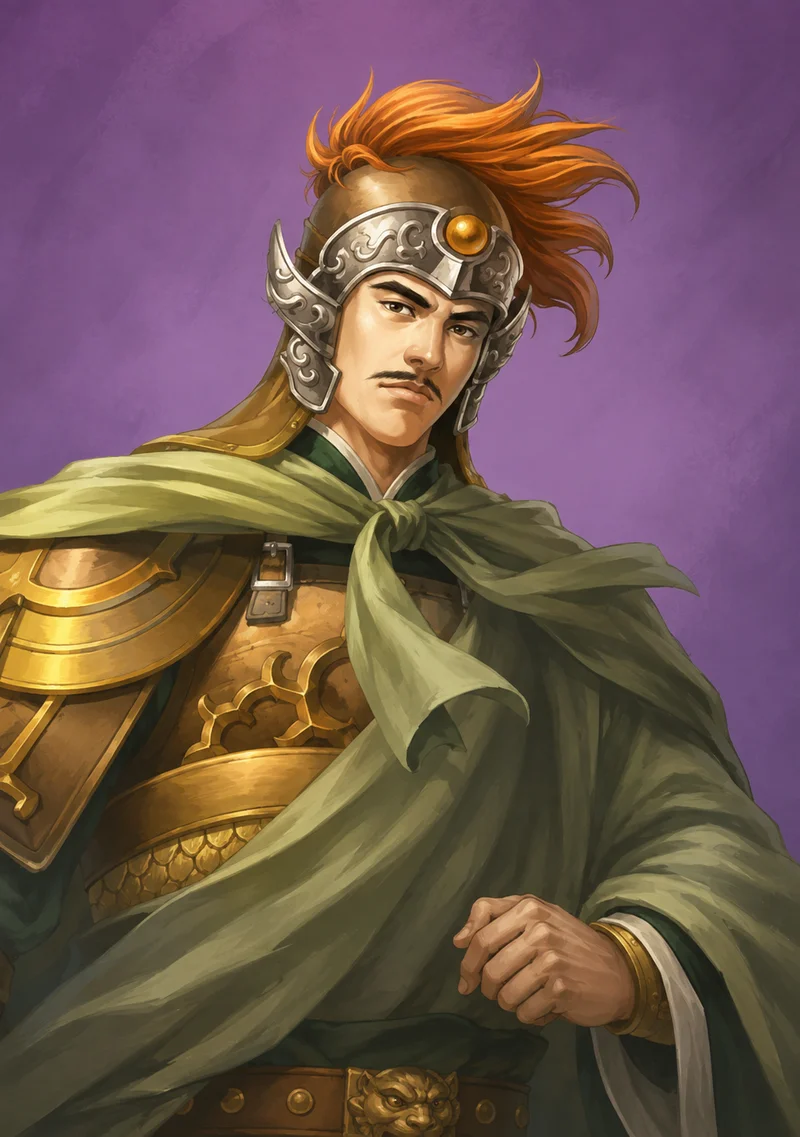
He Kui, courtesy name Shulong, was a high-ranking political advisor, virtuous administrator, and Grand Palace Grandee (Taibu) of Cao Wei during the Three Kingdoms period. Hailing from Yangxia County in Chen State (modern-day Taikang County, Henan Province), he was born into a distinguished gentry family with a legacy of high government service. He Kui is historically celebrated in Chen Shou’s Records of the Three Kingdoms (Sanguozhi – Book of Wei, Biography of He Kui) for his upright moral integrity, his strict enforcement of civil governance, and his masterclass in bloodless pacification—successfully persuading the formidable Yellow Turban pirate chief Guan Cheng to surrender three thousand households without shedding a single drop of blood.
In his youth, amid the chaotic upheaval triggered by Dong Zhuo’s tyranny in Luoyang, He Kui sought refuge in the Huainan region. Warlord Yuan Shu attempted to coerce He Kui into entering his service. Recognizing Yuan Shu’s treasonous ambitions and lack of statecraft, He Kui steadfastly refused to collaborate, engineering a daring escape back to his ancestral hometown. In 197 AD (the second year of Jian’an), learning of Cao Cao’s recruitment of virtuous talents, He Kui traveled to Xuchang to pledge his allegiance. Cao Cao appointed him as a Sub-officer to the Minister of Works (Sikong Yuan) and later as Magistrate of Chengfu County, where he earned widespread acclaim for enforcing impartial justice, curbing local corruption, and fostering economic recovery.
Between 205 AD and 206 AD, as Cao Cao established Changguang Commandery in the frontier region of Qing Province, he appointed He Kui as Administrator of Changguang (Changguang Taishou) to pacify the turbulent eastern seaboard. At the time, Guan Cheng, a powerful remnant Yellow Turban chief and pirate admiral, had assembled over three thousand households, occupying coastal islands, raiding local counties, and aligning with Yuan Tan’s rebellious faction. Faced with widespread destruction, Cao Cao’s military generals urgently advocated launching a massive, all-out military extermination campaign against Guan Cheng’s coastal stronghold.
Rising above military pressure, Administrator He Kui delivered a brilliant strategic assessment. He argued that Guan Cheng’s followers were not inherently rebellious, but had been driven to banditry by wartime lawlessness and a lack of imperial benevolence. He warned that pressing them with overwhelming military force would force them into a desperate, fight-to-the-death stand, causing immense casualties to both government troops and civilians. Adopting a diplomatic strategy of benevolent governance, He Kui dispatched County Assistant Huang Zhen directly to Guan Cheng’s camp. Huang Zhen articulated the strategic choices between surrender and destruction with profound clarity. Deeply moved by He Kui’s sincerity and righteousness, Guan Cheng and his entire coalition of three thousand households submitted peacefully to the Han imperial court without firing an arrow.
Following his triumph in Changguang, He Kui was summoned back to the imperial capital as Sub-officer of the East Bureau in the Prime Minister’s Office (Chengxiang Fu Dongtao Yuan). When Cao Cao was ennobled as King of Wei, He Kui was appointed Grand Tutor to the Crown Prince (Taizi Taifu), tasked with educating Crown Prince Cao Pi. Known for his unyielding integrity, He Kui repeatedly admonished Cao Pi against arrogance and extravagance. When Cao Pi ascended the imperial throne in 220 AD to establish the Cao Wei dynasty, He Kui was elevated to Grand Palace Grandee (Taibu) and ennobled as Marquis of Chengyang Village (Chengyang Ting Hou). He passed away peacefully from old age in 228 AD (the second year of Taihe under Emperor Cao Rui) and was posthumously honored with the title Marquis Su (Marquis the Solemn).
Role in Romance of the Three Kingdoms
In Luo Guanzhong’s novel Romance of the Three Kingdoms, He Kui does not appear as a named character nor is he featured in any chapter. Luo Guanzhong omitted many civil administrators and diplomatic pacification campaigns to center the literary drama on primary military strategists like Xun Yu, Guo Jia, Cheng Yu, and Jia Xu, as well as grand battlefield engagements. However, He Kui is an authentic historical figure documented in official historical texts, including Chen Shou’s Records of the Three Kingdoms (Sanguozhi – Book of Wei, Biography of He Kui) and Sima Guang’s Zizhi Tongjian, as the brilliant administrator who achieved a bloodless pacification of Qing Province and served as Grand Tutor to Cao Pi.
He Kui (何夔) — Historical & Literary Timeline
Refusing Yuan Shu and Submission to Cao Cao
Refuses service under the ambitious warlord Yuan Shu in Huainan; escapes back to Yangxia and submits to Cao Cao at Xuchang in 197 AD, earning appointment as Magistrate of Chengfu.
Appointment as Administrator of Changguang
Appointed Administrator of Changguang Commandery; confronts a major coastal insurgency led by Yellow Turban pirate chief Guan Cheng commanding three thousand households.
Bloodless Pacification of Guan Cheng’s Rebellion
Opposes an all-out military assault; dispatches Huang Zhen to negotiate with Guan Cheng, persuading Guan Cheng and three thousand households to submit peacefully without bloodshed.
Serving as Grand Tutor to Cao Pi and Passing
Serves in the Prime Minister’s Office; appointed Grand Tutor to Crown Prince Cao Pi; elevated to Grand Palace Grandee and Marquis of Chengyang Village under Cao Wei, passing away in 228 AD.
Key Relationships
Family
- He Jun (何峻, Hà Tuấn): Grandfather who served as an imperial official during the Eastern Han dynasty.
- He Biao (何彪, Hà Bưu): Father who served as a respected local official in Chen State.
- He Zeng (何曾, Hà Tằng): Son who inherited his father’s administrative legacy and later rose to high government rank, serving as Chancellor and Grand Commandant under the Western Jin dynasty.
Friends
- Huang Zhen (黄珍, Hoàng Trân): Subordinate and trusted County Assistant of Changguang whom He Kui dispatched as diplomatic envoy to negotiate Guan Cheng’s peaceful submission in 206.
- Mao Jie (毛玠, Mao Giới): Colleague and political ally in Cao Cao’s administration who shared He Kui’s strict standards of personal integrity and impartial civil governance.
Enemies
- Yuan Shu (袁术, Viên Thuật): Warlord in Huainan who attempted to coerce He Kui into entering his service prior to 197; He Kui recognized his reckless ambitions and staged a daring escape back to his homeland.
- Guan Cheng (管承, Quản Thừa): Yellow Turban remnant and pirate leader entrenched in the Qing Province coastal islands, whom He Kui successfully pacified through diplomatic persuasion in 206 without military bloodshed.
Other
- Cao Cao (曹操, Tào Tháo): Lord and Chancellor of Han who recruited He Kui in 197, entrusted him with governing Changguang Commandery, brought him into the Prime Minister’s Office, and appointed him tutor to his heir.
- Cao Pi (曹丕, Tào Phi): Crown Prince and later founding Emperor of Cao Wei, whom He Kui tutored as Grand Tutor to the Crown Prince, offering strict moral admonishments against extravagance before serving him as Grand Palace Grandee.
- Cao Rui (曹叡, Tào Duệ): Second Emperor of Cao Wei, during whose reign in 228 He Kui died of old age and received the posthumous title Marquis Su.
In Novel
Chapter 72
- He Kui (何夔, Hà Quỳ): He Kui serves as a Wei civil official during the succession crisis following Cao Cao’s death. He is among the officials who help stabilize the government as Cao Pi succeeds Cao Cao and the princes of the Cao family are required to return to their fiefs.
Chapter 79
- He Kui (何夔, Hà Quỳ): He Kui becomes involved in the political tension created when Cao Zhang approaches the capital with a large army. He warns Cao Zhang against bringing such a force into Luoyang and helps persuade him to surrender command to Cao Pi rather than create a succession war.
In History
Summary
- He Kui (何夔, Hà Quỳ), courtesy name Shulong (叔龍), was a Cao Wei official and administrator known for his integrity and ability in local government.
Period I — Early Career
- He Kui entered public service during the political disorder of the late Han and developed a reputation for administrative competence.
Period II — Service under Cao Cao
- He Kui served Cao Cao in several administrative capacities and was entrusted with important local responsibilities.
- His career continued after the establishment of Cao Wei, where he remained a respected official.
Historical Record
- He Kui was historical. His biography is preserved in Sanguozhi volume 12.