
Contents
Biography & Historical Record
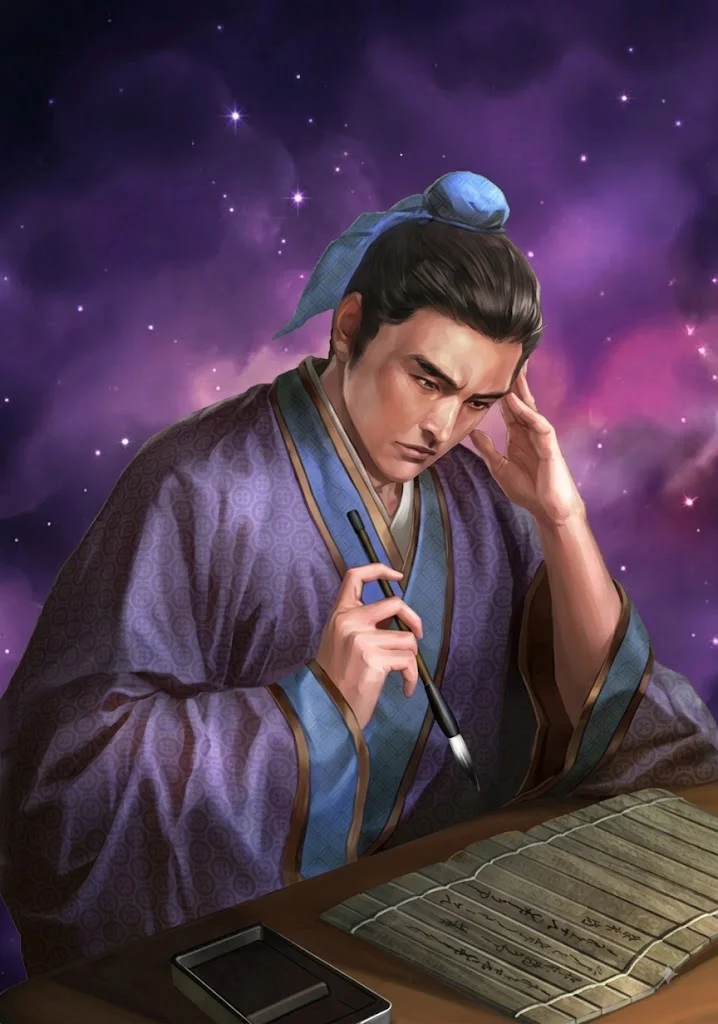
Hu Chong was a distinguished Eastern Wu state minister, imperial strategist, high-ranking historian, and later Western Jin dynasty official who served as Prefect of the Palace Secretariat (Zhongshu Ling) in Wu and later as Master of Writing (Shangshu Lang) and Grand Administrator of Wu Commandery in Jin. Hailing from Gushi County in Runan Commandery (modern-day Gushi County, Henan Province), Hu Chong was the son of Hu Dong, a high-ranking Secretariat official in Eastern Wu. Documented in Chen Shou’s Records of the Three Kingdoms (Sanguozhi – Book of Wu, Biography of Lu Xun and Biography of Sun Hao) and Luo Guanzhong’s classic historical novel Romance of the Three Kingdoms, Hu Chong was historically celebrated across southern China for his profound grasp of administrative law, keen psychological insight into statecraft, and his seminal thirty-volume historical work Wu Lu (Record of Wu), which became a foundational historical source extensively cited by Pei Songzhi in his annotations to Sanguozhi.
During the reign of Sun Quan in 230 AD, a major political crisis threatened the court of Eastern Wu when the Cao Wei emperor Cao Rui dispatched a dual agent named Yin Fan to infiltrate Wu. Arriving in Jianye under the guise of a political refugee, Yin Fan utilized brilliant rhetoric and grand legal theories to dazzle numerous Wu ministers, including Senior Officer He Pu. While most court officials praised Yin Fan, Hu Chong, alongside General of the Left Zhu Ju, saw directly through the deception. Hu Chong submitted a confidential memorial to Emperor Sun Quan, warning: ‘True sages of antiquity matched their words with humble deeds. Yin Fan has just arrived without prior reputation, yet he behaves with arrogant condescension, disparaging the northern court and aggressively building a political network across Jianye. In my judgment, he is no genuine political refugee, but a dangerous double agent dispatched by Cao Wei to undermine our imperial governance!’ Hu Chong’s sharp foresight proved completely accurate when Yin Fan’s treasonous plot was exposed shortly after, saving Eastern Wu from a devastating internal coup.
As the decades progressed, Hu Chong rose through the imperial bureaucracy to become Prefect of the Palace Secretariat under Sun Hao, the final emperor of Eastern Wu. In March 280 AD, a massive Western Jin armada commanded by Grand General Wang Jun surged down the Yangtze River, smashing Wu’s river defenses at Xisaishan and threatening Jianye. As panic gripped the imperial court and Sun Hao contemplated desperate, suicidal resistance, Hu Chong courageously stepped forward to advise the emperor to prioritize the survival of the civilian populace and follow the peaceful precedent of Shu Han’s former ruler Liu Shan. Sun Hao accepted Hu Chong’s counsel and entrusted him with drafting three official surrender petitions addressed to Jin commanders Wang Jun, Sima Zhou, and Wang Hun. Hu Chong personally composed the formal capitulation documents and delivered them to Wang Jun’s flagship, formally marking the end of the Three Kingdoms era as China was reunified under the Western Jin Dynasty. Moving to the Jin capital of Luoyang, Hu Chong served as Master of Writing and Grand Administrator of Wu Commandery, devoting his final years to authoring Wu Lu, preserving the geography, legal codes, and biographies of Eastern Wu for posterity.
Role in Romance of the Three Kingdoms
In Luo Guanzhong’s classic historical novel Romance of the Three Kingdoms, Hu Chong appears in Chapter 120 during the grand climax of the Three Kingdoms saga. Introduced as the Prefect of the Palace Secretariat under Sun Hao, Hu Chong plays a crucial historical role as the voice of wisdom amidst the collapse of Eastern Wu. In Chapter 120, as Wang Jun’s massive Jin fleet approaches Jianye and the Wu court descends into total chaos, Hu Chong urges Sun Hao to avoid unnecessary slaughter and surrender peacefully to preserve the lives of thousands of innocent citizens. Sun Hao heeds his advice and orders Hu Chong to draft the official surrender petitions to Jin generals Wang Jun, Sima Zhou, and Wang Hun. Hu Chong’s noble actions and solemn drafting of the surrender documents serve as the ultimate literary bridge that closes the century-long warlord era, fulfilling the famous opening line of the novel: ‘The empire, long divided, must unite.’
Hu Chong (胡沖) — Historical & Literary Timeline
Exposing Cao Wei Spy Yin Fan
Submits a confidential memorial to Sun Quan correctly identifying Cao Wei infiltrate Yin Fan as a double agent, preserving the political stability of Eastern Wu.
Advising Sun Hao & Ending the Three Kingdoms Era
Counsels Emperor Sun Hao against suicidal resistance as Wang Jun’s Jin fleet approaches Jianye; drafts three official surrender petitions to Jin generals Wang Jun, Sima Zhou, and Wang Hun, ending the Three Kingdoms era.
Service in Western Jin & Authoring Wu Lu
Serves as Master of Writing and Grand Administrator of Wu Commandery under Western Jin; authors the thirty-volume historical work Wu Lu (Record of Wu).
For detailed historical records, archives, and official chronicles, explore Hu Chong on Wikipedia.
Key Relationships
Family
- Hu Dong (胡栋, Hồ Đống): Father of Hu Chong who served as a high-ranking Secretariat official in Eastern Wu.
Friends
- Zhu Ju (朱据, Chu Cứ): Eastern Wu general and ministerial colleague who, alongside Hu Chong, saw through the deception of Cao Wei spy Yin Fan in 230 AD and warned the imperial court.
Enemies
- Yin Fan (隐蕃, Ẩn Phiên): Cao Wei double agent and infiltrator whose plot to subvert Eastern Wu governance was exposed by Hu Chong’s confidential memorial in 230 AD.
- Wang Jun (王濬, Vương Tuấn): Western Jin Grand General whose armada breached Wu’s river defenses in 280 AD; Hu Chong personally composed and delivered the formal surrender document to his flagship.
- Wang Hun (王浑, Vương Hồn): Western Jin commander advancing on Jianye during the 280 AD invasion who received one of the three official surrender petitions drafted by Hu Chong.
- Sima Zhou (司马伷, Tư Mã Trụ): Western Jin imperial prince and general who received a formal capitulation document drafted by Hu Chong during the conquest of Wu in 280 AD.
Other
- Sun Hao (孙皓, Tôn Hạo): Final Emperor of Eastern Wu whom Hu Chong served as Prefect of the Palace Secretariat; Sun Hao accepted Hu Chong’s counsel to surrender peacefully in 280 AD to spare the civilian population.
- Sun Quan (孙权, Tôn Quyền): Founding Emperor of Eastern Wu who received Hu Chong’s confidential warning regarding Yin Fan’s undercover plot in 230 AD.
- Pei Songzhi (裴松之, Bùi Tùng Chi): Liu Song dynasty scholar who preserved Hu Chong’s legacy by extensively citing his thirty-volume historical work Wu Lu in the annotations to the Records of the Three Kingdoms.
In Novel
Chapter 120
- Hu Chong (胡冲, Hú Chōng): Hu Chong serves as a Wu court official during the final crisis of the Eastern Wu state. When Jin forces enter the Wu capital and Sun Hao considers suicide, Hu Chong and Xue Ying advise the emperor to follow the example of Liu Shan and surrender rather than die needlessly. Their advice contributes to Sun Hao’s decision to submit to Jin, bringing the Three Kingdoms period to an end.
In History
Summary
- Hu Chong (胡冲, Hồ Xung) was a scholar and official of the later Three Kingdoms and early Western Jin period.
Historical Role
- He belonged to the educated official class that continued serving through the political transition from Eastern Wu and Cao Wei to Jin.
- His surviving record is more closely associated with historical writing and official service than with battlefield exploits.
Historical Record
- Classification: Historical. Because several Hu-family figures appear in this period, exact-name evidence should be maintained.