



Contents
Biography & Historical Record
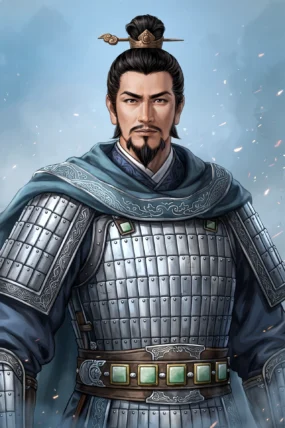
Li Tong (168–209 AD), courtesy name Wenda, was a military general who served under the warlord Cao Cao during the late Eastern Han dynasty. Hailing from Pingyu, Ru San Commandery (modern-day Pingyu County, Henan Province), Li Tong was famed in his youth for his martial courage, physical endurance, and fierce chivalric temper. Alongside his close associate Chen Gong (not to be confused with Cao Cao’s advisor Chen Gong), he organized a local militia group in the Huai River valley, defeating local brigand leaders and consolidating regional authority over small armed warlord groups.
In 196 AD, Li Tong led his followers to formally submit to Cao Cao at Xu. Appointed as General of the Household and Administrator of Runan, he was tasked with defending the vulnerable southern borders of Cao Cao’s domain against Yuan Shu and Liu Biao. During Cao Cao’s campaign against Zhang Xiu at Wancheng, Li Tong led vanguard reinforcements to secure the retreat of Cao Cao’s rear forces, earning high personal praise. During the pivotal Battle of Guandu in 200 AD, when Yuan Shao sent emissaries to grant Li Tong official titles and persuade him to defect, Li Tong steadfastly refused and executed Yuan Shao’s messengers, maintaining absolute loyalty to Cao Cao while personally suppressing local rebellions instigated by Yuan Shao in Runan. In 209 AD, during the aftermath of the Battle of Red Cliffs, Guan Yu led a naval and land blockading force to cut off Cao Ren’s communication lines at Jiangling. Li Tong personally led a rescue force, bravely fighting through Guan Yu’s encirclement to deliver vital reinforcements and supplies to Cao Ren. However, during the intense campaign, Li Tong fell gravely ill and died on the return march at the age of 42. He was posthumously granted the title Marquis Gang.
Role in Romance of the Three Kingdoms
In Luo Guanzhong’s historical novel Romance of the Three Kingdoms, Li Tong appears in Chapter 18 and Chapter 58 as a loyal and valiant military officer under Cao Cao. In Chapter 18, during Cao Cao’s siege and subsequent tactical withdrawal from Wan Castle against Zhang Xiu and Liu Biao, Li Tong arrives with crucial fresh troops to reinforce Cao Cao’s rearguard, effectively holding off enemy pursuers and allowing Cao Cao to safely regroup. In Chapter 58, during the campaign against Ma Chao and Han Sui at Tong Pass, Li Tong serves in Cao Cao’s frontline army. Seeing Cao Cao’s forces thrown into chaos by Ma Chao’s fierce assault, Li Tong heroically rides out to engage Ma Chao in single combat to protect his sovereign. However, after fighting for only a few brief bouts, Li Tong is thrust off his horse and slain by Ma Chao’s spear.
Li Tong (李通) — Historical & Literary Timeline
196 AD
Joining Cao Cao and Relieving Wan Castle
Submits his militia forces to Cao Cao at Xu; leads rearguard reinforcements during Cao Cao’s retreat from Wan Castle to repel Zhang Xiu and Liu Biao’s pursuit.
200 AD
Defending Runan During Guandu
Refuses Yuan Shao’s bribes and executes his diplomatic envoys; successfully holds Runan Commandery and quells local revolts while Cao Cao engages Yuan Shao at Guandu.
209 AD
Breaking Guan Yu’s Blockade at Jiangling
Fights through Guan Yu’s surrounding forces to resupply Cao Ren at Jiangling; falls ill and dies on the return journey at age 42.
211 AD
Duel with Ma Chao at Tong Pass
In the novel, charges forward at Tong Pass to duel Ma Chao in order to cover Cao Cao’s desperate escape, but is slain in single combat after several bouts.
Key Relationships
Family
- Li Ji (李基, Lý Cơ) — Eldest son who succeeded to Li Tong’s title of Marquis Gang and served the state of Cao Wei.
- Li Xi (李绪, Lý Tự) — Son who served as an official during the Cao Wei period.
Friends
- Chen Gong (陈恭, Trần Cung) — A local associate from the Huai River valley who co-founded the militia group with Li Tong before they submitted to Cao Cao.
- Cao Ren (曹仁, Tào Nhân) — A senior Wei general whom Li Tong successfully reinforced and resupplied by breaking through Guan Yu’s blockade at Jiangling in 209 AD.
Enemies
- Ma Chao (马超, Mã Siêu) — A Western warlord who, according to the Romance of the Three Kingdoms, killed Li Tong in a duel at Tong Pass in 211 AD.
- Guan Yu (关羽, Quan Vũ) — A Shu Han general whose naval and land blockade at Jiangling was breached by Li Tong in 209 AD.
- Yuan Shao (袁绍, Viên Thiệu) — A northern warlord whose attempts to bribe Li Tong into defecting during the Battle of Guandu in 200 AD were met with the execution of his envoys.
- Zhang Xiu (张绣, Trương Tú) — A warlord of Wancheng whom Li Tong fought against while serving as a vanguard commander for Cao Cao.
Other
- Cao Cao (曹操, Tào Tháo) — The warlord and sovereign to whom Li Tong pledged absolute loyalty in 196 AD, serving as a trusted general until his death.
In Novel
Chapter 25
- Li Tong (李通, Lý Thông): Li Tong is one of Cao Cao’s regional commanders and helps maintain Wei’s control over Runan. His local authority becomes important because the area is repeatedly contested by Liu Bei and other forces.
Chapter 39
- Li Tong (李通, Lý Thông): Li Tong remains a trusted Cao Cao commander during the campaigns around Jingzhou and the defense of the southern approaches.
In History
Summary
- Li Tong (李通, Lý Thông), courtesy name Wenda (文达), was an important military commander who served Cao Cao in the early years of Cao Cao’s rise.
Period I — Runan
- Li Tong was a local military leader in Runan. He supported Cao Cao and helped secure the region during the conflict with Yuan Shao and other forces.
- His ability to mobilize local troops made him particularly useful in the unstable central plains.
Period II — Service under Cao Cao
- Li Tong continued to command troops for Cao Cao and took part in campaigns against rival warlords.
- He was trusted with important defensive responsibilities and received honors for his service.
Death
- Li Tong died in 209 AD while serving in the south. His death deprived Cao Cao of an experienced regional commander.
Historical Record
- Li Tong was a historical figure. His biography is preserved in Wei Book 18 of the Records of the Three Kingdoms.