








Contents
Biography & Historical Record
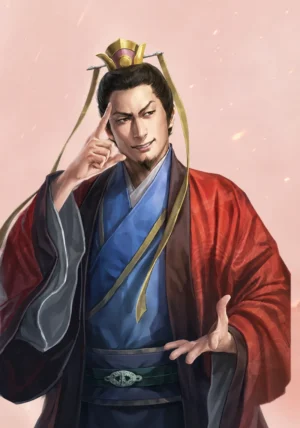
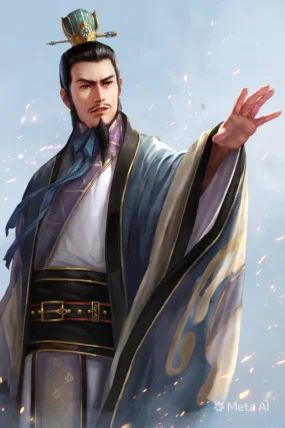
Zhuge Jin (174–241 AD), courtesy name Ziyu, was a prominent politician and diplomat serving the state of Eastern Wu during the Three Kingdoms period. Born in Yangdu, Langye Commandery, he was the older brother of the famed Shu Han chancellor Zhuge Liang and the father of the Wu general Zhuge Ke. Early in life, due to the turmoil of the late Han Dynasty, Zhuge Jin migrated south to Jiangdong, where he was recommended by Lu Su to enter the service of the warlord Sun Quan. Known for his calm demeanor, integrity, broad-mindedness, and exceptional diplomatic skill, Zhuge Jin earned the deep trust and high favor of Sun Quan, eventually rising to become General of the Left, Inspector of Yu Province, and holding the peerage of Marquis of Wan.
Throughout his career, Zhuge Jin acted as a master mediator and ambassador, skillfully managing the delicate and often volatile diplomatic alliance between Eastern Wu and Liu Bei’s regime in Jing Province and later Shu Han, maintaining crucial communication channels even amidst military tensions such as the invasion of Jing Province and the Battle of Yiling. Despite his high standing and political influence, he remained humble, cautious, and unassuming, never abusing his power or seeking excessive glory, which earned him widespread admiration as a model official. He passed away in 241 AD at the age of 68.
Role in Romance of the Three Kingdoms
In Luo Guanzhong’s historical novel Romance of the Three Kingdoms, Zhuge Jin is frequently featured as Wu’s chief envoy and diplomat, leveraging his family ties and rhetorical skill to negotiate complex territorial disputes, particularly concerning Jing Province. In Chapter 53, he is sent by Sun Quan to demand the return of Jing Province from Liu Bei, leading to verbal clashes with Zhuge Liang and Zhou Yu. Later, following the death of his brother Zhuge Liang, Zhuge Jin continues to serve Wu faithfully, participating in campaigns against Cao Wei and offering wise counsel to Sun Quan.
Zhuge Jin (諸葛瑾) — Historical & Literary Timeline
Entering Service under Sun Quan
After migrating to Jiangdong to escape northern conflicts, Zhuge Jin is recommended by Lu Su to Sun Quan, impressing the warlord with his wisdom and becoming a trusted strategist and envoy.
Negotiating for Jing Province
Zhuge Jin visits Liu Bei on behalf of Sun Quan to press claims for Jing Province, engaging in subtle psychological and diplomatic chess matches with his brother Zhuge Liang and Liu Bei’s commanders.
Campaigns Against Guan Yu and Yiling
Zhuge Jin participates in the strategic campaign that captures Guan Yu and later serves in Lu Xun’s forces during the Battle of Yiling, helping secure Wu’s dominance over the Yangtze River region.
Death
Zhuge Jin passes away at the age of 68, leaving behind a legacy of diplomatic excellence and deep loyalty to Eastern Wu.
For detailed historical records, archives, and official chronicles, explore Zhuge Jin on Wikipedia.
Key Relationships
Family
- Zhuge Gui (诸葛珪, Chư Cát Khuê): Father, who served as a magistrate during the late Han Dynasty.
- Zhuge Liang (诸葛亮, Chư Cát Lượng): Younger brother, the famed chancellor of Shu Han who maintained a complex diplomatic and familial bond with Zhuge Jin despite their opposing allegiances.
- Zhuge Jun (诸葛均, Chư Cát Quân): Younger brother, who lived in seclusion before serving the Shu Han government.
- Zhuge Ke (诸葛恪, Chư Cát Khác): Eldest son, who rose to high political office in Eastern Wu following his father’s footsteps.
- Zhuge Qiao (诸葛乔, Chư Cát Kiều): Second son, who was adopted by his uncle Zhuge Liang to continue the latter’s family line.
- Zhuge Rong (诸葛融, Chư Cát Dung): Youngest son, who served as a military officer for the state of Eastern Wu.
Friends
- Lu Su (鲁肃, Lỗ Túc): A key strategist of Eastern Wu who recognized Zhuge Jin’s talent and recommended him to Sun Quan, initiating his political career.
- Lu Xun (陆逊, Lục Tốn): A prominent Wu commander and statesman with whom Zhuge Jin collaborated closely on military and administrative matters, particularly during the defense of the Yangtze region.
Enemies
- Guan Yu (关羽, Quan Vũ): A Shu Han general whose control of Jing Province led to diplomatic friction with Zhuge Jin; Zhuge Jin later participated in the strategic campaign that resulted in Guan Yu’s defeat and execution in 219 AD.
- Cao Cao (曹操, Tào Tháo): The ruler of Cao Wei whose expansionist policies forced Zhuge Jin to migrate south and later served as a primary strategic adversary for the state of Eastern Wu.
Other
- Sun Quan (孙权, Tôn Quyền): The founding Emperor of Eastern Wu who placed immense trust in Zhuge Jin, utilizing him as his primary diplomat and advisor throughout his reign.
In Novel
Chapter 51
- Zhuge Jin (诸葛瑾, Gia Cát Cẩn): Zhuge Jin serves Sun Quan as a senior adviser and is known as Zhuge Liang’s elder brother. He participates in Wu’s strategic deliberations as the struggle over Jingzhou develops after Red Cliffs.
Chapter 54
- Zhuge Jin (诸葛瑾, Gia Cát Cẩn): Zhuge Jin serves on Sun Quan’s side during the political maneuvering surrounding Liu Bei’s marriage to Sun Quan’s sister. Because he is Zhuge Liang’s brother, his position also gives him a natural connection to the Shu leadership, but he remains loyal to Sun Quan and Wu.
Chapter 55
- Zhuge Jin (诸葛瑾, Gia Cát Cẩn): Zhuge Jin remains involved in Wu’s efforts to control the consequences of the marriage alliance and the dispute over Jingzhou. His family relationship with Zhuge Liang makes him an important intermediary between the two states.
Chapter 61
- Zhuge Jin (诸葛瑾, Gia Cát Cẩn): Zhuge Jin continues to serve Sun Quan as Wu presses Liu Bei over Jingzhou. He is part of the senior political group attempting to manage the conflict without allowing the alliance with Shu to collapse completely.
Chapter 84
- Zhuge Jin (诸葛瑾, Gia Cát Cẩn): During the Yiling campaign, Zhuge Jin remains a senior Wu minister while Lu Xun commands the army. He is among the political figures whose advice and concerns form part of the background to Lu Xun’s difficult appointment and subsequent victory.
Chapter 98
-
- Zhuge Jin (诸葛瑾, Gia Cát Cẩn): Zhuge Jin is again involved in Sun Quan’s strategic discussions as Wu and Shu maneuver against Wei. When Zhuge Liang attempts to use a Wu campaign against Wei as a diversion for his own northern offensive, Wu’s leadership recognizes the danger and prepares its own strategy.
Chapter 108
-
- Zhuge Jin (诸葛瑾, Gia Cát Cẩn): Zhuge Jin remains one of Wu’s senior ministers as Sun Quan’s long reign nears its end. He is part of the political establishment that survives the deaths of earlier figures such as Lu Xun and Sun Quan’s succession crisis.
In History
Summary
- Zhuge Jin (诸葛瑾, Gia Cát Cẩn), courtesy name Ziyu, was a senior Eastern Wu statesman and the elder brother of Zhuge Liang (诸葛亮, Gia Cát Lượng).
- His career is notable for his long service to Sun Quan, his diplomatic dealings with Shu, and his ability to maintain political trust despite being the brother of Wu’s rival-state chancellor.
Early Career
- Zhuge Jin (诸葛瑾, Gia Cát Cẩn) moved to Jiangdong during the upheavals of the late Han and entered Sun Quan’s service. He quickly became a trusted adviser.
Diplomatic Service
- Because his younger brother Zhuge Liang served Shu, Zhuge Jin (诸葛瑾, Gia Cát Cẩn) was repeatedly involved in diplomacy between Wu and Shu. Historical sources portray him as careful and conciliatory rather than as a schemer exploiting the family connection.
Military Career
- Zhuge Jin (诸葛瑾, Gia Cát Cẩn) also held military commands and participated in Wu’s campaigns against Wei. He eventually became one of Sun Quan’s highest-ranking commanders.
Final Career
- Zhuge Jin (诸葛瑾, Gia Cát Cẩn) became Grand General of the Left and served as a senior pillar of the Wu state until his death in 241 AD.
Historical Reputation
- His reputation for moderation and loyalty was strong enough that his relationship with Zhuge Liang did not undermine Sun Quan’s trust in him.
Historical Record
- Zhuge Jin (诸葛瑾, Gia Cát Cẩn) was a real historical statesman and general. He was one of Sun Quan’s most trusted officials and the elder brother of Zhuge Liang.